
Feb 27, 2010
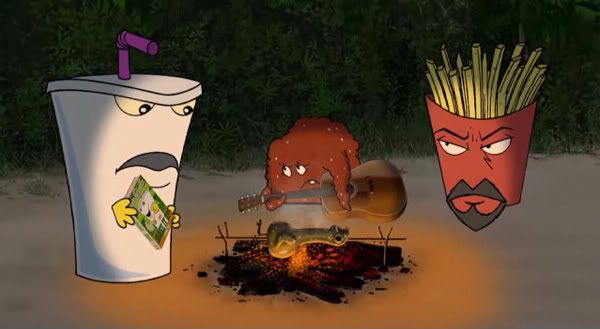
Aqua Teen Hunger Force: Season Seven

Phyllis and Harold


Cindy Kleine has a weirdly personal axe to grind in her feature length familial exposé Phyllis and Harold, a work that sports a talented eye for sumptuous, implicitly cinematic assembly of images but forgoes much documentarian value in its general refusal to address these matters from a more naturally candid state. In detailing the path that was her parent's til-parted-in-death marriage and all its inglorious bumps along the way, Kleine weaves together archival materials and interview footage to alternately intriguing and quease-inducing effects. Most aggravating about Phyllis and Harold is the displayed tendency to pin a family member down - namely, director Cindy's late parents, whose relationship is targeted here as something of the ultimate fraud - and make them squirm like the emotional equivalent of an ant caught under a magnifying lens. The occasional moment of significant emotional affection can't begin to justify what feels like an orchestration of specific answers in a chosen order. On such occasions, Cindy's mother Phyllis can often be seen treading inwards in her monologues to touching results, and it is in these sequences that the film nearly becomes a thoughtful rumination on larger notions of happiness and love; early passages in which the titular pair read their long-ago love letters to each other out loud to the camera are in line with the simpler, observatory nature the film should adopted.
Disappointingly, the possibility that the overbearing Harold's lifelong photographic tendencies might have aided Phyllis's ability to open up on-camera is never given due consideration, confirming that Kleine isn't so much concerned with cinematic inquisition as with Morgan Spurlock-reminiscent gimmickry (a key revelation towards the film's end reeks of exploitation-- some things should be kept off camera, for chrissakes). Twee animated sequences utilizing deliberately crude stop-motion serve as chapter breaks and set a disingenuous tone, one not helped by a voiceover/narration-to-the-camera device that - in ways just as upsetting as the average line of dialogue in Avatar - tends to spell out the things already inferred visually, and with more meaning and resonance at that. What works in the film is somewhat revelatory (the best sequence, featuring Phyllis's end of a most memorable phone call, is one of the few to respect emotional privacy, evoking a distinct and crucial sense of perspective) and suggests better things to come in the genre of the feature home movie-- what doesn't smacks of inadvertent magazine gossip.
Directed by: Cindy Kleine Cast: Phyllis Klein, Harold Kleine, Cindy Kleine 2008, Not rated, 85 minutes
The Usual Suspects
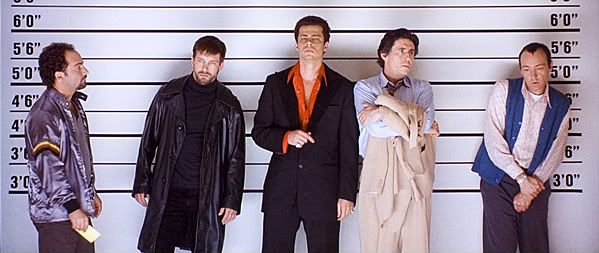

Cowardly, largely embellished manipulation makes up the bulk of The Usual Suspect's justification for existence, and – despite frequent critical praise, a screenwriting Oscar to its name and absurdly high placement on IMDb's Top 250 – they don't make a strong case once all the pieces have settled. Like the embarrassingly purported mystery hidden in plain view, the sheer transparency of it all renders this frivolous cinematic cat-and-mouse game a pointless cock tease to anyone with enough of a clue to see the bent-over-backwards "subtlety" on display for what it is: a cheap distraction, the ravings of a circus showman quick to pocket his ticket earnings before the majority of the attendees know what hit them. Here, a botched crime and subsequent explosion that leaves many dead lands lone witness Verbal (Kevin Spacey) in a demanding investigator's office, easily allowing roughly thirty minutes worth of plot to be stretched out to feature length as the audience is jerked back and forth between tepid interrogation and UPN-quality flashbacks to earlier heists Verbal took part in with four other prominent henchmen. Those able (or willing) to have the wool pulled over their eyes this shoddily have been (and will continue to be) amazed by the film's ultimate twist, but it doesn't take much sniffing around to realize from the outset that some obvious pieces of the puzzle are being intentionally hidden from sight if only to conjure mystery where none exists. The film patronizes by pretending to have far more cards up its sleeve than it actually has, and even if its crass manipulation actually bore a worthwhile payoff, The Usual Suspects further offends by failing to employ any form of consistency in its perspective-filtered presentation of critical events. In other words, the film might appear crafty in piecemeal (what with such deliberately enunciated, obviously profound dialogue, Kevin Spacey's risible performance is one of the great Oscar con jobs), but get up close and the smoke and mirrors become reprehensibly obvious. Little matters aside from the final jerk-around, and The Usual Suspects' attempts at such a payoff come across as an atrociously orchestrated bluff. Gimme Bryan Singer any day he can let his superhero freak flag fly - X-Men 2 and Superman Returns are the work of a fine craftsman and restrained artist - but his poker face is worthless at best.
Directed by: Bryan Singer Screenplay by: Christopher McQuarrie Starring: Gabriel Byrne, Kevin Spacey, Stephen Baldwin, Chazz Palminteri, Pete Postlethwaite, Kevin Pollak, Benicio Del Toro, Suzy Amis, Giancarlo Esposito, Dan Hedaya, Paul Bartel 1995, Rated R, 106 minutes
Originally published on 5-22-06, reprinted here with some editing.
Feb 21, 2010
For the Love of Film (aka Down to the Wire)
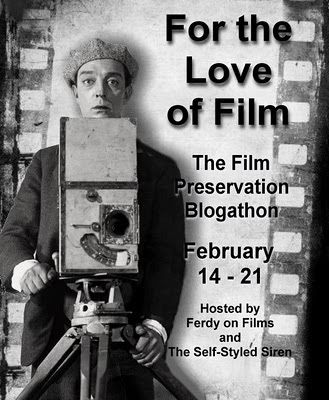
But an inch short of the deadline (as usual), I finally present my contribution to the Film Preservation Blogathon, hosted by The Self-Styled Siren and Ferdy on Films. Ideally, I'd have offered up something substantial of my own for something like this (click through the picture above for some amazing pieces), but that's just not in the cards right now (my time is eaten for many a reason: a surprise lurks, and three new reviews, very shortly). So I instead offer something from my personal movie experiences, which are deeply rooted in classic horror and thus are long familiar with the legendary, once "lost" adaptation of Frankenstein by none other than Thomas Alva Edison. Everyone should see it, and if this post sees even one more person out there discover it and treasure it, I'll be happy.
Without looking it up (I'm relishing the past, not researching a topic, people), memory says the film was found sometime in 1996 (this is, at least, when I learned of it; the glorious, early days of the internet, srsly), though it took many years for that footage to actually make its way to the public (a web site associated with the finding promised video copies available for sale in the near future; I kept an eye on it for years, but nothing ever materialized). What we have thanks to that find is a fascinating relic, a must-watch chapter in cinematic and technological history, and, I would argue, as important a special effects watermark as anything accomplished by a certain Jim C. Now pardon me while I clean up the pool of saliva collecting at my feet, and try to expunge the thought of a new version of Metropolis available in the near future...
Shutter Island
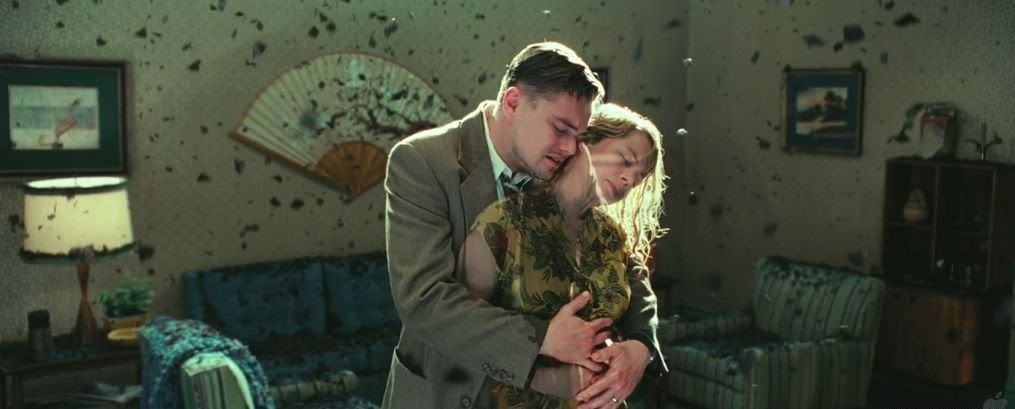

Count this Scorsese fan as officially worried: will this audacious, innovative filmmaker fade away into the kind of unenthused formula that now threatens to define the legacy of Woody Allen? Of course, only time will really tell, but having loved the bulk of Marty's output long enough to regret seeing him being awarded his first Best Director Oscar for some of the most phoned-in work of his career (sorry, Departed fans; having now seen it three times, I've liked it less and less each go around), I can't help but wonder if Hollywood has succeeded only in nudging him in the absolute wrong artistic direction. Shutter Island is by many counts a skilled bit of filmmaking, but the points it scores are mostly technical, rendering it a mere beautiful construct devoid of spirit. To take a note from the film's flirtations with the paranormal, where is the ghost in this machine?
The rapturous cinematic orchestrations of GoodFellas and Gangs of New York - two of the films that best embody Scorsese's legendary bravura, his "movie brat" appeal - have given way of late to flashy disconnect, from the rhythmless bludgeoning of The Departed to this hacky procedural thriller, in which Teddy Daniels (Leonardo DiCaprio, whose method acting here fails in that he lets us see the strings) investigates a prisoner missing at an island-based, high-security psychiatric hospital. From the hot red nail polish sported by the ethereal Michelle Williams to the migraine-representative lights that ravage DiCaprio's psyche, Shutter Island is often lavish to behold, but the seams too often show here, and in ways downright embarrassing for a director of this caliber (notice the inconsistently matched shot/reverse shots of Williams late in the film).
A tonal misfire, Shutter Island almost begs for camp to enliven the proceedings, its proper thriller etiquette hot to the touch but only by constant force from all angles; brighter lights and louder volume represents trauma, etc., while Laeta Kalogridis's script (from Dennis Lehane's novel) is damned to let any details up for the audience to infer. Wonky expositional stretches and incongruous dream/reality parallels, Shutter Island is hopefully a bump in the road more than an indicator of things to come. Will we be tasting a fine wine in Scorsese's latter years, or the staleness of vinegar? That the film occasionally works (the final sequences, and the last shot in particular, gave me chills) only serves to better highlight its uneven foundation and lamentable deficiencies, which seems to stem from something far worse than lack of talent: lost motivation. Scorsese stokes the flames when he should be letting his pot simmer.
UPDATE 2/22/10: I feel the need to add more to this conversation, even before I see the film a second time (something I knew I'd want to do by the half-way point of my first viewing). Right here, I believe, is a key example of why we need critics, by which I mean not old guys passing off opinions as fact, but energetic, passionate, and diverse minds connecting over a shared interest that all are hopefully well educated upon. Without the intense debate going on over this film right now, I'd have probably not returned to it for some time, if at all (and anyone who says they've never found something great thanks to someone else, be it a professional critic or just a recommendation off a stranger, is almost definitely a liar). Now, I'm more excited than ever to watch it, even having already "seen" it. I use that term tentatively; sometimes we fail to realize how problematic a viewing experience, often for personal reasons we can't help but bring in with us at the time. Let me simply say that I consider my experience, and resulting piece, to be problematic, and sincerely hope my first impression was wrong. I suspect it will be. Readers, don't listen to me: go see this movie.
Directed by: Martin Scorsese Screenplay by: Laeta Kalogridis Starring: Leonardo DiCaprio, Mark Ruffalo, Ben Kingsley, Max von Sydow, Michelle Williams, Emily Mortimer, Patricia Clarkson, Jackie Earle Haley, Ted Levine, John Carroll Lynch, Elias Koteas 2010, Rated R, 138 minutes
Feb 16, 2010
Bad Santa


Time has the power to add poignancy to all things, so while I'd probably argue Bad Santa as a modern comedy classic despite the fact that two if its stars are now dead only these six and a half years later, it's silly to pretend that that shadow doesn't alter the perception: more recently, Bernie Mac was taken before his time (we like to think), and I barely knew John Ritter. The Dark Knight's Heath Ledger is the best recent example of this, of course, but larger-than-life bravura does not usurp quiet dignitaries-- it merely eclipses them in the eyes of fools. Bad Santa is a movie about the importance of details, of little things, of life and happiness found in the out-of-the-way places, and on a level field, Ritter's posthumous turn is as profound as Ledger's fire-and-brimstone-from-the-grave (the more recently departed Mac was, as always, alive, paling all around him).
Fantastic performances aside - and I haven't even touched on the title character yet - Bad Santa is really about two things: the audacity of the movie to think it could exist in the first place, and that required to actually bear it into creation. The holiday spirit antithesis did and still does offend like so much shock value (I said it then and I say it now: the movie is rated R, why did you take your children?), but what elevates Terry Zwigoff's comedy, based on a story by the Brothers Coen, is its lack of posturing. These people - Willie Stokes (Billy Bob Thornton in his finest hour), an alcoholic thief impersonating a mall Santa; "The Kid" (Brett Kelly; his name is one of the film's best jokes), an overweight and virtually unsupervised child; Sue (Lauren Graham of Gilmore Girls), a bartender and Santa fetishist - are fucked up indeed, but all the funnier (and more tragic, as goes the film's dual planes of existence) for their respected humanity. Willie heaves kneejerk insults at The Kid for curiosity and prowess at chess, but what remains unspoken is how observant and intelligent he is between the lines of obscenity (The Kid, not Willie).
Not unlike the Coen Brothers's own directorial output this past decade, Bad Santa works in large part conceptualization, part exacting execution, and all (A Serious Man, No Country for Old Men, etc.) take deliberate joy in jerking their audiences around, both in craft and emotionally-piercing lyricism. Bad Santa is high low art. As Willie, Thornton is a tour-de-force of his own: a crotchety curmudgeon with a heart worth loving if you get to know him past the vile surface, one that is, indeed, very thick. Pissing freely in his Santa suit and telling a dozen kids to fuck off would not be an unusual afternoon, and the never-better Billy Bob captures it like existential lightning in a bottle. People don't simply speak in this movie: they spar, and like an orchestral comedic throwdown, Bad Santa is drunk on beautiful obscenities. The very pacing seems largely predicated on the verbal music of an embittered black small person heaving vocal bricks at Willie ad nausea, alone (Tony Cox as Marcus, Willie's long time elf cohort; what recent movie has offered this many great comedy teams?). It's also an unprecedentedly uplifting experience, borderline Shakespearean in its purity, entering deliberate (but earned) It's a Wonderful Life territory with a mirror to that classic's bridge jumping scene. Then again, George Bailey never kicked Mr. Potter in the nuts. Bad Santa inspires fits of laughter and tears, but you could file it next to that film with a straight face.
Directed by: Terry Zwigoff Screenplay by: John Requa and Glenn Ficarra Starring: Billy Bob Thornton, Tony Cox, Bernie Mac, Lauren Graham, John Ritter, Cloris Leachman and Brett Kelly 2003, Rated R, 93 minutes
Feb 13, 2010
The Wolf Man
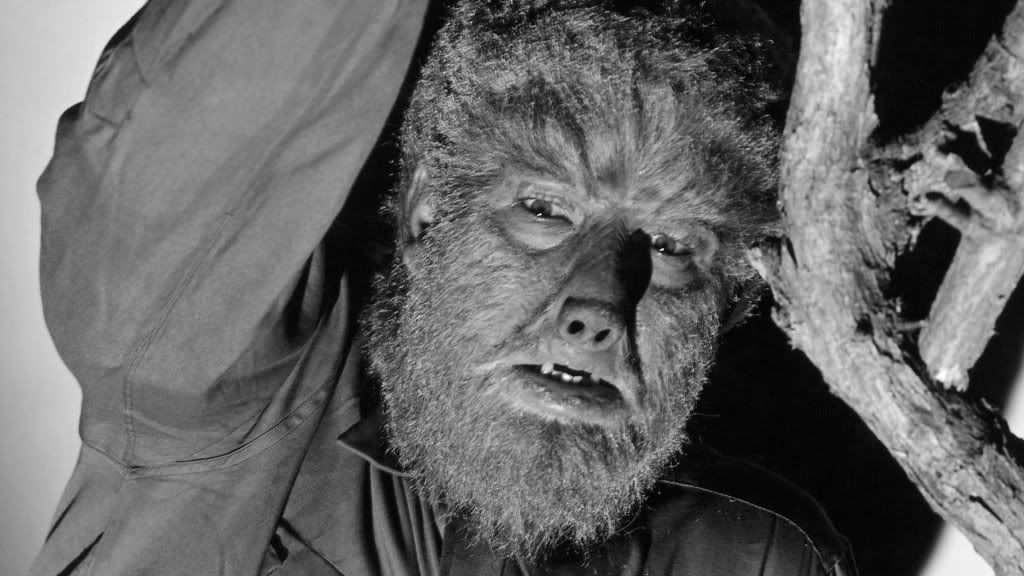

Directed by: George Waggner
Screenplay by: Curt Siodmak
Starring: Lon Chaney Jr., Claude Rains, Warren William, Ralph Bellamy, Patric Knowles, Bela Lugosi, Maria Ouspenskaya, Evelyn Ankers, J.M. Kerrigan, Fay Helm, Forrester Harvey
1941, Not rated, 70 minutes
James Whale’s subversions aside, the Universal monster films weren’t open to a great range of subtext. This makes it all the more refreshing to see a gem like The Wolf Man, which creates a far more nuanced and affecting conflict than many works equipped with a larger canvas. Like The Invisible Man, there is no true villain here, only a protagonist whose better intentions have been derailed by an unforeseeable conflict in which they were ill-prepared. The plot is miniscule: the well-meaning Larry Talbot (Lon Chaney Jr., surely making his father proud) returns to his family home after a prolonged absence. A night of harmless company with two local girls takes a turn for the worse when one is attacked and killed by a prowling wolf; only Larry sees the creature, killing it with his silver-capped cane but not without first suffering a curse-transmitting bite. Chaney’s immense performance (surely making his father proud) translates through the thick and awkward-looking makeup during his few scenes of transformation. His mammalian gestures are awkward at first, but come to convey the twisted humanity at the core of the man who awakens only to learn of the evil done by his hands unaware (the script teases, briefly, that the happenings may be a sickness of his mind). Outside Jacques Tourneur, The Wolf Man features some of the most ravishing set design/art direction during this era of the genre-- the swirling fog often parallels Larry’s own quagmire-bound morality and conflicting imperatives. Most horrifying, it suggests, is the potential inability to sway our own innately darker tendencies.
Originally published on 10-26-06, reprinted here with some editing.
Dante's Inferno
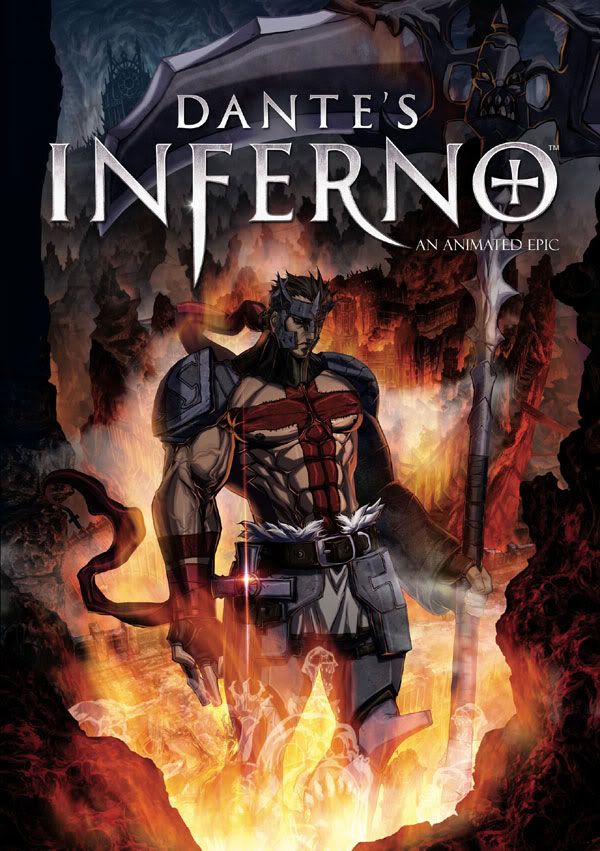
Directed by: Victor Cook, Kim Sang-Jin, Shukou Murase, Jong-Sik Nam, Lee Seung-Gyu, Yasoumi Umetsu
Written by: Brandon Auman
Cast: Graham McTavish, Vanessa Branch, Steven Blim, Peter Jessop, Mark Hamill, Victoria Tennant
2010, Not rated, 88 minutes
A healthy variety of experience is vital to any development in life, so while the straight-to-DVD feature Dante's Inferno lacks the soul-piercing power of, say, The Duchess of Langeais, it doesn't lack for some base/basic pleasures. At any rate, it's a more fulfilling experience than Avatar (not that that says much), even if the writing is often as hackneyed and the end doesn't even try to mask the fact that the whole thing is just a lead-in to the videogame just as fresh on the same retail shelves (if that doesn't explain the ending, then lousy screenwriting surely does). Surely forgettable, this bit of unrestrained adolescence has modesty on its side. Admittedly, stuff like this is out of my usual comfort zones - it took me until about the 25 minute mark to get over certain elements (the faux-serious nudity is a riot) - but as a comparatively low-budget anime within a fairly constrained zone of creativity, this mini-epic succeeds as an expressionistic vista of spirituality in conflict, low on thought but high on seductive, stylized imagery. Freshly returned from the Crusades, Dante finds his beloved Beatrice slain, her soul - though pure - claimed by Lucifer, who takes her to the inner circles of hell from which she must be rescued. Simplistic religious meaning abounds, ditto screenwriting devices that might have been infuriating if the were presented as anything else. Honesty lends legitimacy; these sins are easily overlooked given how exuberantly the movie revels in orgiastic imagery (a favorite touch: the female souls trapped in the circle of Lust sprout phallic tentacles, invoking Cronenberg). The plentiful action sequences might be mere boss battles from the game itself, but here they're simplified into postures and poses that aren't so dynamic as they are symbolically expressive from a religious/gender perspective. Past that, there's not much going on here, but then, that's not always so terrible.

DVD Audio/Visual/Special Features: Given Dante's Inferno's rather undemanding technical side, it's no high praise to say this DVD provides an adequate transfer and sound mix. English and Spanish subtitles included. Special features include six animated storyboard sequences - boring, except for the insight they lend into how specific actions and expressions are emphasized - and a preview for the game of the same title, which, on the basis of these same visually-bound virtues, appears far more worthwhile.
Feb 11, 2010
Snowy thoughts
Being at ground zero of all those lines of cold, this already-brilliant fuck you to "peek-a-boo-ologists" became perfectly sublime.
The clip also speaks to me because it confirms a pet peeve I had and previously chalked up to my being naturally too harsh-- here, my want to complain about people who know virtually nothing about, say, global warming, being allowed to speak as if (the same goes for any topic). Charles Schulz penned for his Peanuts creation, "I love humanity, it's the people I can't stand". I think that says it, even if it's skimpy on the anger. Once a science major and long a science enthusiast, I know my fair share of things about how our world works, and though meteorology always struck me as the most technically boring of the sciences, global warming was a thing unto itself to know about (like the hole in the ozone layer). Such broad scientific knowledge has served me well in the movies, like Magnolia. But to know what's out there, from the diversity of life to the corners of known creation to a basic understanding of the laws of physics, is to be prepared as an active human in any walk of legitimate life.
 You stupid fucking cow-eyed sloths. Why would you gamble the well-being of your bed of existence - i.e. Earth - on short-term financial reward? Why with even the slightest chance (add greedy to that tirade). Greedy indeed, with no thought for their children's children (which, I'll be getting to, there need to be less of). Global warming disrupts the entire planetary system, and, in our projected unfolding reality, ultimately locks North America in another ice age, amongst other unpleasantries (even the shitty Day After Tomorrow at least got that much right). Then there's pollution in general, the exploding population (tests for parents, NOW, you do good, you get to have a second; make these law), the ceaseless growth of a global society reliant on finite resources. No kids for me, thanks, though I will be responsible enough to send my superior DNA into the future via time capsule so that my spawn can emerge from the population-thinning chaos surely about to ensue, unharmed.
Thank you to the woman on Aramingo Avenue last Saturday, who withdrew her pedestrian crosswalk right-of-way and allowed the car to make a right turn, further allowing three more cars (mine being the last) to make the green. You were the best thing about that day.
| The Colbert Report | Mon - Thurs 11:30pm / 10:30c | |||
| We're Off to See the Blizzard | ||||
| ||||
The clip also speaks to me because it confirms a pet peeve I had and previously chalked up to my being naturally too harsh-- here, my want to complain about people who know virtually nothing about, say, global warming, being allowed to speak as if (the same goes for any topic). Charles Schulz penned for his Peanuts creation, "I love humanity, it's the people I can't stand". I think that says it, even if it's skimpy on the anger. Once a science major and long a science enthusiast, I know my fair share of things about how our world works, and though meteorology always struck me as the most technically boring of the sciences, global warming was a thing unto itself to know about (like the hole in the ozone layer). Such broad scientific knowledge has served me well in the movies, like Magnolia. But to know what's out there, from the diversity of life to the corners of known creation to a basic understanding of the laws of physics, is to be prepared as an active human in any walk of legitimate life.
You stupid fucking cow-eyed sloths. Why would you gamble the well-being of your bed of existence - i.e. Earth - on short-term financial reward? Why with even the slightest chance (add greedy to that tirade). Greedy indeed, with no thought for their children's children (which, I'll be getting to, there need to be less of). Global warming disrupts the entire planetary system, and, in our projected unfolding reality, ultimately locks North America in another ice age, amongst other unpleasantries (even the shitty Day After Tomorrow at least got that much right). Then there's pollution in general, the exploding population (tests for parents, NOW, you do good, you get to have a second; make these law), the ceaseless growth of a global society reliant on finite resources. No kids for me, thanks, though I will be responsible enough to send my superior DNA into the future via time capsule so that my spawn can emerge from the population-thinning chaos surely about to ensue, unharmed.Thank you to the woman on Aramingo Avenue last Saturday, who withdrew her pedestrian crosswalk right-of-way and allowed the car to make a right turn, further allowing three more cars (mine being the last) to make the green. You were the best thing about that day.
Feb 10, 2010
A Serious Man
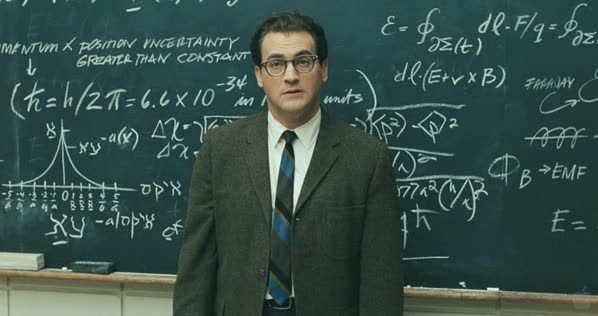
Directed by: Joel Coen, Ethan Coen
Screenplay by: Joel & Ethan Coen
Starring: Michael Stuhlbarg, Richard Kind, Fred Melamed, Sari Lennick, Aaron Wolff, Jessica McManus, Adam Arkin
2009, Rated R, 106 minutes
A Serious Man can be immediately placed into the permanent comedy hall of fame, but like the infamous Airplane! quip, this cup is black, and - depending on one's palate - very very bitter (so much that even some ardent Coen fans found the bleakness of tone to be one of "go fuck yourself" levels of offense). Some consider their films of late (No Country and since) to be atheistic, but my experiences find it to be a trend of strict agnosticism - perpetual doubt and scrutiny, the longing for the impossible fruit of knowledge. "Why does he make us feel the questions if he won't give us any answers?", pleads Larry Gopnik (Michael Stuhlbarg, in the third best performance of the year not nominated for an Oscar), a singularly poetic articulation of one very ultimate question. A savagely existential comedy of errors, A Serious Man grooves on Gopnik's mounting anquish, he a physics professor up for tenure whose wife suddenly leaves him for a close friend, forcing him out of the house, etc. Life punches in rapid succession, inviting biblical comparisons and anti-Semitic charges, but this series of unfortunate events is really among the most personal and empathetic work as has ever been put out by a semi-mainstream studio (the Coens have made clear the influence their youth had on the film). That it sits atop some of the most savory comedic timing since Jones and Avery ruled the world (bonus: some of the great pot scenes in movies) only deepens the all-penetrating mirror erected for our psyche; we laugh, so we may not cry. "Hashem hasn't given me shit!" screams Larry's socially challenged brother Arthur (Richard Kind), reminding us that somebody always has it worse. Key, though, is the defiant use of power: why should I tell you the end, and does that really even matter anyway? God exists in these last few by the Coens, to which they say, how great can He be if this is how things are? Lebowski, meet Gopnik.
Feb 8, 2010
Slant Magazine's Best of the Aughts
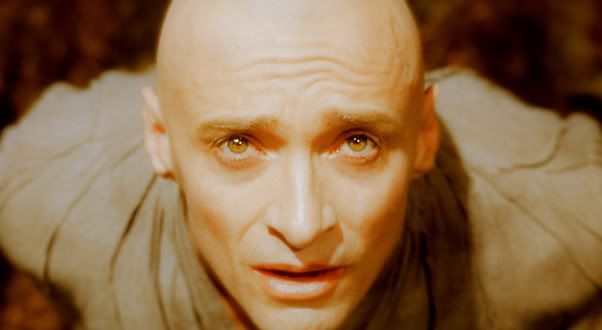
I'd be hella excited about the unveiling of this list even if I wasn't one of the participants who helped build it. Eleven writers, one hundred films, pure Slant awesomeness. Check back as we'll be unveiling twenty films per day; my capsules can be found at #93, 80, 58, 54, 46, 41, 21, 20 and 5.
Feb 6, 2010
The Imaginarium of Dr. Parnassus
Directed by: Terry Gilliam
Starring: Christopher Plummer, Heath Ledger, Lily Cole, Andrew Garfield, Tom Waits, Verne Troyer, Johnny Depp, Colin Farrell, Jude Law
2009, Rated PG-13, 122 minutes
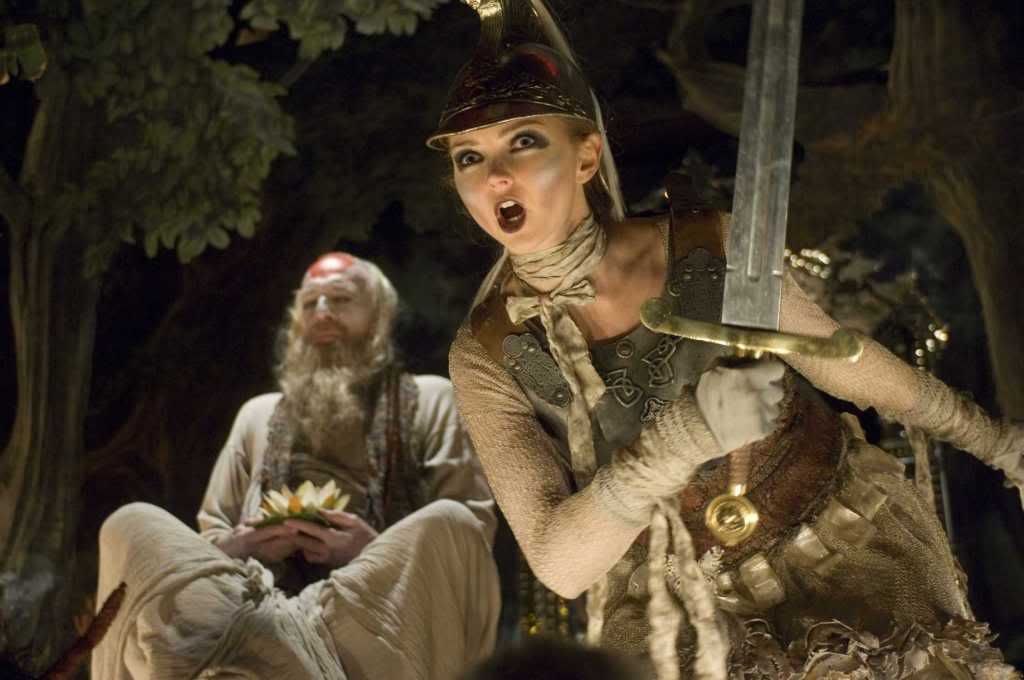
Far from being as off-the-cuff mad as most early reviewers insinuated, The Imaginarium of Dr. Parnassus, while certainly the antonym of all things normal in its many imaginative flourishes, represents something far more conventional from a storytelling level. Beat to beat, the rhythms of the film are prone to tangents and distractions, and could easily provide the basis for a semester or two of classes in editing theory, but as a plot with a basic few components, there's really not that much to puzzle over. Of course, this is coming from the guy for whom Brazil and Aqua Teen Hunger Force Colon Movie Film for Theaters represent the best from their respective years. How one appreciates (or doesn't) a film like this often highlights core interests in the medium, and messy personal confessions are frequently my sort of thing (versus, say, stuffy, technically exact cinema with a message of the week). Here, Gilliam is being as obviously personal as Bob Fosse in All That Jazz (double feature!), touching on concerns of mortality, fatherhood and truth in expression with a sometimes maniacal, always light-hearted cinematic freestyle.
Heath Ledger is the elephant in the room, his death mid-shoot creating a daunting creative obstacle wittily surmounted via a semi-genius plot device so consistent with the surrounding fabric (if you're lucky enough to not know it, yet, I won't spoil it here) that it could easily have been the planned course of action from day one. His doppelgängers – Johnny Depp, Jude Law and Colin Farrell – seem creatively placed throughout according to their varying personas, a small way of countering the inherent unevenness in placing four into a single role (I recall an adaptation of Hamlet in which each act featured a new lead). Seriously weird – which is to say the film is free of ironic detachment – Parnassus walks a thin line between the convenient and the absurd (the latter mostly confined to the numerous scenes inside the imaginarium, cobbled together with inspired threadbare digitry), sort-of parallel to the depicted conflict of its aging title character (Plummer), who made a deal with the devil and is rapidly approaching his requisite date of payment. On the occasions where Parnassus fails to reach all-out levels of delirium (in its drop-you-in-the-moment intensity, the opening mirror sequence might be the high point, although Law's segment is at least a close second), the touching and immersive commitment to the creative spirit more than carries the weight.
Feb 5, 2010
Inglourious Basterds
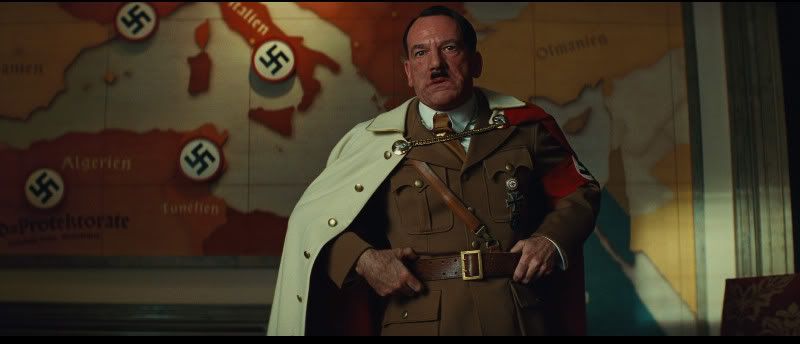
Such qualities and more preclude me from sharing the you-can't-touch-that! attitudes of Jonathan Rosenbaum and others, who take offense to the less-than-solemn vision of war and apparent arrogance implicit in historical revision, who see only deliberately courted controversy and "adolescent snicker". Basterds is not entirely relevant when divorced from actual historical understanding, but in Rosenbaum's defense, he's probably had more exposure to historically ignorant upstarts than I, something I'm sure could over-fuel anyone's bullshit detector. (In the same fashion, I'm sure some still fault The Producers' treatment of Hitler; great comedy - which, in its moments of choosing, Inglourious Basterds is - must always offend some.)
But I've read (and adored) Hannah Arendt and studied the Holocaust at length, and both are as hip as the next thing (intellectually speaking, I groove on them). What makes it worth more than callous teenage sneer? Sure, it's partly true that Basterds is a revenge-fantasy (and a comedy and a guys-on-a-mission movie and a feature-length Looney Tune and...), but it's also incredibly self-critical about the feelings that genre intends to conjure, deliberately conjuring its own imagery in the vein of well-known WWII atrocities. Call it a brilliantly (and morally) played bait-and-switch. Such shock-and-awe poses are struck like falling dominoes for specific reactions in a specific order -- to see only the rage at the surface of the script is to ignore the deeper inner workings.
By engages with historical legend and eschewing cliche via empathetic characterizations, Inglourious Basterds directly counters reductive expectations and becomes a work of moral weight and worth, most directly in the plot thread in which Jewish refugee Shoshanna (Laurent) must deflect the courting of German soldier Frederick Zoller (Brühl). Says Slant's Ed Gonzalez, "A lushly intriguing grappling with morality, ideology, nepotism, and authorship, the entire chapter may be the deepest Tarantino has ever gotten." His words mean more than mine, but I'll go one further and call it the base of Tarantino's latest summit.
Mounting such, the film takes an obvious stance against Nazi evils, even imparts "be intolerant of intolerance" virtues in what seems to me a passive approval of the Basterds' no-mercy war tactics. Nevertheless, it doesn't stop the camera from pulling back at the sight of the bat-wielding Bear Jew in action (a shrill-free equivalent to turning one's head). The only character the film makes a point in gleefully repudiating is Hans Landa (Oscar spotlight Christoph Waltz), who is swayed not by love or revenge of country, but the prospect of personal gain over all else. Basterds condemns evil through banality, but more ruthless is its treatment of the greedy, the root of all evil.
Drunk from frame one on its own movie-ness, Basterds is a slow-ticking bomb that sporadically explodes with streaks of glorious, tangible violence, the punctuation marks in what amounts to a deliberate and precise arrangement of cinematic chess pieces. (On paper, Tarantino's revelations are as obvious as anything in Shyamalan's canon, but where his impress more surprise is in his reveling of storytelling details -- we're too intoxicated to see the strings.) Several jerks of the rug later, and WHAM!, the movie has hauled you down an unprecedentedly complex path, complicating assumed notions of good and evil, scrutinizing itself (and the viewer) via a deceptively brilliant, self-devouring plot device (maybe the best movie-within-a-movie, ever), and yes, affirming the righteous social power of cinema. Only a work so personal and dependent on love for the medium could actually get away with it. Inglourious Basterds is worthy of Dr. Strangelove, which is to say, it's an inflammatory masterpiece. [A]
[Screencap thanks to DVD Beaver.]
Feb 2, 2010
2009: The Year in Film
SPOILER WARNING IN EFFECT!


Full list:
10. Julia
9. Public Enemies
8. The Cove
7. Liverpool
6. Adventureland
5. Fantastic Mr. Fox
4. A Serious Man
3. 35 Shots of Rum
2. Inglourious Basterds
1. Two Lovers
Honorable Mentions: The Sun, The Hurt Locker, Treeless Mountain, Moon, Surrogates, Coraline, Land of the Lost, Trucker, Oblivion, Pontypool
Ten Offenders: Friday the 13th, Wolverine, Trick 'r Treat, Night at the Museum: Battle of the Smithsonian, Who Does She Think She Is?, Horsemen, Up in the Air, The Proposal, The Class, Bride Wars
'Til next time, au revoir!

Full list:
10. Julia
9. Public Enemies
8. The Cove
7. Liverpool
6. Adventureland
5. Fantastic Mr. Fox
4. A Serious Man
3. 35 Shots of Rum
2. Inglourious Basterds
1. Two Lovers
Honorable Mentions: The Sun, The Hurt Locker, Treeless Mountain, Moon, Surrogates, Coraline, Land of the Lost, Trucker, Oblivion, Pontypool
Ten Offenders: Friday the 13th, Wolverine, Trick 'r Treat, Night at the Museum: Battle of the Smithsonian, Who Does She Think She Is?, Horsemen, Up in the Air, The Proposal, The Class, Bride Wars
'Til next time, au revoir!
Subscribe to:
Posts (Atom)