1.31.2011

Images of the Day Week, 2011

JANUARY

Photo Sharing and Video Hosting at Photobucket
1.10, Munich (Steven Spielberg, 2005)

Photo Sharing and Video Hosting at Photobucket
1.11, Tron (Steven Lisberger, 1982)

Photo Sharing and Video Hosting at Photobucket
1.12, Apocalypse Now (Francis Ford Coppola, 1979)

Photo Sharing and Video Hosting at Photobucket
1.13, For All Mankind (Al Reinert, 1989)

Photo Sharing and Video Hosting at Photobucket
1.14, Pulp Fiction (Quentin Tarantino, 1994)

Photo Sharing and Video Hosting at Photobucket
1.15, Reservoir Dogs (Quentin Tarantino, 1992)

Photo Sharing and Video Hosting at Photobucket
1.16, Death Proof (Quentin Tarantino, 2007)

Photo Sharing and Video Hosting at Photobucket
1.17, Speed Racer (Andy Wachowski and Larry Wachowski, 2008)

Photo Sharing and Video Hosting at Photobucket
1.18, Glengarry Glen Ross (James Foley, 1992)

Photo Sharing and Video Hosting at Photobucket
1.19, GoodFellas (Martin Scorsese, 1990)

Photo Sharing and Video Hosting at Photobucket
1.20, The Thin Red Line (Terrence Malick, 1998)

Photo Sharing and Video Hosting at Photobucket
1.21, Seven (David Fincher, 1995)

Photo Sharing and Video Hosting at Photobucket
1.22, Night of the Living Dead (George A. Romero, 1968)

Photo Sharing and Video Hosting at Photobucket
1.23, Assault on Precinct 13 (John Carpenter, 1976)

Photo Sharing and Video Hosting at Photobucket
1.24, Citizen Kane (Orson Welles, 1941)

Photo Sharing and Video Hosting at Photobucket
1.25, McCabe and Mrs. Miller (Robert Altman, 1972)

Photo Sharing and Video Hosting at Photobucket
1.26, Aguirre, the Wrath of God (Werner Herzog, 1972)

Photo Sharing and Video Hosting at Photobucket
1.27, Miami Vice (Michael Mann, 2006)

Photo Sharing and Video Hosting at Photobucket
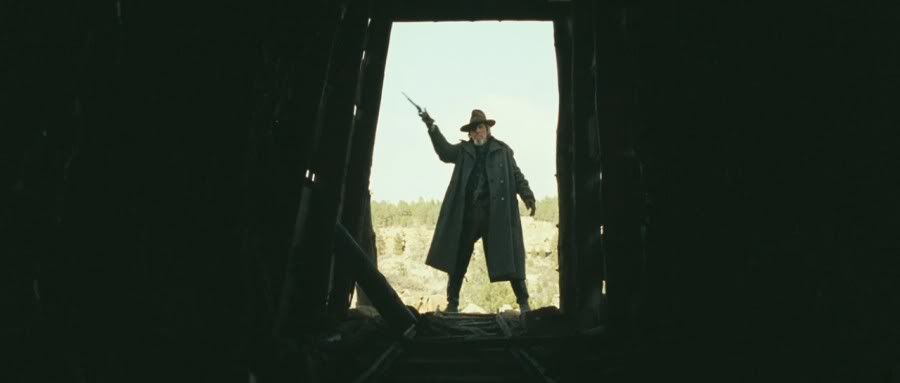
1.28, True Grit (Joel Coen and Ethan Coen, 2010)

Photo Sharing and Video Hosting at Photobucket
1.29, Five Dedicated to Ozu (Abbas Kiarostami, 2003)


FEBRUARY

Photo Sharing and Video Hosting at Photobucket
2.03, The Killer (John Woo, 1989)

Photo Sharing and Video Hosting at Photobucket
2.04, Anchorman: The Legend of Ron Burgundy (Adam McKay, 2004)

Photo Sharing and Video Hosting at Photobucket
2.05, Step Up 3 (Jon M. Chu, 2010)

Photo Sharing and Video Hosting at Photobucket
2.06, Let Me In (Matt Reeves, 2010)

Photo Sharing and Video Hosting at Photobucket
2.07, Shutter Island (Martin Scorsese, 2010)

Photo Sharing and Video Hosting at Photobucket
2.08, Pulp Fiction (Quentin Tarantino, 1994)

Photo Sharing and Video Hosting at Photobucket
2.09, Aqua Teen Hunger Force Colon Movie Film for Theaters (Matt Maiellaro and Dave Willis, 2007)

Photo Sharing and Video Hosting at Photobucket
2.11, Bad Lieutenant: Port of Call New Orleans (Werner Herzog, 2009)

Photo Sharing and Video Hosting at Photobucket
2.12, Inglourious Basterds (Quentin Tarantino, 2009)

Photo Sharing and Video Hosting at Photobucket
2.13, Adventureland (Greg Motolla, 2009)

Photo Sharing and Video Hosting at Photobucket
2.14, Boogie Nights (Paul Thomas Anderrson, 1997)

Photo Sharing and Video Hosting at Photobucket
2.18, Casino Royale (Martin Campbell, 2006)

Photo Sharing and Video Hosting at Photobucket
2.19, The Terminator (James Cameron, 1984)

Photo Sharing and Video Hosting at Photobucket
2.20, Halloween (Rob Zombie, 2007)

Photo Sharing and Video Hosting at Photobucket
2.21, Fight Club (David Fincher, 1999)

Photo Sharing and Video Hosting at Photobucket
2.23, Curb Your Enthusiasm, "The Bat Mitzvah"


MARCH

Photo Sharing and Video Hosting at Photobucket
Aqua Teen Hunger Force, "Universal Remonster" (Matt Maiellero & Dave Willis, 2003)

APRIL

Photo Sharing and Video Hosting at Photobucket
Taxi Driver (Martin Scorsese, 1976)

Photo Sharing and Video Hosting at Photobucket
Robot Monster (Phil Tucker, 1953)

Photo Sharing and Video Hosting at Photobucket
If God Is Willing and Da Creek Don't Rise (Spike Lee, 2010)

Photo Sharing and Video Hosting at Photobucket
The Last Temptation of Christ (Martin Scorsese, 1988)

MAY

Photo Sharing and Video Hosting at Photobucket
Day of the Dead (George A. Romero, 1985)

Photo Sharing and Video Hosting at Photobucket
Suspiria (Dario Argento, 1977)

Photo Sharing and Video Hosting at Photobucket
Snow White and the Seven Dwarfs (William Cottrell, David Hand, Wilfred Jackson, Larry Morey, Perce Pearce, Ben Sharpsteen, 1937)


Monkeyshines No. 1 & Monkeyshines No. 2 (William K.L. Dickson, William Heise, 1889/1890)

JUNE

Photo Sharing and Video Hosting at Photobucket
Rejected (Don Hertzfeldt, 2000)

1.28.2011

The Social Network

Photo Sharing and Video Hosting at Photobucket

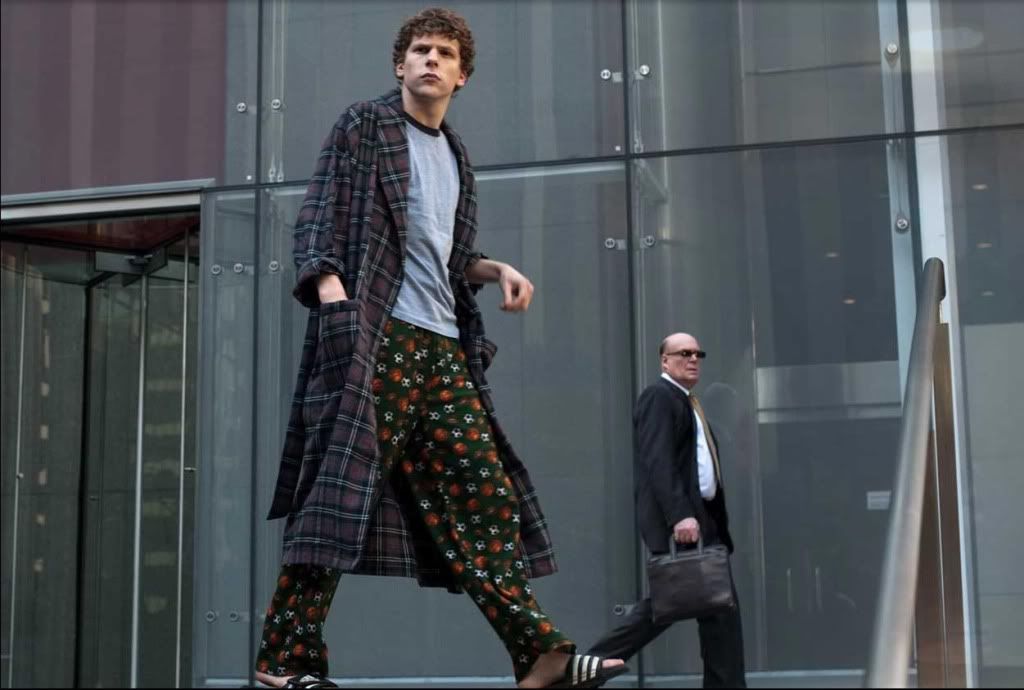
As I've already named it my personal #1 movie of 2010, I'll go ahead and assume that my affection for The Social Network is generally understood. Like GoodFellas, Pulp Fiction and David Fincher's own Fight Club, The Social Network strikes me as being as breathlessly composed as almost any work of the cinema and is equally infectious, like a great pop song. Fincher's kino eye, screenwriter Aaron Sorkin's ear for wittily self-conscious dialogue (the kind that people actually use, thanks most likely mostly to the long-term effects of the movies themselves) and Trent Reznor and Atticus Ross's addictive electronic score make for something of a perfect storm. Similarly consistent praise is due to the cast; Andrew Garfield is a personal favorite, but the lot are not unlike the perfectly oiled cogs to a massive, beautiful, funky machine.

For a movie so popular amongst both audiences and critics, the level of discourse surrounding has nevertheless struck me as surprisingly minimal, which is to say, both the praise and the dissent have struck me as almost equally weak in their articulation (such lack of discussion has been a particular buzzkill to how I typically enjoy these things). Early hype labeling the film an heir to Citizen Kane was both blessing and curse; as a friend aptly noted, the structure of the film acutely parallels that of Orson Welles' oft-named G.O.A.T. masterpiece, possibly more so than any non-parody of that film has ever managed, but such lofty praise can easily backfire under even the most conducive circumstances. (I'm speaking of critical hype, for the record, not Fincher's own tongue-in-cheek declaration that his film would be the Kane of John Hughes movies, a title I'd think appropriately bestowed on Adventureland, which, coincidentally, shares the same lead.)

When concerning a social trend that has thus far included close to 1/10th of the world's population (over 500 million have joined Facebook's network as of 2010), it's hard not to brush with the topics that guide the very essence of modern life, and part of The Social Network's appeal surely lies in the fact that it feels so very current -- a self-aware time capsule. But the film only incidentally examines the nature of this digital tsunami (Sorkin is allegedly computer illiterate; as the cute final scene demonstrates, however, he certainly grasps what Facebook can and does mean to millions of people) as it carries on with its primary task of scrutinizing the (interpreted, not real) character of Mark Zuckerberg (Jessie Eisenberg), the gifted programmer who launched the site in 2003 and is represented here by what are the likely questionable depositions following court action taken against him.

Early indicators set The Social Network aside from absolute factuality, and we're spared that most dubious of screen captions, "based on a true story." As is typical for movies based on real happenings, details have been changed aplenty, and as the adage goes, never let the facts get in the way (of a good story). To these eyes, The Social Network makes no claims to historical truth, and in doing so probably gets to the core of the material's truths all the better. I've not read Ben Mezrick's The Accidental Billionaires, on which Sorkin's screenplay is based, but as usual, I'm comfortable with whatever diverges have taken place so long as they remain in service of the film –- not some sloven adherence to trite details.

In collapsing the events of many years into a single streamlined narrative, Sorkin's screenplay is almost certainly deliberately indebted to Kane, a quality that wordlessly speaks to Zuckerberg's own inflated ego. As presented here, Zuckerberg's conception of Facebook followed his being courted to develop a similarly conceived web site meant to offer exclusive dating opportunities to Harvard students; after Facebook launched, Zuckerberg's would-be business partners took legal action, followed by former Facebook CFO Eduardo Saverin (Andrew Garfield), who was pushed out of his stock ownership in the company in an apparent revenge stunt by Zuckerberg. As the early stages of Facebook's creation are recounted via two different court hearings in overlapping (and seamlessly logical) fashion, we see Zuckerberg squirming his way through the proceedings, dodging questions, lying methodically, defying the laws of intellectual property and showing a general contempt for the legal system. His creation being certainly his own in the majority, the film doesn't slander his character for bad business -- just bad friendship.

It speaks to the sublime ambiguity of the film that what little diversity of opinion exists on it is largely of a directly conflicting nature (key example: those who think the film blesses Zuckerberg's questionable actions versus those who think it rakes him over the coals for them entirely); as someone points out at a key moment in the film, "You're not an asshole, Mark, you're just trying so hard to be" (the term is only used three times in the film, the first two coming from those who were closest to Mark, now pushed away). Longtime indie favorite Eisenberg (The Squid and the Whale, Zombieland) lends Zuckerberg what feels like a natural likability buried within a deeply insecure nature, but he doesn't warm up the character in audience-friendly terms (in other words, he lets you decide).

The machine gun dialogue of the opening scene sets the tone for both the character and the film, and speaking personally, I've been exactly that kind of thick-headed guy (in a crowded restaurant, albeit minus the educational condescension and assumptive judgment about “the door guy”), and I appreciate the hell out of any film that can be honest about that kind of character without relegating the perpetrator to the status of sheer dickhead. As a representation of this moment in history, we surely cannot be the final judge on the film's effectiveness (only hindsight will allow such), but as a touching look at friendship falling outs, its personal meaning to me remains unrivaled.

Directed by: David Fincher Screenplay by: Aaron Sorkin Starring: Jesse Eisenberg, Andrew Garfield, Justin Timberlake, Armie Hammer, Max Minghella, Josh Pence, Brenda Song, Rashida Jones and Rooney Mara 2010, Rated PG-13, 120 minutes

127 Hours

Photo Sharing and Video Hosting at Photobucket

For all intents and purposes, Danny Boyle perfected his distinctively flamboyant music video-ish mode of filmmaking with the infectious and masterfully crowd-pleasing -- if somewhat slight -- Slumdog Millionaire, so it is perhaps inevitable that the similarly show-offy 127 Hours feels a bit redundant. Frequently utilizing split-screen panoramas and editorial effects that display everything from otherwise unrelated mood-setting imagery to Hulk-like multiple angles of the same event, Boyle aims (and, I would argue, mostly succeeds) to turn the infamous experiences of Aron Ralston (a recreational hiker who, in 2003, while alone in the proverbial middle of nowhere, inadvertently dislodged a large boulder and fell with it down a canyon shaft, his right arm becoming pinned between them, utterly immobile; after the titular time span, he freed himself by cutting off his arm with a dulled pocket knife) into an existential riff on determination, self-examination, and the sheer will to survive. Boyle's impulsive creative choices often lash out with seemingly little rhyme or reason, and his hyperactive editorial dashes tend to work best when they're emulating the thought processes of the main character (at one point literally, in a tongue-and-cheek talk show sequence), but they also develop collectively, not unlike the satisfying rumbles of an intense storm.

Alas, Boyle's awareness of his chosen style's limitations isn't among his present strengths, and one wishes that he'd handed the spotlight over to the almost one-man-show that is James Franco (he's as good to this film as Tom Hanks was to the similar, superior Cast Away) about twice as much as he actually did. It's not just that Boyle's flair wears itself out a bit as it goes on (rather than building to a crescendo, it just kind of fizzles out) -- it's that Franco is also just that good. As the loner Ralston, he doesn't just hide from people (implied and stated antisocialism abounds), but himself; he gradually becomes naked to himself, and we watch the unraveling with empathy. By the time he takes to the foretold limb hacking, the character seems stripped away to prehistoric carnality. As a warning to those put off by the apparent levels of violence: This squirmy viewer (icky body stuff bothers me, even though I love The Fly and even enjoy stuff like The Human Centipede, disturb me though they do) was able to get through the eventual mutilation with relative ease, so those deterred by intense levels of drawn-out violence can be at east. Then again, once you've seen Irreversible (twice), you can sit through just about anything. Now that I've gotten way off track, back to 127 Hours: It's a good movie, nothing great, but certainly worth a watch. I'm out.

Directed by: Danny Boyle Screenplay by: Danny Boyle and Simon Beaufoy Starring: James Franco, Amber Tamblyn, Kate Mara, Clémence Poésy, Lizzy Caplan, Treat Williams and Kate Burton 2010, Rated R, 94 minutes

1.26.2011

When We Leave

Photo Sharing and Video Hosting at Photobucket

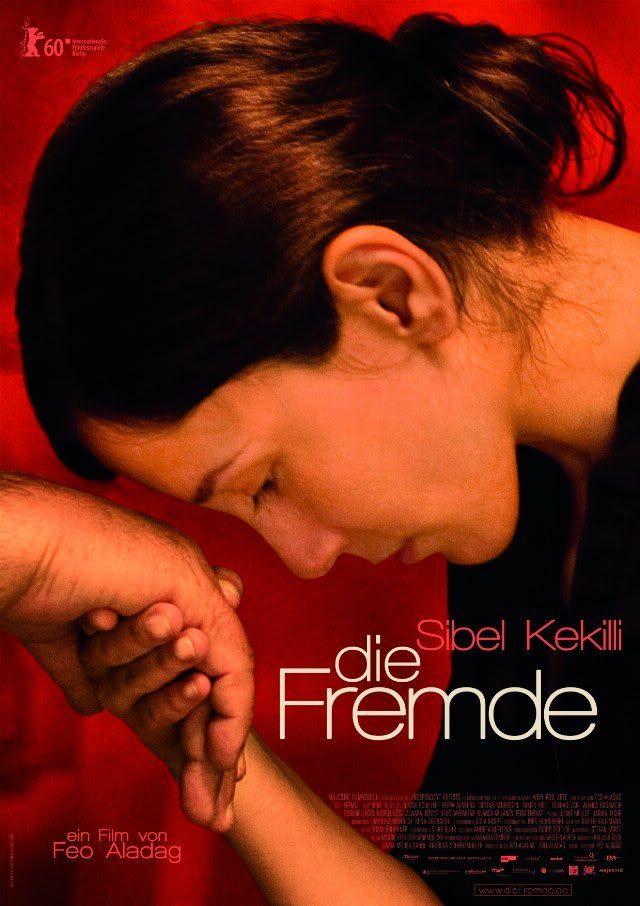
When We Leave is as shrill as any handful of the interlinking paths from Paul Haggis's Crash (spoilers ahoy), and while a climactic scene that similarly involves both a child and a gun makes the film's indebtedness unmistakable, the film differs from 2004's Oscar winner in that it actually captures something resembling legitimate human emotions. As far as pro-humanitarian arguments go, one could do far worst for subtlety, but while the film's points are on target and virtually inarguable (modernity = good, ancient barbaric misogyny = bad, etc.), the degree to which the script flatters the intended liberal audience won't do much for the non-believers. In this case of calculated injustice, a traditional Turkish family (living in Germany) rejects the wishes of their daughter Umay (Sibel Kekilli), who chooses to leave her abusive husband and take their young son with despite cultural traditions dictating the husband's absolute final say (the still accepted practice of "honor killings", in which dishonorable women are typically killed by family members, is the film's key social target). The material has great potential but the ultimate shock is softened by a common foreshadowing device that doesn't contribute anything thematically -- rather, it exists merely to pull the rug out from under you. What does move is the conflicted humanity on display via the cast, who collectively embody the social disharmony that pressures so many people into behaving into the hands of the past (lead actress Sibel Kekilli in particular is sheer radiance). Screenwriter/director Feo Aladag is a hip to human suffering as she is prone to lay it on thick; a thematically encapsulating line of dialogue -- "Leave God out of this, it has nothing to do with Him" -- suggests too knowing a summary, not unlike a bumper sticker slogan. While a step in the right direction for prestigious socio-political issue films, When We Leave nevertheless remains too little Do the Right Thing, too much Crash (which is to say, it's a borderline cheat).

Directed by: Feo Aladag Screenplay by: Feo Aladag Starring: Sibel Kekilli, Nizam Schiller, Derya Alabora, Settar Tanriogen, Tamer Yigit, Serhad Can, Almila Bagriacik, Florian Lukas, Nursel Köse, Alwara Höfels, Ufuk Bayraktar, Blanca Apilánez and Rosa Enskat 2010, NR, 119 minutes