Oct 13, 2015

GoodFellas and good food at the Alamo


Firstly, a confession of sorts: I don't have the statistical knowledge to thoroughly discuss the finer points of today's moviegoing market from an economic standpoint. More to the point, I don't want to. Anyone actually interested in this kind of metadata is welcome to it; not me. Even if there were 72 hours in a day and our lives comparably longer for it, I'd likely still find it a corrosive waste. (Oh, your stock in Disney went up again? I'll let you know the next time a Marvel movie doesn't put me to sleep.)

That said, I feel more than qualified to talk about today's moviegoing market from a consumer standpoint. That word, consumer, carries baggage of the ilk I just tried to distance myself from, yes, but even an idealized perspective on film as art must acknowledge the forces at play, even when we're reticent to play by their rules. We're consumers of a product that, from case to case, may or may not also be art (the reverse can also be said on rare occasions), in an industry entrenched with injustices since its inception. On a playing field where John Ford explicitly distanced himself from the term artist, or where Roger Ebert once placed Spider-Man 2 in his top five films of the year while also maintaining that it is not art, I think the closest we can come to truth is to acknowledge that everyone has their own version, and few, if any, are without some level of implication, and that the more gates are open, the better off for everyone.

As a consumer of movies born in Ronald Reagan's United States, it should come as no surprise that Martin Scorsese's GoodFellas was a watershed moment in my cinematic upbringing. Even though the first time I saw it was in the form an edited, pan-and-scan television cut, it's hold was remarkable. Flash forward 18 years, and I've since purchased it three times (letterbox VHS, DVD, and Blu-ray), but when my local Alamo Drafthouse announced that they would be hosting a screening of the film's new 4K restoration to be served with a specifically curated four-course meal, there was no doubt that I would have to be there.


I've not kept track of which classics I've seen theatrically in 4K; off the top of my head, this and last year's re-release of the original Texas Chain Saw Massacre might be it. Much as I love the tactile resonance of physical film, I have eyes, and both of these experiences were a glory. Watching GoodFellas again this past weekend, I was struck by the level of grain that was captured in the restoration, and with the exception of the absent reel markers and inevitable scratches, as well as the occasional freeze frame employed by Scorsese (in which the flickerless projection is most apparent; pictured), the experience was almost film-like.

Hollywood is fighting to keeps asses in seats, but if there's a way to fight the growing trend of people saving their dollars by waiting for Redbox, it's the Alamo way, which I've come to think of as being an improvement on the comfort many people take in the living room experience. You likely know the general deal – the theater is also a full-service bar and restaurant. I'm not a food critic, but as someone who enjoys good things, I've never had so consistently excellent an experience with either such establishment (I just checked my Letterboxd records, and I've seen at least forty-four shows there in the last five months, and I think I've ordered food or drink at all but one of those times). The GoodFellas dinner was four courses, beginning with a light tomato and mozzarella cheese salad, then crostini with olive salad and garlic, followed by a main course of baked ziti, and a dessert of tiramisu, which I should have taken into account before driving home. The leftovers themselves would shame a great many stand-alone restaurants, where projection and aspect ratios and crowd control aren't all matters of concern. When I'm no longer in driving distance from an Alamo location, to paraphrase James Joyce by way of Sean Penn, I'll feel the lack.

The GoodFellas screening, alas, did not go off perfectly, albeit in ways that made me feel all the better about where I was. I find myself judging theater chains in much the same way I find myself measuring my favorite comedians against each other, which is to say, how they function when something goes wrong. The (I'm assuming) family that was seated immediately to my right has already accelerated my eventual transmogrification into a grouchy Clint Eastwood type defending his plot of land, and as much as I wanted to wring their necks, the feeling towards them that I'm trying to settle on is abject pity. Their lack of awareness concerning their surroundings was awe-inspiring; despite the “THIS AUDITORIUM IS NOW A NO TALKING ZONE; KEEP YOUR CELL PHONE DARK, SILENT, AND OUT OF SIGHT” announcement that plays immediately before the movie, these evolutionary prodegies took out their phones and used their screens/flashlights to look at their menus, despite the warm illumination beckoning from the helpfully-placed lights under their tables. Before long, a runner swooped into to explain to them that cell phones were not allowed for any purpose and that they could read their menus easily with the provided lights, and with what I imagine must be a highly practiced tactfulness, in place of the string of nasty similes I'd have probably unloaded as an offended patron.


But all had not ended; at least three in this group of five sustained a low chatter through the film's opening scenes with the young Henry Hill. Already infuriated, I turned to the two closest to me, roughly 15 and 20 year-old boys, and told them flatly that if they kept talking I would report them. Someone already had, however, and another runner (maybe it the same person; how they do their jobs so well in the dark is beyond me) arrived promptly to issue a firm warning.

This traveling circus more or less behaved for the rest of the movie. A head-slapping highlight: the shining star sitting closest to yours truly asked his maybe-sibling, during the wailing strings of “Layla,” “what's getting made?,” reaffirming my belief that some people simply don't deserve good things. What happened next was something I'll never forget: during the final, cocaine-fueled stretch of the film, this ne'er-do-well in training took out his phone. The screen wasn't on, but he nonetheless took out his phone and was fidgeting with it, unable to sit still lest the mortal terror of existence overtake him, apparently, audibly tapping it at one point until I gave him a glare that I find myself hoping haunts him later in his life during moments of intimacy.

In hindsight, I realized that I could, and should, have raised an order card -- as per the warnings, cell phones should be out of sight, screen illumination notwithstanding -- but at that point, I was more concerned with Michael not letting the sauce stick. These experiences, frustrating though they are, serve two purposes: they remind us how good things are otherwise, and they satisfy a certain anthropological interest on my part. As a young adult in an Apple age of convenience, I'm terrified of losing my autonomy and diminishing my attention span; I realize that I don't need to worry that much. Here I am, trying to carve out time to rewatch The Turin Horse uninterrupted; this little oaf, and likely the bulk of his infected gene pool, on the other hand, couldn't even make it through motherfucking GoodFellas – arguably the cinematic equivalent of lighting in a bottle.

In the words of Robert De Niro's Jimmy (not Joe Pesci's Tommy), “what is the world coming to?” But I know better; it's long been like this, just in different forms and details. There's always a tide to fight, against thoughtlessness and impatience, and anyone who loves anything will eventually have to at least figuratively get into bed with something or someone they don't like. It's as possible to avoid bad crowds as it is to avoid insects, and to have even the vainest hope of doing either, you'll probably have to move to Antarctica. In the dozens of trips I've made to Alamo, I can count the negative impressions I've gotten from my fellow patrons on one hand, which is not just a better success rate than virtually every other theater I've ever attended, but also even the most ideal Thanksgiving meal with one's extended family. At the end of the day, the only bad thing about the GoodFellas dinner party was that more people didn't show up. Remember the Alamo.

Sep 26, 2015

My Summer at the Alamo

I was going to start this piece off by addressing my dedicated readers, but that would be a misnomer. Indeed, I have some friends and colleagues who seek out what I have to say, to which I am flattered, but in order to be dedicated, there must first be something to dedicate oneself to, and the fact is that I've barely written much of anything for almost a year, and the writer's block had started kicking in well before that. One of my editors offered, some time back, that it seemed like I just didn't love writing about movies anymore, and he was right, no matter how much I didn't want to believe it.

I don't intend to dwell on this, but instead to embrace it as some sort of necessity in my personal life. I moved to Pittsburgh following my mother's passing, and for all of what seemed like the right reasons, I moved to Denver earlier this year. It didn't take long to realize that I need to go back, for reasons I couldn't see except from afar. I'm comfortable with this, but it doesn't mean the temporary limbo I've found myself in is any less strenuous. For now, though, I'm optimistic, and I trust in patience and my gut, and that they're pulling me in the right direction. They have so far.

Denver it is for now, and as I so often have, I've found some refuge from life's more weathering aspects at the movies. Work, exercise, and sleep (even more of a necessity than usual as I'm trying to kick caffeine for good) take up most of my time, otherwise, and at this point, there's no sense in trying to maintain much sense of objectivity. I've been a fan of the Alamo Drafthouse since a trifecta of visits I made with a friend to one of their Austin locations in the summer of 2010, at which I was blessed with the opportunity to see the now cult-certified Miami Connection in its effective public re-premiere. When I recently learned that Film Freak Central critic and friend Walter Chaw had become the general manager of the new Littleton location, I was ecstatic, and seeing this location was near the top of my list of things to do once I got to Denver.

Walter proved to be just as affecting and generous in person. We first met at a further nexus, of sorts, for yours truly. One Matt Zoller Seitz was attending the screenings of two films in a cross-promotion of his books on the films of Wes Anderson and the not-yet-published Oliver Stone Experience. Matt's presence in both the film world and my life, and as someone who has also experienced great loss, can't be put in words that I think do it justice. He's been like a personal lighthouse, or Yoda, perhaps. We spent the night talking about the films being screened, The Life Aquatic with Steve Zissou and Natural Born Killers, and also “Bojack Horseman” and the yet-unreleased Jurassic World, and how fucking hard and great life can be. Whatever forces are or are not at work in the universe, it felt like exactly where I needed to be, wherever else I'd go from there.

That was the best Alamo experience I've had so far, and I don't expect it to be topped. But one of my first – the opening night of Mad Max: Fury Road – came close, and that the movie itself represents a sort of encapsulation of my life right now (Charlize Theron helped me see the Furiosa in my own life, and patriarchy just sucks, seriously) makes this all feel like a memoir chapter just waiting to be written. It's certainly defined my summer. To make some perfect even better, opening night of Fury Road was screened with one of the Alamo's famous multi-course, beer-paired meals served throughout the movie. Black bean pork chili, served with tortillas and – I love this – in a can, because Mad Max.

You'd be fair in thinking that the servers walking about during the movie would be terribly distracting, but on the whole, I find they're not. In the dozens of visits I've made to the theater since, I keep experiencing moments where my drink or check seems to have suddenly apparated, because I wasn't even aware the runner had stopped by. Tip them well. They deserve it.

Anyhow, Mad Max, opening night. There almost aren't even words for it. I've seen it now seven times theatrically, plus I don't know how many times at home, plus twice in manually-adjusted black and white, plus once in the newly-unveiled fan edit subtitled “black and chrome.” I've come to the determination that it's the greatest action film in at least a quarter century. It has the cinematic moment of the year to date, for my money's worth, and it was that moment that solidified just how capital-M Motherfucking awesome the Alamo is.

You know the moment? Yeah, you remember it. When Nux has chased Furiosa into the storm, and Max grabs the flare at the last second, and the two vehicles collide, and the flare drops, and expires. I get chills just thinking about it. That moment proved that the Alamo was a special place because, for the next 45 seconds, the movie is essentially silent, and so was the audience. No talking. No whispering, which is also talking. No clanking glasses or silverware in a theater full of delicious food and beer that had already been served to its patrons. Other audiences I've seen it with have somehow been noisier, with only their asses in regular movie theater seats and popcorn and Skittles as their instruments. Some great feeb even made an MST3K-esque joke once, at a second run theater, about Max's car insurance going up (which literally makes zero sense in context). Not us. We were in rapture. I had found my place of worship.

The diversity and emphasis on the quality of the films that play at Alamo are well worth what is, in my mind, the most significant investment I have to make when visiting it – the time. 40 minutes' drive each way, if I'm lucky, and the necessary return drive limits one's alcohol choices, not that a second feature with a quesadilla isn't a bad way to sober up (and hey, I thought Trainwreck was kind of awesome, too).

In the further interest of full disclosure, I feel that I should add that while I have been a paying customer at the Alamo, I have also been treated as a guest on a number of occasions. My budget at the time of Matt Seitz's visit did not allow for me to attend both screenings; I committed to Life Aquatic, no offense to Mr. Stone and one of the best films of the 90s. Walter had me as a guest at Natural Born Killers, which also came with three beers and an amazing cheeseburger that they then replaced with a fresh cheeseburger when I asked for a doggy bag! It was, no doubt, one of the great nights of my moviegoing life, and an oasis in my own personal desert, and without Walter's generosity, it likely wouldn't have amounted to a third of what it did.

I assume that it's stating the obvious that the moviegoing experience kind of blows these days, mainly, if you're not careful. I saw a Terrence Malick film with a general audience once; never again (which is to say, no evening shows at the cineplex, which is where I saw his The New World. I similarly refuse to go to a horror movie on an opening night anymore, although the exception I made for It Follows at Pittsburgh's Hollywood Dormont theater was carefully vetted and ultimately rewarding one, because great horror films rarely play better than they do with a mostly full and respectful audience at a professionally maintained, classy theater. (If you get a chance, their 35mm copy of The Rocky Horror Picture Show is beautiful). The Mile High Horror Film Festival is next week, and I'm silly with excitement. Typical horror movie crowds notwithstanding (words I hate to write, for I love the genre so), I feel like I'll be able to trust my fellow patrons. It took three months of regular visits for me to see someone on their phone there, during a movie, and the offender was quickly removed after myself and others had already complained. That level of infrequency is, as far as I'm concerned, a miracle. But maybe it isn't. It only makes sense that great business courts great clientele, and Alamo has both.

There's so much going on at the Alamo that I frequently have to pick and choose, not just because of the needs of my wallet, but because the screenings are literally overlapping. Alas, you can't do everything you want, film or otherwise, a fact that has resulted in a much more humble and rewarding life since I've taken it to heart. What Alamo guarantees, however, is that there will always be something awesome there, whenever you can go, and as a proponent of film exhibition, screenings of Chinatown, The Dark Crystal, Grace of My Heart, Do the Right Thing, Time Bandits, O Brother, Where Art Thou?, Creature from the Black Lagoon (in 3D!), Scanners, The Abyss, Never Been Kissed, and an amazing genre oddity known as The Devil Fetus, among others, on 35mm, have been a great boon to my soul. This coming month sees a lot of great horror fare on the format, from The Changeling to Carnival of Souls to Antichrist. I wish I lived closer; it's the largest contributor to my odometer, by a walk.

As someone with experience both showing movies (I was a projectionist at Allentown, Pennsylvania's 19th Street Civic Theatre) and serving food in exchange for an hourly pittance, I know how hard it is to pull off either of those things with consistent quality. Alamo does well by it's customers, and everything else is just superlatives at this point. The extent and variety and creativity of their events is mind-boggling, from exquisitely curated meals based around a particular movie (the molten lava cake at the end of Terminator 2 was a brilliant touch) to filmmakers and other artists visiting the theater (tonight, I'll be seeing L.A. Confidential with James Ellroy in person), to all manner of audience participation (the Inside Out message board, pictured, broke my heart even more than the movie itself), concerts, and special menu items. At the Littleton location, you can still order the They Live-inspired Kick Ass Bubblegum Milkshake, and you should.

To brings things full circle, the melancholy heart of the matter of my life now is, I don't feel at home in Denver. My family and loved ones are far away, and my family, as am I, are getting older, and as much as I'm glad to have made a change in my life, I don't think this is it. It reminds me of Matt Seitz's blog The House Next Door, and more specifically, the adage from which it takes its name: Sometimes in life, you have to drive around the block backwards in order to get to the house next door. I think that that's what I'm doing.

Until this leg of the journey ends, the Alamo feels like home – as all good movie theaters do. Every Alamo location I've been to is second-to-none by any standard, and the fact that a good friend is holding the reigns to this particular location only makes it better that I'm lucky enough to be there this much at this time of my life. If justice prevails, there will be one in every major city before three more Star Wars movies are released, at which point you can all tell me how right I am.

Jun 12, 2015

Rebels of the Neon God (1992): A-

After the existentially fraught, almost magnificently crushing experience of Stray Dogs (released stateside last year), Tsai Ming-liang's debut feature, 1992's Rebels of the Neon God, feels positively mainstream. Never officially released in the United States before now, it's a remarkable film, not only for the fact that Tsai's use of composition and extended, languid takes was already formidable-bordering-on-consummate, but also for the rear view it offers into the west's own global effects, now presented not unlike something preserved in amber.

The neon god of the title refers to Nezha, a Chinese deity evoked explicitly by at least two characters, but more so does it refer to the cityscape habitat this film's small band of characters find themselves struggling vainly against, almost unaware. Two small-time thieves are our introduction to this world, as Ah Tze (Chen Chao-jung) and Ah Bing (Chang-bin Jen) break into a payphone and various other vending machines for the loose change waiting inside. One senses that their handiwork is less out of financial need than because they're feeding into their own projections of machismo; a telling moment occurs early in the film when Tze's girlfriend, Ah Kuei (Yu-Wen Wang), asks him after a night of drinking if they raped her, her tone equal parts casual and disturbed. Their story intertwines with that of Hsiao Kang (Lee Kang-sheng), a troubled student struggling to satisfy the wishes of his parents.

Rebels features many cameos by popular works of western cinema, from a poster of Rebel Without a Cause in the back of an arcade to an implied shout-out to Taxi Driver when one of the characters purchases a gun for some casual target practice.  These hallmarks are but a piece of the socio-cultural architecture that at once shapes and torments these characters, who spend most of their time laying down (not necessarily sleeping), or pleasuring themselves, and each other. A flooded apartment building suggests another metaphor for a roving, ill-defined existence within the film's larger microcosmic framework; sandals, cigarette butts, and other detritus is cast about as dirty water surges upward from the floor's intended drain, much like these characters have less autonomy than they realize within a society unable to quell its own moral plumbing.

Tsai's film is nothing if not a great expression of sadness and longing, particularly the kind so often impossible to articulate when one is in the midst of depression. Numerous details are left unexplored -- why Hsiao Kang's scooter is towed, for instance -- with the cumulative impact being that so much of life affects us without explanation, and maybe it's fruitless to dwell on those aspects. The minimalist story, such as it is, is tertiary to Rebels' lyrical and visual qualities. The acts of vandalism perpetrated by these characters seem minute compared to the larger dehumanization implicit in nearly every frame. An act of revenge instills one of these souls with a momentary catharsis, but the scenes proves melancholy, as the viewer knows better the fruitlessness of such deeds (see also: the wasted efforts to plug the aforementioned apartment drain). Rebels of the Neon God is one of the great films about modern unrest and the pangs of youth. I can't wait to watch it again.

Sep 30, 2014

Goke, Body Snatcher From Hell (1968)


It seems impossible to not mention the similarity between Goke, the Body Snatcher and the same year's Night of the Living Dead. Both are quasi-science fiction/horror films about, among other things: a small band of people trying to survive, interplanetary happenings, racial politics, humanoid monsters that devour their victims in whole or part, and a conclusion that doesn't aim to have you skipping out of the theater. In it's own way, Goke is just as brilliant, beautiful, and entertaining as Romero's first zombie masterpiece. Here, it's a flight of passengers that crash lands on a remote island, after sighting a UFO. Divulging further details would be criminal.

Visually, Goke is almost an inversion of Night's impressionistic black and white imagery; the widescreen Fujicolor images burst with hypnotic splendor, suggesting nightmares remembered with all the exuberance of a kid in a neon-colored candy store. The opening setpiece is a hard achievement to top, yet the film continues to outdo itself, barreling through character drama and dreamy monster menaces with a remarkably elastic sleight of hand. As archetypes, the broad-stroke characters fit the B-movie bill snugly, not that it matters in the bitter end. Already a great achievement, Goke fully commits to the course of its vision, and the end result is something at once savagely beautiful and sure to have caused many nightmares in those whose young eyes saw it.

Sep 12, 2014

Sin City: A Dame to Kill For (2014)


Have my tastes changed since I last saw the original 2005 Sin City, or is it nine years later and we now have a shitty sequel on our hands? The latter possibility is the obviously correct one to these eyes, not the least because the original film had its pick of the litter from Frank Miller's original serialized creations. Nor is it entirely the fact that new work from the past-his-prime (some would also say taste) artist comprises around half of this new feature, and also to blame, clearly, is Rodriguez himself, who has now slid into laziness courtesy his self-indulgent and shapeless love affair with the ease of digital cinema.

No doubt cinema comes in all shapes and sizes, but it's to no one's advantage that the recent work of Rodriguez (the horrid Machete jokes and now this, both outdone by the perfunctory fourth Spy Kids film, which is specifically not saying much) is defined by its half-assedness, in all of the ways that that sounds bad, and them some. Every take feels rushed, perfunctory, and unfelt, and many of them insincere at that. Some of the performances still bring the pathos of the original film, but at best, Sin City: A Damn to Kill For can be described as the talented performers of an apathetic circus master, all wound up with no place to go (or, in the words of Trent Reznor, an echo of an echo of an echo).

Reciting plot points from this bastardization of a sequel is enough to nudge me towards depression – not just because the worldview the film espouses is ultimately bitter and cruel, but more so because it lacks the courage of its convictions. Rodriguez sells these ideas without owning up to any of them. It's nihilistic dress-up. Maybe he only fooled me last time, but he still did so beautifully. The permeation of death here is, on the other hand, is not only meaningless, but soulless, less neo-noir than Underworld bullshit, and without enough of a context to establish, say, why Mickey Rourke is back after biting the dust last time (some of us haven't committed the books to memory, mind you – it's called having a functioning adult life, paying off debt, and being interested in things from before the year of one's birth, among other things), or even just simple stuff like visceral edge and narrative thrust, the effect is that of the kind of stale greatest hits albums Aerosmith seemed to put out every three months during the 90s. We remember how you used to kick ass - now please do more than just remind me of what once was.

While there's still something stirring about Nancy (Jessica Alba, still not nude), here edging closer toward self-destruction, with Hartigan (Bruce Willis) now forced to try to help her from the other side of mortality, these are moments adrift in a nothing with a great choice of skin. Is it a memory, or a fluke? Maybe both. It can be well argued that the movie looks good, but without a reason to care, why should I want to look at it? What with the tsunami of violence herein so lacking in wit or substance (and, frankly, the style isn't all that this time around, either), it becomes full-on parody without even necessarily recognizing it, and quite possibly everything the detractors of the original said was wrong about that film. Rodriquez is not without talent, but I can't tell why he does it anymore.

Jul 22, 2014

Rage (2014)


Rage (aka Tokarev) begins with what appears to be unbridled enthusiasm for otherwise well-worn genre trappings, although it's difficult to determine just how much of this is the film riding the coattails of one Nicolas Cage's particular brand of bottled-lightning near-hysteria. Cage is Paul Maguire, a former criminal whose long-standing efforts to go straight are infringed upon when his teenage daughter is kidnapped, ostensibly by Russians with a long-standing grudge. With no shortage of bloodshed or cruelty, Paul enlists some of his friends to search for clues as to his daughter's whereabouts, and the motives of those who took her.

An early scene in which a near-catatonic drug addict is tortured for information is but the first of many miscalculations that rob the film of its initial gusto without adding anything in the way of moral gravitas. The theme of cyclical violence is an admirable one to unpack, particularly within the context of what is ultimately a nihilistic thriller, but ultimately both this narrative conceit and director Paco Cabezas' bag of tricks wear thin, and even a small parade of faces familiar to such proceedings (e.g. Peter Stormare, Danny Glover) are unable to do much more than go through the motions. Rage is less disrupted by moral confusion -- indeed, it's sense of ambivalence towards violence is almost necessary, in the same sense that even anti-war films can be exciting -- than by a stultifying apathy, it's sobering conclusions heartfelt, but ultimately unearned.

May 4, 2014

The Amazing Spider-Man 2 (2014)


Despite the talent put into it, 2012's The Amazing Spider-Man failed in large part as a result of its own redundancy. Not merely serving as an almost-remake of a film barely a decade old, the entire affair reeked of something thrown together as a last-minute necessity (which, after Sam Raimi walked away from a potential fourth film), its plot mechanics an unfortunate amalgam of franchise-establishing necessities and screenwriting so perfunctory, one almost wishes it had been written via formula instead. The in-film absence of pathos overwhelmed any flashes of wit or emotion, and the result felt stillborn at best. (My review of that film, penned after a midnight screening that barely enthused my caffeine-addled eyes, was entirely too kind; a second viewing negated most of my residual fondness.)

With some skepticism, then, I approached this follow-up, which, at least on the page, is looks like a committee project run amok, so jam-packed with antagonists and character crises that it rivals the overstuffed lineup of Raimi's ultimately doomed third film. As an example of how the auteur touch can enliven any otherwise waterlogged corporate product, I still champion Spider-Man 3 (the first two films of that cycle are nearly perfect), and now The Amazing Spider-Man 2 (hereafter Spidey 2) joins its ranks. Webb's affecting lightness finally manifests amid the competently (if obviously) delivered plot, and the tone is so distinct and personable that even the choices that could be justifiably considered mishaps (particularly Jamie Foxx's nebbish villain, taking a cue from The Incredibles' Syndrome before going all Dr. Manhattan) still feel genuinely lived-in. Spider 2 is, ultimately, product, but in a genre of increasing sameness, it's tactile emotions leaves a potent impression.

I was fortunate enough to see the film projected on 35mm, a welcome opportunity for the increasingly rare Hollywood film shot on the format. The quality of the image was noticeably better than other films with CG effects transferred to celluloid (the next to most recent Marvel film, Captain America: The Winter Soldier, suffered for the transfer), and speaks to Webb's desire to ground the material in something of genuine substance. Without a cast capable of enlivening the otherwise xeroxed archetypes (among the collective resumes of the three credited screenwriters, Alex Kurtzman, Roberto Orci and Jeff Pinkner, the best film prior to this one is the excellently disposable Mission: Impossible III), it's hard to imagine this material working, but therein lies the spark of this kind of spectacle. Difficult choices and personal demons -- from what we do for family and love to a surprisingly political acknowledgement of class struggle -- roil beneath the surface, and if Spidey 2 ultimately resolves without quite plumbing its own depths as much as I'd have preferred, I'm still more than impressed with where it opts to go in the first place.

Apr 30, 2014

Under the Skin (2013)


The impulse to compare filmmakers (especially those whose work might be described as "slow" and "arty") to Stanley Kubrick is one I wish we would get away from. Much as it might laud the man who might be my favorite to ever make movies, as a comparison, it's overused, reductive, and does nothing to illuminate the many ways these directors (e.g. Paul Thomas Anderson, David Fincher) are great; it merely states with hyperbolic obviousness that they are great, and it dulls appreciation of why and how they do what they do in favor of trivial flattery. Those feelings notwithstanding, it still seems within reason to note that the opening sequences of Under the Skin reminded me potently of 2001: A Space Odyssey. On first viewing, this was because of the basic connection of space-like darkness and star-like light; on second viewing, and more importantly, it was because I realized that I felt not unlike that film's primate characters, in awe of the monolith before then, transformed by sonic sensation, and more, into something unprecedented. Writer-director Jonathan Glazer isn't merely inspired by Kubrick's genius; he's standing on his shoulders (and Hitchcock's, and Roeg's...), and earning his place.

These quixotic opening images (and most of the film) refuse to provide any surrounding context, and as a pre-title plunge, they're an excellent primer for the dreamy, terrifying, sporadically funny, almost mathematically acute experience that follows, like a pressure chamber one might use to adjust to otherwise uninhabitable conditions. (Spoilers ahead.) A dot of light forms from seemingly nothing; an apparent detail shot suggests that this is the birth of a star; something aligns, something enters, a dulled voice begins cycling through the phonics of language, and the Kubrickian comparison is invited again by a jarring cut to Scarlett Johannson's eye. Named Laura in the credits but, as near as I can tell, nameless on screen, her character is everything and nothing, human yet not, that which we long for and that which keeps us from sleeping at night. I imagine these opening images to be her birth -- perhaps some metaphysical computer system coming online, or a virus downloading itself into the viewer -- but the film is better for leaving such literal interpretations there, in the realm of imagination. Under the Skin is among the most aptly named films I've ever seen, and Glazer's third feature is nothing if not an intense meditation on what it means, not to occupy a body, but to be one.

Under the Skin's loosely-drawn plot -- a female, ostensibly extraterrestrial, prowls Scotland for men, whom she lures into a black pit for mysterious and unknown reasons -- adapted loosely from Michel Faber's eponymous novel, isn't so much about the telling of a story as it is carrying a mental drag net, through which all manner of stimuli catch and mingle. As an alien invasion, the literal menace is subdued and distant -- the film hints at some larger plan spreading the countryside, if not further, and later implies that Laura's experience infiltrating humanity fails in part because she ultimately becomes too human (an unlikely correlation with the almost-equally batshit Robot Monster) -- but what stands out most is an unspoken essay on empathy, epitomized in a touching scene in which Laura offers a kindness that would seem to go against her directives, and which arguably sets up a later scene that acts as both savage humor and heartbreaking insight. (If Under the Skin can be said to function as a feminist statement, it's telling what many male critics assume about this woman, and women in general.)

Seen through Laura's eyes (she's arguably a proxy for the victims, and would-be victims, of sexual violence, and although the film eschews strictly feminist readings for something more thorny and universal, some implicit suggestions are eventually realized), Under the Skin allows us to see even basic things (shopping malls, parking lots) anew, with an emphasis on life being frequently definable as discomfort bordering on terror. The sins of human selfishness (the covetous man; the parents who think of themselves before the child) and the often cruel randomness of life (the man with a deformity condition) themselves become as terrifying as the black abyss in which Laura's unlucky prey find themselves. Scarlett Johansson's celebrity and sex appeal are recast as something, essentially, too good to be true, and between this film and last year's Her, it's fitting to see this talented woman finally reaping the fruits of her work in Lost in Translation (with the upcoming Luc Besson film Lucy, Under the Skin seems destined to be the central panel in an unofficial triptych of soul/body/mind), as good here as she has ever been, as capable of insect-like coldness as tender frailty.

A pair of scenes come as close to suggesting a character arc as anything else in a film with unspoken disdain for plot delivery, although, like everything else in this mad beast, they raise greater questions and deepen the surrounding mystery. An errant ant invites Laura's intense curiosity, her scrutiny later mirrored when she unexpectedly encounters her reflection, after a particularly shaping experience with humanity. The desire to know what lies behind our eyes is a uniting facet of existence, and therein her dawning realizations and autonomy lies...something, ineffable, beautiful, unforgettable. Metaphorically fertile and stripped of clutter, Glazer's achievement is pure cinema -- a philosophical line in the sand in a medium defined by such achievements. Under the Skin doesn't just affirm the movies' ability to draw us out of our worldview: it raises the bar. I can't wait to watch it five or six more times, at least.

Aug 10, 2013

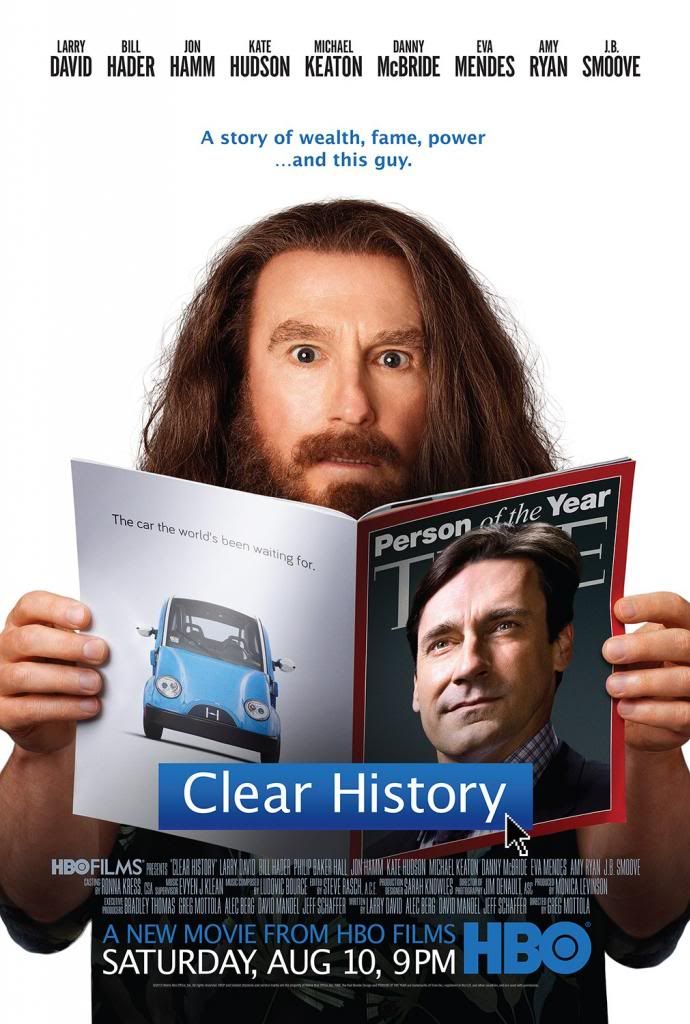
Clear History (2013)


A stunningly unfunny comedy, Clear History's failure is all the more disheartening when one considers that it comes from the same minds that penned some of the finest episodes of both Curb Your Enthusiasm and Seinfeld. Nathan Flamm (Larry David, channeling his usual schtick) is an eccentric marketing executive with an upstart electric car company, but the name of their new product—“Howard,” inspired in part by the main character of Ayn Rand's "The Fountainhead"—is so off-putting to him that he sees no choice but to sell back his share of the company and disassociate himself completely, a decision that becomes the focus of public ridicule when the car proves to be a raging, billion-dollar success. Ten years later, Flamm is in hiding on Martha's Vineyard (where the populace, oblivious to his embarrassing and financially ruinous history, knows him as Rolly DaVore) when his former boss, Jon, (Will Haney), buys a local property.

This scenario might have sufficed for a half-hour episode of television, but at feature length, it's stretched past the breaking point, and it's one not helped by the script's tendency to pass over ripe comedic opportunities for those of the obvious and uninspired variety. Given the film's blatant attempts to capitalize on David's long history of playing a socially graceless narcissist (as indicated by the script's assortment of awkward personal encounters, unfortunate coincidences, and typically David-esque pet peeves), it's somewhat astonishing when, after the invocation of Ayn Rand, Flamm's anger over the name Howard is revealed as entirely apolitical, instead proving to be merely a curmudgeon's petty reaction to something new, an unsubstantiated idea necessitated by the script to justify all that follows. Such pettiness is on display throughout, from the predictably structured setups and payoffs of the plot's disparate threads to the tossed-off and callous nature of most of the jokes (a long-gestating gag concerning the weight of Eva Mendez's character, Jennifer, feels particularly cruel) to the almost complete absence of a world with rules and consequences. One of the strengths of Curb Your Enthusiasm was its creation of situations in which David's guilt or innocence was largely beside the point, and the hilarity of his existential frustration worked because of a distinct moral context that questioned the nature of justice. Clear History, by contrast, exists in an arbitrary moral void.

That David manages to score a few laughs throughout is a testament to his innate talent as a comedian, but the script's rehashing of situations, gags and personal hang-ups (some of them dating as far back as the Larry David persona's original incarnation in Seinfeld's George Costanza) to such diminishing returns suggests that a different kind of characterization was called for this time around. Ostensibly, we're supposed to be rooting for Flamm, and while many a successful dark comedy has put far more reprehensible characters in the role of protagonist, Clear History's shorthanded characterizations and ethical vacuum prove so flaccid that it fails even if one views it as a nihilistic statement. Among the largely wasted cast, only Michael Keaton, as a grizzly islander with an appetite for destruction, walks away with his dignity intact, while it's roundly embarrassing to see talent like Philip Baker Hall and J.B. Smoove spinning their tires. On top of it all, the film simply looks banal and dreary, another surprising disappointment given director Greg Mottola's usual flair for infusing life and energy into otherwise visually sparse locations. Clear History fulfills the mantra that Seinfeld cheekily embraced, i.e. it's a film about nothing. Enthusiasm, curbed.

Jun 13, 2013

Current, HRW Film Festival, "The Guillotines," "Beetlejuice," etc.

Less output than I'd have liked the past few weeks, but given that I've finally started proper full time employment for the first time in nearly two years (as opposed to multiple part time job employment in excess of 50 or 60 hours a week), I consider this much in the way of published material to be something of a triumph.

The meatiest is by far my coverage of this year's Human Rights Watch Film Festival, which starts today and runs through June 23 (details here). I covered only six of their 20 films this year, and next year hope to go even more expansive; of the six, Camera/Woman (pictured above) was by far my favorite. At Slant Magazine you'll also find reviews of the disappointing The Guillotines as well as the recent DVD release of the complete animated Beetlejuice series. Last and, to these eyes, most certainly least (in terms of the film; as far as the writing goes, I leave that to your eyes) is my Southern Berks News piece on J.J. Abrams' rank Star Trek Into Darkness. Retch.

May 23, 2013

Current: "The Great Gatsby," "The Last Stand," etc.

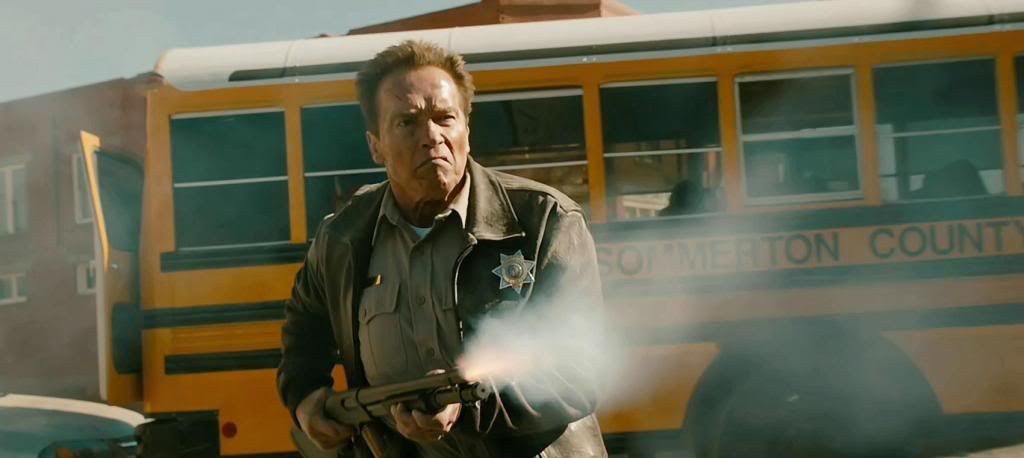
A few links to catch up on. Though mixed, I'm ultimately in favor of Baz Luhrmann's all-over-the-place adaptation of The Great Gatsby, my review of which can be read online at the Berks-Mont News here. Less favorable was my take on the threadbare indie comedy 3 Geezers! at Slant Magazine, but it was a film I adored compared to the patience-testing experience that was Pilgrim Song (autopsy detailed here). The cream of the crop was my coverage of the Blu-ray release of Kim Jee-woon's The Last Stand, a Schwarzenegger action vehicle I more or less love in spite of some quibbles. More goodies to come.

May 7, 2013

Current, "Iron Man Three," "The Big Wedding," etc.

Not much new over these past few weeks, but some exciting news in that I'll now be contributing to the online (and occasionally the print) edition of The Southern Berks News. My first review for them is for this summer's first mega-release, Iron Man Three, which I rather shamelessly enjoyed (twice, actually; the 3D is ultimately unnecessary, but well rendered, surprisingly so for a post-conversion job). Why did I write out three, you ask? Because that's how the title appears onscreen, and I'm stubborn like that. Less noteworthy is the documentary Free the Mind, which I wished had proven more substantial given how endearing its subjects are, but it's still leagues away from The Big Wedding, which will likely end up on many worst-of-the-year lists.

Apr 18, 2013

Current: "Naked Lunch," "MST3K XXVI," etc.

Time to catch up on my latest critical endeavors: Murph: The Protector came and went and as near as I can tell no one cared. Fists of Legend may still be playing but, despite some energetic fighting sequences and good performances, it's hardly worth a trip to the theater. On the home video front, it's always excited when I get to review a Mystery Science Theater box set, even the tepid collection of episodes in Volume XXVI (in which I manage to read something like subtext). Last and most certainly not least is The Criterion Collection's blu-ray rerelease of Naked Lunch, a sterling package of a sterling film if I've ever seen one.

Apr 8, 2013

Roger Ebert, 1942 - 2013

There isn't much I can say that hadn't already been repeated a thousandfold by this past Thursday evening. Roger was a mentor, a poet, and even though I never met or corresponded with him directly, a friend. His death comes at a crossroads in my own life and will likely be of greater influence than many live relationships I've had or will have. My first conscious awareness of Roger's presence in the world was through the Microsoft Cinemania program, and I'm grateful to have known his work and his writing as long as I have. Few others have eased the burden of existence so readily. His is a void that will never be filled; the example he gave us as a compassionate, worldly and humble man is such that it never has to be.

You will be missed.


Mar 15, 2013

Current: "Vanishing Waves," "College," etc.

Three new pieces at Slant Magazine for your reading pleasure: Vanishing Waves (pictured above), the best new film I've seen so far in 2013, is out this week in New York and other privileged locations. Greedy Lying Bastards opened last week but is still lingering and is worth a recommendation for those into the whole angry liberal diatribe thing. Finally, and most relevant (to me at least), is the newly released blu-ray of Buster Keaton's overlooked College, considered here.

Mar 2, 2013

Current: "Pavilion," "The Last Exorcism Part II," etc.

Two reviews at Slant Magazine for new releases this week: Pavilion, which was quite good, and The Last Exorcism Part II, which was not.

In other news, as of yesterday, I'm one of the new members of the Online Film Critics Society Governing Committee; over the coming months, I expect to learn more than I can imagine about the intricacies of the film industry and the criticism wing. With some luck (and blood and sweat and tears), I'll have my local renovations completed here before long. Thanks to all for your patience and support in helping this flourish.

Feb 18, 2013

Escape from Planet Earth

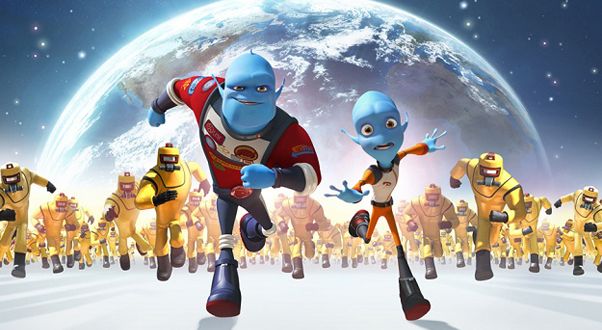
It's hard to exhibit anything other than pity toward Escape from Planet Earth, an energetic and well-meaning but thoroughly watered-down and creatively ossified kiddie flick unceremoniously dumped into theaters after languishing in development and production hell for nearly six years.

Feb 15, 2013

The Berlin File

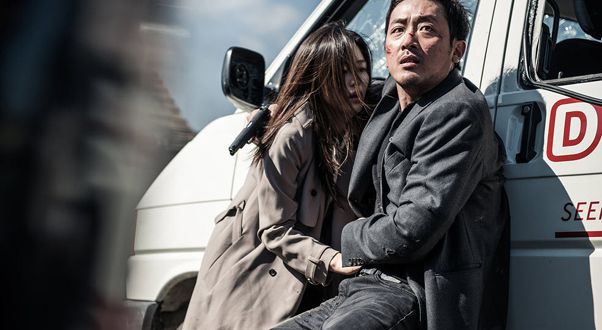
...a sporadically entertaining, modestly ambitious shoot 'em up that frequently succumbs to spelling out its subtext. At least the fisticuffs and gunfights are skillfully composed and edited, none better than an apartment brawl that ends with our protagonist functioning as an impromptu wrecking ball...

Feb 10, 2013

Freebie Flicks: RMS Titanic Edition

In Nacht und Eis (In Night and Ice, 1912)


Atlantis (1913)


Atlantic (1929)


Titanic (1943); if you download the file, you can use these subtitles.


1958's A Night to Remember (embedding disabled).

And James Cameron's Ghosts of the Abyss, a film I cannot recommend but for the extraordinary footage it includes of the wreck. If this silly documentary ditched Bill Paxton and so much of its excessively imposed "narrative," it could've been tremendous, but silver linings notwithstanding, it's easily the weakest effort in Cameron's body of work.