Oct 18, 2007

Braindead (1992): B+


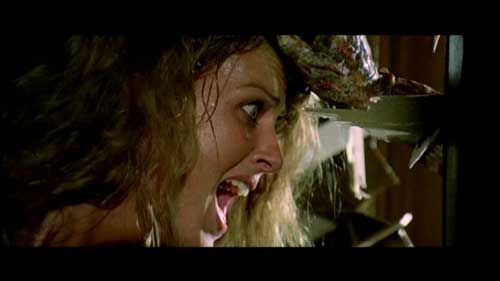
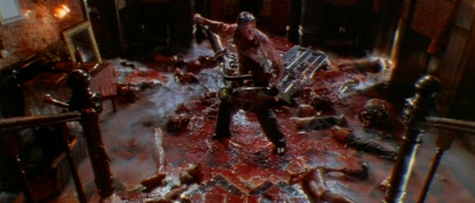
It may take a bit of patience to adjust oneself to the gaudy, synthesized madness of Peter Jackson's practically unrivaled Braindead (aka Dead Alive). The film utilizes the alluring qualities of trashy horror cinema at a feverish pitch, its gratuitously comical indulgences into gore of the squishy and squirty kind likely to simultaneously blow minds and turn stomachs. Its fable-esque story of one young man's fight for freedom against his domineering mother is told with a ghastly sort of brilliance, infused with incessantly red-stained imagery, into which it dives without coming up for breath for seemingly hours at a time. On a surface level, its obtrusive, exaggerated stylistics are almost deliberately off-putting, and like the overwhelming hoards of grotesque zombies that eventually abound its spectacle, one must be willing to get down and dirty in the muck if they're to survive the incoming onslaught.
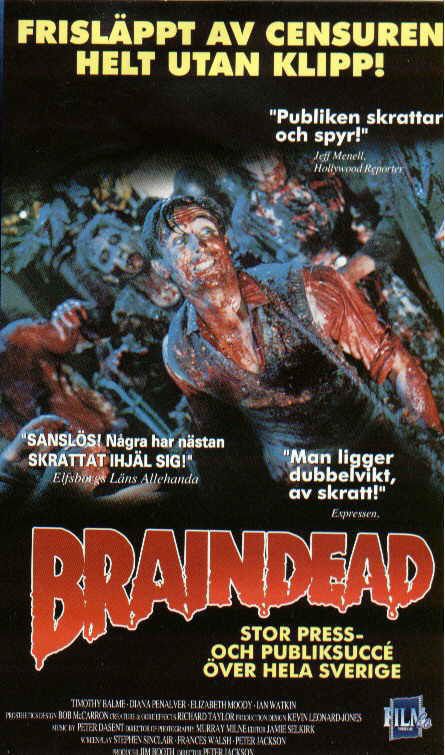
With apologies to Shaun of the Dead, Braindead remains the original rom-zom-com, its tale of Oedipal suppression and distressed romance writ large in what is easily the bloodiest coming-of-age story ever filmed (seriously, Passion of the Christ pales next to this monster). Lionel Cosgrove (Timothy Balme) has been with his mother Vera (Elizabeth Moody) as long as he can remember, he but her sole emotional vestige after the tragic death of his father, who drowned while saving Lionel himself from a fall into the ocean at age of five. Their relationship is one of destructive co-dependence; Vera is fascistic in her demands while Lionel instinctively relies on the structure imposed by her dominance, knowing no purpose outside satiating her every whim, however unreasonable. It is beyond his scope of experience, then, when a beautiful young woman, Paquita (Diana Peñalver), falls almost instantly in love with him. Vera will have nothing of it, of course, and follows the two on their first date to the local zoo. Hiding in the bushes near one of the animal cages, Vera is unforeseeable bitten by the Sumatran Rat Monkey.
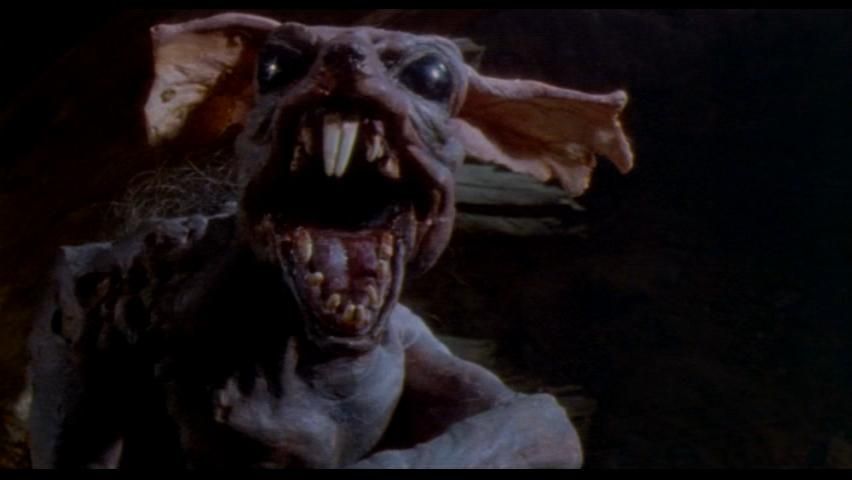
Yes, a rat monkey - and an evil one at that (just watch the movie, I swear it makes as much sense as is physically possible). With her wound seemingly a minor one, Vera is bandaged up by a local nurse and left to recover in the comfort of her own home. Come morning, however, her state has drastically worsened. Both mentally and physically, Vera is literally falling apart, her wound now a festering, goopy mess prone to squirting unidentifiable fluids in any number of directions, while her face literally tears open at the first attempt to apply makeup. Lionel, unable to recognize a world without his beloved mum, takes to preserving her by any means possible. Death proves but a minor nuisance in their case; shortly after perishing, Vera rises again as a violent zombie, with Lionel ultimately chaining her up in the basement, ever faithful even as she attempts to tear him limb from limb. By this time, her newfound hunger for flesh has created a handful of additional zombies, whom the distraught and confused Lionel - reaching for a long-departed sense of normality - takes to alternately feeding and tranquilizing in the privacy of his home (needless to say, his blossoming relationship with Paquita has suffered as a result of these developments).

Even if Braindead were something to be reviled (an opinion that I'm sure is held by many), its sheer creativity in portraying zombie mayhem would be something to marvel at. Dawn of the Dead may get the props for its brilliant helicopter half-decapitation, but what other film has had such audacity as to feature a disemboweled stomach and intestines acting as its own predatory force? The film's build-up is a brilliant enough spectacle of gag-testing sight gags and wince-inducing scenarios; Lionel feeds a nearly-headless zombie by plopping the food inside her open neck, while the undead inadvertently consume bits of their melting bodies when the pieces plop into their bowls of custard. Lionel's mother returns from the grave more violent than ever, while the zombified punks who desecrated her burial site must reckon with the kung fu mastery of the sickest priest to ever grace the silver screen ("I kick arse for the Lord!"). What is easily the films most narratively insignificant sequence is also perhaps its most stellar; Lionel, again faking normalcy, takes a zombie baby for a stroll in the park (don't ask). When the devilish little toddler escapes, he is forced to physically subdue it lest it eat the other children abound, and horrified parents look on at what is seemingly the worst case of child abuse this side of Mommie Dearest.
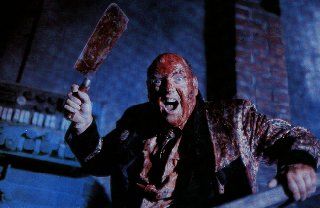
When all hell breaks loose in the confines of Lionel's high-rise mansion, the carnage that unfolds may be the most sustained yet executed in the genre; the seemingly endless creativity in how Jackson kills off both people and zombies practically requires a second viewing on general principle alone. Nevertheless, its uncontainable excess acts as a visually poetic rendering of Lionel's suddenly required spurt of maturity, with the death of his mother a significant departure he must literally fight to move on from. These blood ties take on disturbing and profound depths when, in the gargantuan climax, the monstrous, mutated Vera tears open her stomach so as to return her son to the womb. I'm yet unable to connect the creative ties between this and Jackson's equally masterful work on The Lord of the Rings (save for the visual homages that populate his trilogy, particularly in The Return of the King), but Braindead - at the very least - exhibits the resourcefulness that would allow this Kiwi to redefine the modern blockbuster some ten years later. In its own compact way, this exhausting zombie outtake is just as epic as that trilogy. Rarely has the urge to expectorate one's lunch been a feeling so sublime.


Feature: 31 Days of Zombie!

Oct 17, 2007

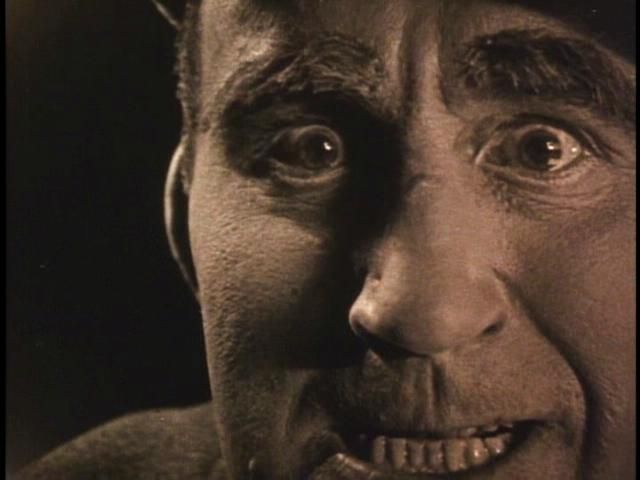
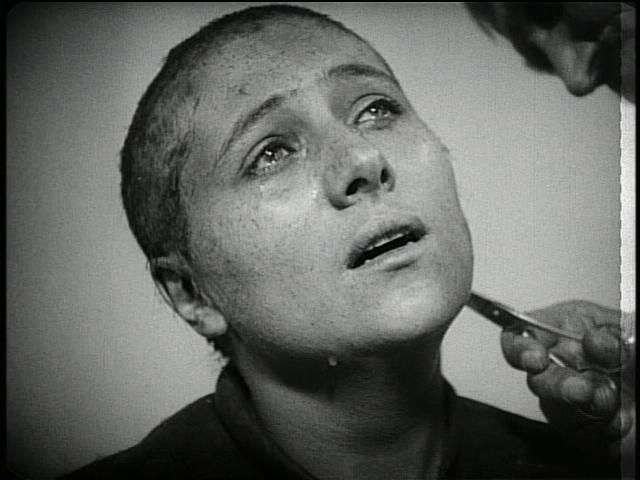
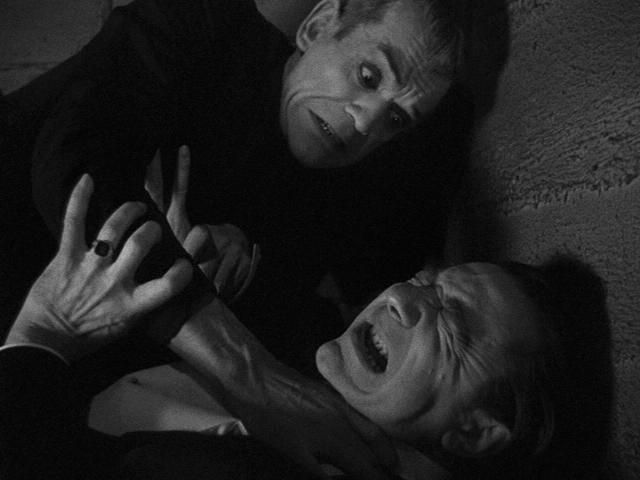
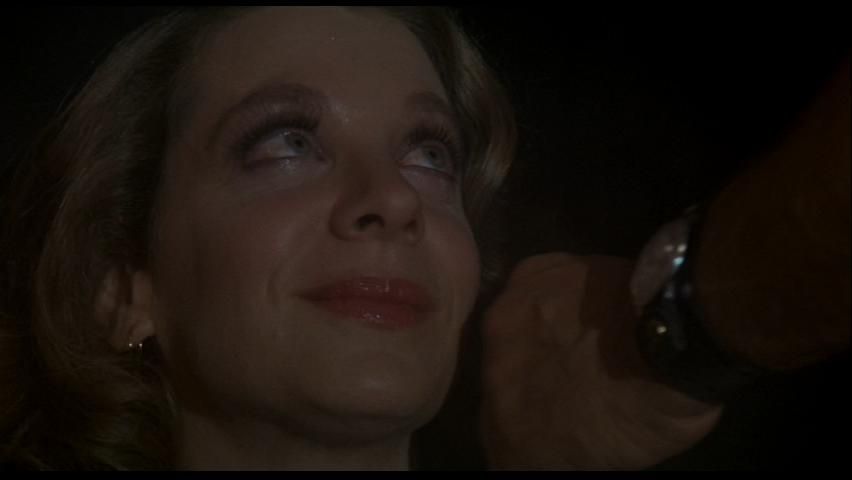
Close-Ups, Part I: Extremities of Emotion

This is the first in a planned three-part contribution to Matt Zoller Seitz's Close-Up blog-a-thon, running October 12-21 at The House Next Door.

Broken Blossoms (1919)

The Passion of Joan of Arc (1928)


The Black Cat (1934)

All That Jazz (1979)


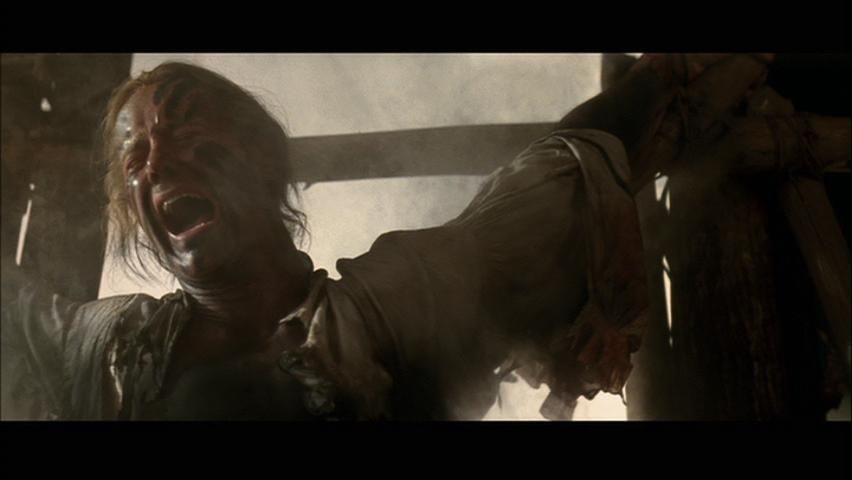
The Last of the Mohicans (1992)


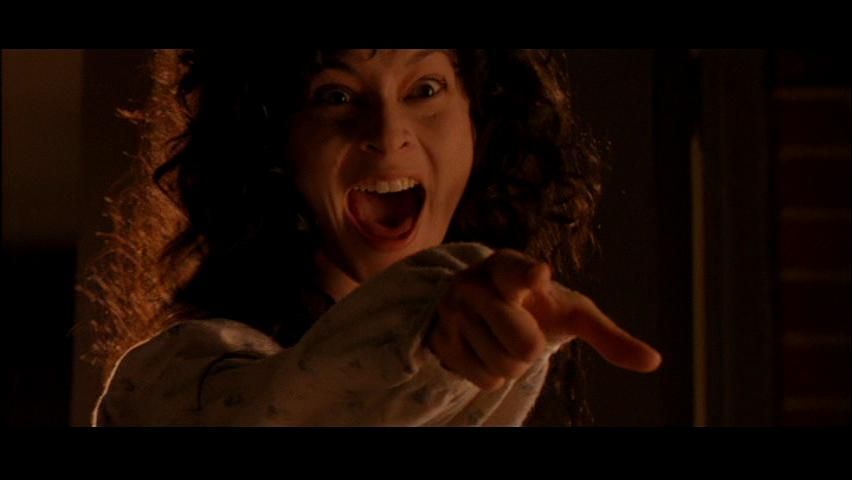
Body Snatchers (1993)


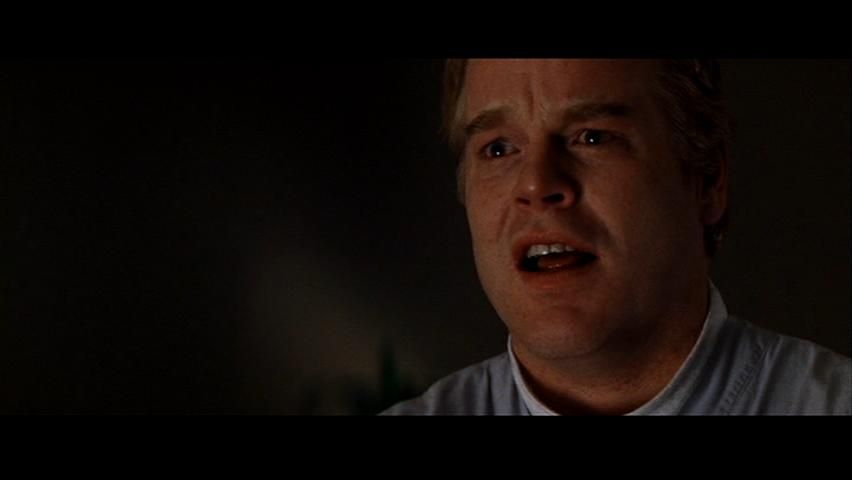
Magnolia (1999)


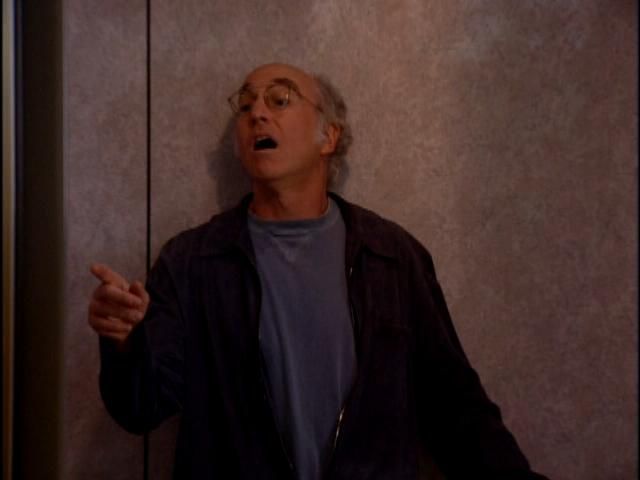
Curb Your Enthusiasm, "Interior Decorator" (2000)


Munich (2005)


Miami Vice (2006)


Death Proof (2007)

MST3K 812: The Incredibly Strange Creatures Who Stopped Living and Became Mixed-Up Zombies!!?

If, in the annals of long-ass movie titles, Dr. Strangelove or: How I Learned to Stop Worrying and Love the Bomb occupies a rung near or at the top of the ladder, then T.I.S.C.W.S.L.A.B.M.U.Z. almost certainly rests at (or below) ground level. Even when viewed in the context of its classic Mystery Science Theater 3000 showcasing (episode 812, which I am in effect reviewing here, having been unable - and slightly unwilling - to track down the film by its lonesome), it is a barely watchable, incoherent mess of dance numbers and rote, often incomprehensible exposition, a film simultaneously coming from nowhere and utterly without a destination. Forget the fact that the zombies indicated in the title are anything but and only show up about five minutes before the end credits; this is the kind of film that threatens to disarm any critic, as reviewing it amounts to little more than listing the basics of filmmaking and pointing out the extremity with which each one is ignored. Bless you, Mike, Tom and Servo - we couldn't get through it without you.

From the outset of this marathon, I knew it would be impossible to ignore this most memorably titled of films, and am delighted to have found an opportunity to mesh together my immense love of the living dead with what I consider the greatest television show of all time (another film, 1986's Zombie Nightmare, starring none other than Adam West, was covered by the series in its sixth season). The film itself, unfortunately, remains a turgidly bad affair severely wanting for atrocities of a more actively embarrassing nature; it's a testament to Mike and the 'bots' riffing skills that they remain consistently hilarious amidst such tedium before them. The opening scene sees a decidedly doughy salesman refusing the sexual advances of the fortune teller Madame Estrella (Brett O'Hara), who - with the help of her assistant Ortega (played by Don Russell as essentially poverty manifest; after this episode, the grizzled, iconic character would become something of a regular on the series) - punishes her would-be partner by pouring acid onto his face. It's a good twenty-five or thirty minutes before we return to this bit of established narrative, a time frame taken up by at least ten minutes of dancing sequences hardly worth their weight in popcorn butter. Crow pointedly remarks, "Cinematography by Zapruder!," and it's anyone's guess as to how one of the film's photographers, Vilmos Zsigmond, would manage to go on to everything from McCabe and Mrs. Miller to Close Encounters of the Third Kind. To his credit, though, he was fourth and last credited. Maybe he only interned.

Director Ray Dennis Steckler stars as Jerry, a free spirit who scoffs at the idea of weighing himself down with a job or education, two of the many means by which society aims to enslave one's mind and spirit (at least, that's what I gather from the barely decipherable sound design). When a trip to the local carnival reveals to him a strange connection with one of the customers of the aforementioned fortune teller, Jerry makes a point to find out just what's going on at the mysterious palm reading booth, only to be hypnotized and enslaved by Madame Estrella, who forces him to carry out her murderous biddings. The film features enough purportedly "suggestive" dance numbers so as to effectively ward off puberty for three to five years in any of its younger male viewers, and it's a long uphill battle before the much-touted zombies make their ultimate appearance. No matter, really; Zeus himself couldn't be expected to save this dreck, while watching the film itself provides explanation enough for the absurdity of the title, which feels cut from the same cloth as the murky anti-scenery. Whatever it was that the creative forces at hand were smoking, they had a lot of it.

The opening host segment of the episode brilliantly riffs on the excessiveness of the film's self-justifying title; the robots are both partaking in a walk-a-thon to raise money for various causes, with the name of the Tom Servo's organization of choice - Helping Children Through Research and Development - ultimately revealing itself as the most obnoxious acronym of all time. Other gaudy aspects of the production - from the unwitting reliance on carnival-esque imagery to the high rising hair styles of the day - find similarly deserving lampoonings between commercial breaks; horrendous though the film may be, this is typical stuff for this trio of seasoned viewers. However, unable to sit in those hallowed seats on the Satellite of Love myself, I desperately searched the proceedings for meaning, style, or subtext - anything to take away the pain from the seemingly countless, completely sexless striptease sequences (say that five times fast). While the chance remains that the film was in fact meant as a commentary on social oppression - Jerry is elevated to some kind of martyrdom after a climactic, incomprehensible police chase along the beach ends in his tragic death - the reality is that it is a work entertaining only through its own astounding incompetence.


Feature: 31 Days of Zombie!

Oct 16, 2007

Planet Terror (2007): B+


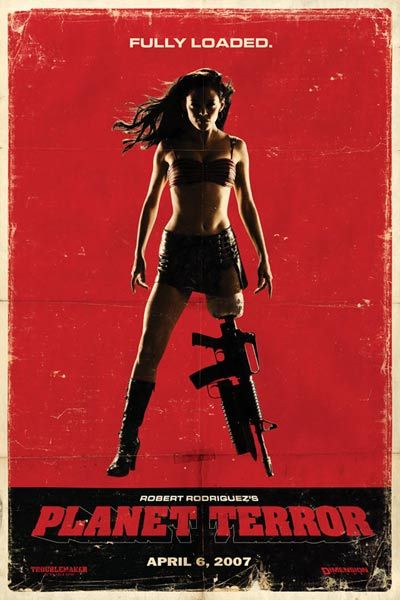
Take it for what it is. Planet Terror - Robert Rodriguez's contribution to his Grindhouse collaboration with Quentin Tarantino - is a first-rate homage to the schlocky, sleazy B-movies of decades past, loading on the gore, clichés, and self-referential dialogue like there's no tomorrow with a cascade of influences from John Carpenter, James Cameron, George A. Romero and Lucio Fulci (just to name a few), all the while topping off its gimmicky (though totally effective) construction with countless scratches, blips, audio/visual inconsistencies and even a carefully placed "missing reel" in its loving ode to the almost lost end-of-the-line theater experience. Multiplexes have sucked the personality right out of most of our collective viewing experiences and Planet Terror effectively recreates such memorable and meaningful imperfections, if only on a superficial level. For the record, I always liked the blips and scratches, and no matter how many times Carmike plays that fucking "digital experience" clip, any movie shot on film is going to suffer when it's projected with our current digital technology. Rodriguez and Tarantino know there's more to cinema than the supped-up technology adored by the likes of George Lucas and Michael Bay, and in its best moments, the film beckons us to return to our roots.

The only real problem, then, is that the film doesn't really do much more than that. Sure, it looks cool. Sure, it's hella entertaining. I've seen it three times and enjoyed it continuously, albeit to decreasing returns. Any work has the potential to lose its potency once it becomes overly familiar, but whereas the great genre pieces of the past - Assault on Precinct 13, Night of the Living Dead, Escape from New York, The Terminator - all worked layer upon layer of moral and philosophical quandaries into their viscerally charged storylines, allowing for repeated viewings of notably increasing returns, Planet Terror is ultimately little more than a collection of cinematic quotations thrown into the melting pot with the heat turned up to eleven. Such relative triteness is legitimate because Rodriguez doesn't aim to pass his homage off as anything but, a necessary modesty that ultimately lends itself a kind of superficial sweetness that might otherwise smack of genuinely hollow emotions. Jeff Fahey and company aren't embodying cinema as persona in the same vein as the performers of Kill Bill or his own Sin City - they're going for the purely stylistic gut of their archetypal forefathers and hitting the nail smack on the head. Like most of Planet Terror, this limits their capacity for actual feeling, but they manage to kick plenty of ass nonetheless.

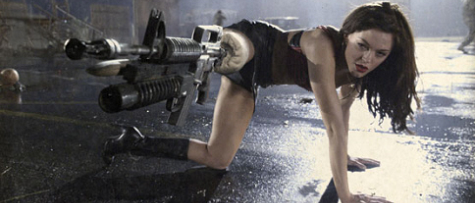
The film's general plot has been detailed extensively on this blog before and needs not be recounted here again. Needless to say, it's melange of junk drawer B-movie parts - the heroic outlaw, and experienced and cynical cop, the brothers divided against each other, the heroine out to prove herself - penetrates directly into the heart of our cinematic subconscious, with Rodriguez trading in deliberately iconic imagery that simultaneously echoes and redefines our genre-based customs and traditions. A sexy, jazzy pole dance opens the film like a sizzling flash of sweat and sleaze, complimented quite perfectly by Rodriguez's own guitar-wailing score. Rose McGowan's same character - cheekily named Cherry Darling - will later lose her leg to a batch of mutated flesh-eating zombies, only to have it replaced by a combo assault rifle/grenade launcher, the centerpiece image in the film's glorious onslaught of heteronormative indulgences of the self-aware and completely shameless kind. From Cherry's ex-lover El Wray (es embodied by Freddy Rodríguez) to the inclusion of makeup guru Tom Savini in the cast, these touches condense the culture that inspired them into a kind of postmodern madness designed to temporarily overload the senses. Planet Terror purports to be stupid and shallow but it is incredibly smart in how it navigates these terrains, proving once again that a little irony can go a long way.


Feature: 31 Days of Zombie!

Oct 15, 2007

White Zombie (1932): B+

White Zombie’s foray into the supernatural feels something like the forging of a legend. When a young couple, en route to be married, comes across a funeral in the middle of the road (where local grave robbers will be less inclined to steal the corpses for their voodoo practices), the film effectively establishes its mysticism as an unavoidable presence in daily life. Neil (John Harron) and his fiancé Madeleine (Madge Bellamy) have traveled to Haiti for their unification, although the superstitious folklore around them heeds them flee some unseen danger, first suggested when a strange man observes them from the road, his seemingly hypnotized servants causing the couple’s driver to flee in panic. Here, the line between life and death is but a thinly veiled schism between lovers, while White Zombie’s entrancing – if occasionally clunky – development of this premise weaves a haunting morality play of gothic romanticism. The film lays it’s emotions on thick but its confrontational immediacy renders them practically irrefutable.

A mysterious Mr. Legendre – Bela Lugosi, in one of his finest roles – plays the puppet master pulling the strings behind these happenings, having obtained power over the living dead, whom he wills to do his bidding in the form of both manual labor and more nefarious deeds. Charles (Robert Frazer), distraught over his unrequited love for Madeleine in the face of her impending marriage, asks for help in winning her affection. Legendre tells him that, apart from making her a zombie without will, no other way exists to wrestle her away from her current life, a terrible choice that Charles’ aching heart only reluctantly agrees to in the moment of truth. Seemingly dead, Madeleine is buried, only to be excavated shortly thereafter by Legendre and his zombie slaves, her empty grave discovered by the mournful Neil after a night of heavy drinking. This passive love triangle embodies the film’s dramatic core, with the genuinely selfless Charles’ quickly coming to resent his twisted part in Madeleine’s transformation. “I can't bear those empty, staring eyes,” he says in anguish. “Better to see hatred in them than that dreadful emptiness.

Victor Halperin’s evocation of this tragedy unfolds as a series of grand melodramatic gestures, his visuals roughly hewn as a result of their pushing the technical limitations of its day, with multi-layered compositions and one choice split screen sequence employed so as to embolden the pulpy sense of romantic duress. Lugosi commands attention with his deep, penetrating eyes and rhythmic modes of speech, and so too does the film’s use of space invite entrancement. The silhouettes of the dead march silently across mountaintops atop the nighttime sky, while deep shots of and inside Legendre’s seaside castle suggest a vast cavern of lost souls in which Neil and Madeleine’s love strains to endure. White Zombie’s canvas is too condensed to achieve absolute greatness but the mastery of mood and emotion on display suggests a work that has been fully realized within its own boundaries, elevating itself above its particular minutiae and into the realm of myth. Through its own ravishing simplicity, the film achieves the near-operatic.


Feature: 31 Days of Zombie!
Oct 14, 2007

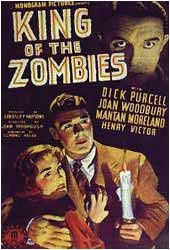
King of the Zombies (1941): C+


Jean Yarbrough would never aspire to aesthetic greatness in his career but his skill behind the camera as a man of basic technical know-how made him something of a commodity for studios relegated to poverty row. A master hack for his time, his works forgo the connective tissues of continuity, logic, or other details whenever such would have impeded on either budgetary restrains or studio-mandated deadlines. This relegated him to quickie films typically lacking in artistry, but there's a genuine earnestness and humility inherent in his work that sorely lacks in the majority of his modern equivalents; rather than gorging on excesses, his films admirably find craft out of practically nothing. King of the Zombies is such a work of slapped-together, audience-pleasing basics, seemingly shot in less than a week and edited together in just over an hour, its aims low and its successes modest (it is worth mentioning, however, that Edward J. Kay's score earned the film a surprise Oscar nomination). But a handful of sets and a few actors - not to mention a running time of under 70 minutes - allow for little in the way of subtlety or characterization, but the film entertains in its own sheepish way, even if it is more interesting as a historical and cinematic time capsule than as its own intended entertainment.

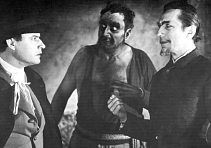
Flying over the Caribbean in search of a missing war comrade, lost in a storm and low on fuel, three Americans - James (Dick Purcell), Bill (John Archer), and their manservant Jefferson (Mantan Moreland) - crash land on an unknown island after picking up on a lone radio signal. Below, they discover the mysterious Dr. Mikhail Sangre (Henry Victor), an Austrian who lives in a mansion on the island with several family members and a handful of servants. Given that one of Dr. Sangre's guests is limited to walking around in a catatonic daze, James and Bill suspect strange going-ons but dismiss the apparent ramblings of Jefferson, who claims to see zombies and ghosts throughout the mansion. Ultimately, though, they discover that the doctor does in fact command a small legion of zombies, having manipulated them with voodoo rituals so as to extract key political information from his prisoners - specifically, details concerning the Panama canal, a key American military concern of the time.

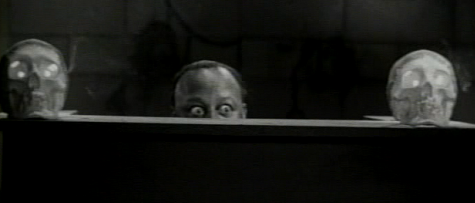
As suggested by its connect-the-dots plotting, nary a moment of King of the Zombies isn't bare to the bone, although the film is one quite satisfied with its own minimalist exercises. Ultimately, it is more of a comedy than a horror, with the skittish antics of the inimitable Moreland taking center stage as he gets riled up over every minute happening and unexplained shadow. A whiff of racism lingers over the film during these more purportedly PC times but Moreland's oft-reviled comedic style is not unlike a one-man Abbot & Costello routine, his snappy delivery of dialogue and subtle gags of body language sporadically amusing - if a tad dated - in their execution. Any cultural condescension is ultimately innocuous, while Moreland's own performance subverts any malicious intentions; although his jittery silliness is often the source of intended laughs in contrast to the staunch seriousness of his white superiors, such floundering often provides the inadvertent solution to whatever problem lies at hand. Such talent is often unappreciated given its context in the ensuing civil rights movement of the time, but Moreland's precision remains a key stepping stone in the history of black cinema, one that proved the high point of many an otherwise dull film, King of the Zombies among them.


Feature: 31 Days of Zombie!
Oct 13, 2007

Zombi 2 (1979): B+


When I first saw Lucio Fulci's Zombi 2 some three years ago, I hated it (or, in the Ebertian oeuvre, I hated hated hated hated hated it). What was this abomination, ruining my beloved Romero lore with its non-plotting, character-less, poorly edited, excessively gory exploitation garbage? It's almost complete lack of narrative cohesion offended my deepest sensibilities, and the flaunting of rotten corpses and festering bite wounds only worsened the offense. The time since then has seen plenty of changes in my perspective, and Zombi 2 has been one of the key films in highlighting what I can only hope is my continuing growth as a lover of the medium. The once singularly championed virtue of plot has since come to share generally equal ranks with the elements of mood, rhythm, integrity, and pure, ribald entertainment, all necessary viewing lenses one will need if they wish to appreciate everything cinema has to offer.

Revisiting the film again, it's abandonment of generally accepted cinematic "necessities" is in fact the key to it's semi-brilliant indulgences into monstrous spectacle. Zombi 2 (named such so as to piggyback on the success of Romero's own Zombi, the Italian title for his Dawn of the Dead) is an exercise in what comes close to pure payoff, its sense of exposition and buildup little more than a formality, albeit one it churns through with a nasty sense of foreboding and its tongue more than slightly in cheek. With a matter-of-fact, unembellished visual perspective, Fulci establishes his scenery as a dense realm of festering disease and steadily encroaching death (the frame itself seems a suffocating force), with even the most banal of dialogue given a weary, tropical menace. Here, four people travel to a secluded Caribbean island in search of a missing person, only to discover the desolate spot of land host to the recently arisen dead.

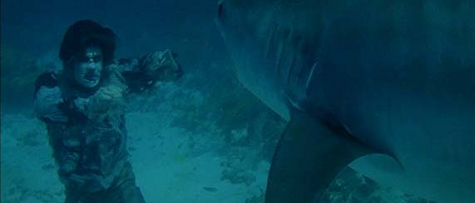
This deliberate narrative minimalism makes way for a raw, nightmarish visual palate. Fulci may not give much of a damn about transition or pacing (or even continuity) but his eye for disturbing scenery - stealthily complimented by a few choice zooms, pans, and creepy zombie point-of-view shots - is nothing short of masterful. One character's terrifying death one-ups Un chien andalou in the film's most squeamish sequence, while the underwater fight between a zombie and a (real) shark remains an audacious move yet to be topped by anything in the genre. These zombies may lack the daffy personality of those from Dawn of the Dead but they certainly don't want for physical repulsiveness; rotting corpses, complete with wormy complexion, rise silently out of the earth before hogging the camera with their decomposing grimaces. The film is shamelessly trashy but all the better for it, with the haunting, muted score by Giorgio Cascio and Fabio Frizzi acting as connective tissue throughout. Although goremeister Fulci would make far more violent films during his career, Zombi 2 may be his best simply for its propulsive, grizzled thrust.


Feature: 31 Days of Zombie!