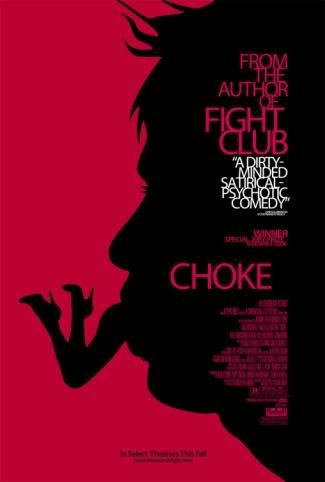
 When reviewing films based on a previously existing source material that one is not familiar with, one is deprived of a potentially insightful angle into the creation of that film; though a great fan of Peter Jackson's Lord of the Rings films from the first time I saw Fellowship of the Ring, it wasn't until I picked up Tolkein's original text that my respect for the adapted screenplays officially shot through the roof. In the case of writer-director Clark Gregg's Choke, an adaptation of what many describe to be a lesser work of famed novelist Chuck Palahniuk, I want desperately to comment more in depth on the page-to-screen mechanics at work, particularly as compared to David Fincher's masterful Fight Club. Nevertheless, even without that particular bit of insight, I can state with plain assurance that Choke sucks, regardless of how weak its source material may be. If Fincher's film can be described as thematically multi-layered, stylistically labyrinthine, deceptively self-aware and self-reflexively brilliant, Choke comes across as squandered dime-store philosophy by way of a reductively sophomoric Scrubs aesthetic, trading in quirk for the sake of quirkiness and a botched attempt at duplicitous storytelling that by all rights shouldn't pass a community college Screenplay 101 course. To be fair, Clark Gregg's film is, in its own modest way, both daring and audacious, but that doesn't mean it's able to chew even a portion of what it's chosen to bite off. Sex addiction, unforeseen manifestations of divinity, political radicalism, self-induced choking as a means to acquiring empathy and many more meaty topics get lumped together in a confused and barely subversive satire that is at best uneven, at worst, clueless.
Feb 17, 2009
Choke (2007): C-
When reviewing films based on a previously existing source material that one is not familiar with, one is deprived of a potentially insightful angle into the creation of that film; though a great fan of Peter Jackson's Lord of the Rings films from the first time I saw Fellowship of the Ring, it wasn't until I picked up Tolkein's original text that my respect for the adapted screenplays officially shot through the roof. In the case of writer-director Clark Gregg's Choke, an adaptation of what many describe to be a lesser work of famed novelist Chuck Palahniuk, I want desperately to comment more in depth on the page-to-screen mechanics at work, particularly as compared to David Fincher's masterful Fight Club. Nevertheless, even without that particular bit of insight, I can state with plain assurance that Choke sucks, regardless of how weak its source material may be. If Fincher's film can be described as thematically multi-layered, stylistically labyrinthine, deceptively self-aware and self-reflexively brilliant, Choke comes across as squandered dime-store philosophy by way of a reductively sophomoric Scrubs aesthetic, trading in quirk for the sake of quirkiness and a botched attempt at duplicitous storytelling that by all rights shouldn't pass a community college Screenplay 101 course. To be fair, Clark Gregg's film is, in its own modest way, both daring and audacious, but that doesn't mean it's able to chew even a portion of what it's chosen to bite off. Sex addiction, unforeseen manifestations of divinity, political radicalism, self-induced choking as a means to acquiring empathy and many more meaty topics get lumped together in a confused and barely subversive satire that is at best uneven, at worst, clueless. 
Jan 21, 2009
Screening Log: Saw V, Righteous Kill, Igor, Repo! The Genetic Opera
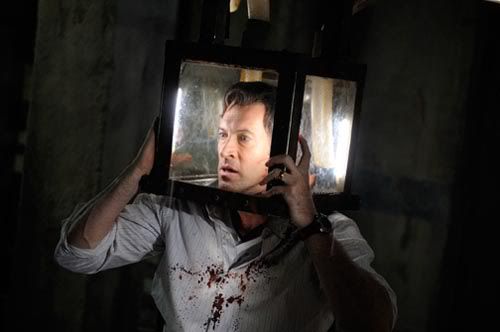
Is there no end to the depths this franchise is capable of reaching? An insult to anything and everything of similar ilk, from the Hitcher remake down to fourth-rate ripoffs of Se7en, and even that may not be harsh enough. At once a sequel, a prequel, and a greatest hits package of the last four Halloween mainstays of tiresome mutilation-cum-philosophy packages, Saw V continues the trend of bending over impossibly far backwards to justify its existence, complicating previous scenarios with additional behind-the-scenes goings-on whilst introducing a new batch of characters pitted against a series of calculated death traps. For the love of all that's holy I can't tell if we're supposed to empathize with the ineptitude, greed, and nonsensicality of these unbelievably stupid beings, or if their lack of cognizance is merely there to justify the film's bland and unimaginative carnage (the amount of death and mutilation that could have been easily avoided here is enough to negate the very existence of the film in the first place). Having just recently popped my Dario Argento cherry, my verdict is to move on to better things (say, Opera) and let the fans of this shit figure it out. [F]
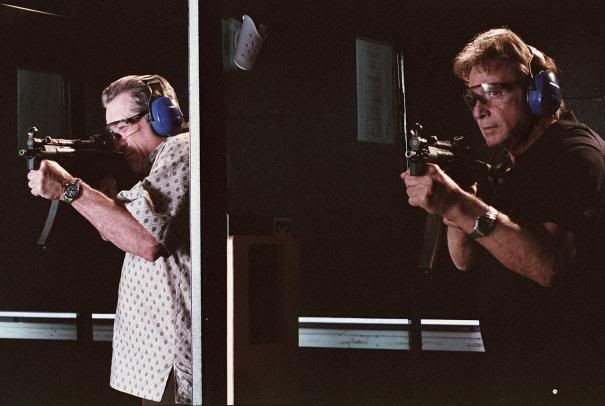
As far as bad movies go, Righteous Kill is something of a zenith, a masterpiece of surface-bound would-be pleasures that, in a pigheaded sort of way, successfully masks the fact that there isn't an ounce of anything going on here whatsoever, like an overly decorated pinata afraid to expose the vacuum inside. Flaunting Robert DeNiro and Al Pacino as if Heat never happened, the film purports to be about two vet cops stepping outside the boundaries of their profession so as to put the guilty away regardless of legal technicalities (a rapist walks because of tampered evidence, etc.), but on the ball of ethical conundrums at the center of this scenario, Righteous Kill leaves not even the faintest of scratches. Instead, it's about obtrusively loud noises, distracting editing devices, blank-faced characters, spelled-out ideas, and two great actors that just don't seem to give a shit anymore. [F]

Where to begin? This dubious piece of would-be family entertainment comes to us like its Shreky predecessors, homogenized to death by filmmaking choices apparently doled out via committee - a wannabe Happy Meal that yearns for broad appeal and instead falls flatly, embarrassingly on its face in the process. Igor purports kid-friendly ethics (believe in yourself, et al) but rarely has a youth-oriented film been more confused about its own intentions: references to science fiction and horror classics abound less like actual jokes than points of interest for adults fending off sleep, while more potentially comical elements (most memorable is Steve Buscemi's nihilistic rabbit Scamper, whose immortality proves irksome as he attempts repeatedly to shuffle off this mortal coil) misfire left and right as the film constrains itself within PG limitations. John Cusack's good guy charm - usually soothing in even the most formidable of dreck - has never been more grating, he the titular humpback who aspires to attain the same respect and success as his mad scientist superiors. Offenses here range from the foundational (the screensaver-quality animation lacks any sense of gravity or depth) to the all-out deranged (a critical turn in the plot hinges on, I kid you not, James Lipton). As far as goes its ability to stifle the young imagination, Igor has no recent competitor. [D]
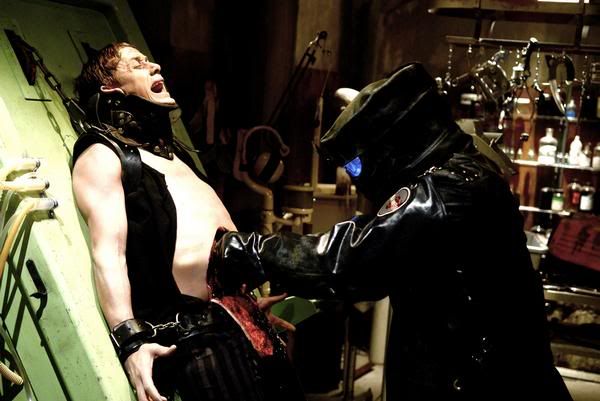
Repo! The Genetic Opera, or: Quite possibly the worst movie I've ever seen in my entire life,. I've no doubt that a creative enough mind and proper sleight of hand could turn this premise into something worthwhile, even great, but this adaptation of the stage play by Darren Smith and Terrance Zdunich is nothing short of retarded, a long-distance cousin of Rocky Horror seemingly convinced that inventiveness and strained self-distinction amount to outright quality and any effort to create something unique automatically qualifies as an all-out success. Seeing as how the entire film is pitched at the level of a speed-afflicted nu metal music video ghost-directed by Andrew Lloyd Webber, it's no help that its central premise never quite gels to begin with: in the future, a plague induces massive organ failure, leading a tyrannical medical company to lease replacement organs, only to slice-n-dice its customers when they fail to make their payments (from a financial standpoint, this doesn't bode well for repeat business, but logic has never applied to Saw fetishists, now has it?). Given the absolutely disjointed sense of tone and construction throughout - including, but not limited to, embarrassing songwriting and even more embarrassing performances, warped imagery that makes the notebook scrawlings of Columbine-bound middle school psychos look mentally balanced by comparison, a gluttony of narrative cul-de-sacs and the almost unbelievable fact that Paris Hilton's presence represents something of a high-water mark therein - it's hard to believe that anything in this self-important avalanche of shit was able to reach the conceptual stage without someone mounting a protest. If you're looking for insight into the death and resurrection of Christ, look no further: I can think of no better means by which to experience the cumulative effect of three days in hell in under 100 minutes. [F]
Jan 9, 2009
Review Catch-Up: Doubt, Slumdog Millionaire, Defiance, The Wrestler, The Reader

Praise be to John Patrick Shanley for adapting his own work in a manner that can actually be classified as cinematic, but methinks it is really Meryl Streep and company that guides Doubt into the realm of the worthwhile. Script-wise, things are about as unambiguous as they come, and so Streep's turn as a nun convinced of her priest's inappropriate relationship with an alter boy becomes less of a "did he/did he not do it" escapade than a morality play in which unnecessary evils are accepted in hope of a greater good. There's Oscar prestige gloss here for sure, but the cast seems to approach it as if it were pulp; their eagerly mucking about the film's thematic underbelly almost justifies the relative triteness with which the material is presented. Hoffman's persona finds one of its best outlets yet therein, Amy Adams continues to endear, and though Streep's excellence has been misused much of late, her fascinating facial concentrations are a tour-de-force unto themselves. [B-]
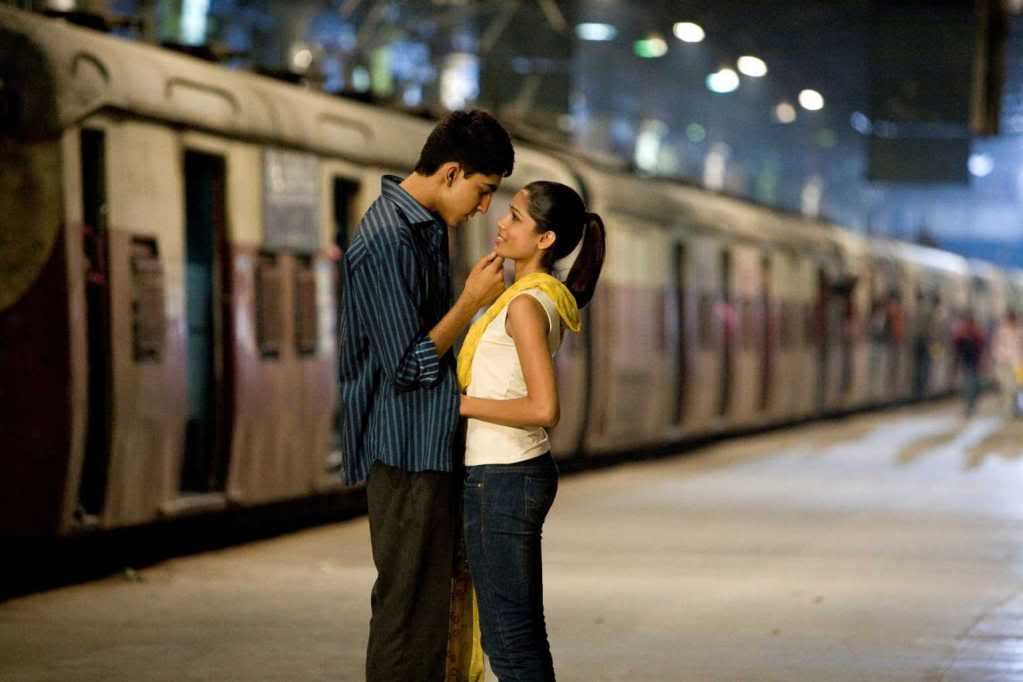
I've seen this film twice to date, and both times I've noticed distinct whiffs of The Wizard of Oz amidst the film's superbly romanticized climax; not so much in shared filmic qualities than in how both sidestep customary storytelling pretenses to go for the emotional jugular. As regarding the lifetime of experiences that aid the most unlikely of gameshow candidates -- a young boy (Dev Patel) whose ghetto life has provided him with a most extensive and varied array of skills and ever-so-helpful factoids -- Slumdog is comparable to Uma Thurman's adrenaline shot in Pulp Fiction, a kinetic fireball of a movie in which every vibrant image and titillating edit trigger vast networks of emotional response. Boyle's flashback device would appear to be a hindrance to the whole, but Slumdog is nothing if not more than the sum of its parts, its collection of instantly iconic pop experiences effortlessly translating across the boundaries of age and culture into a superbly humanized modern-day fairy tale. [B+]
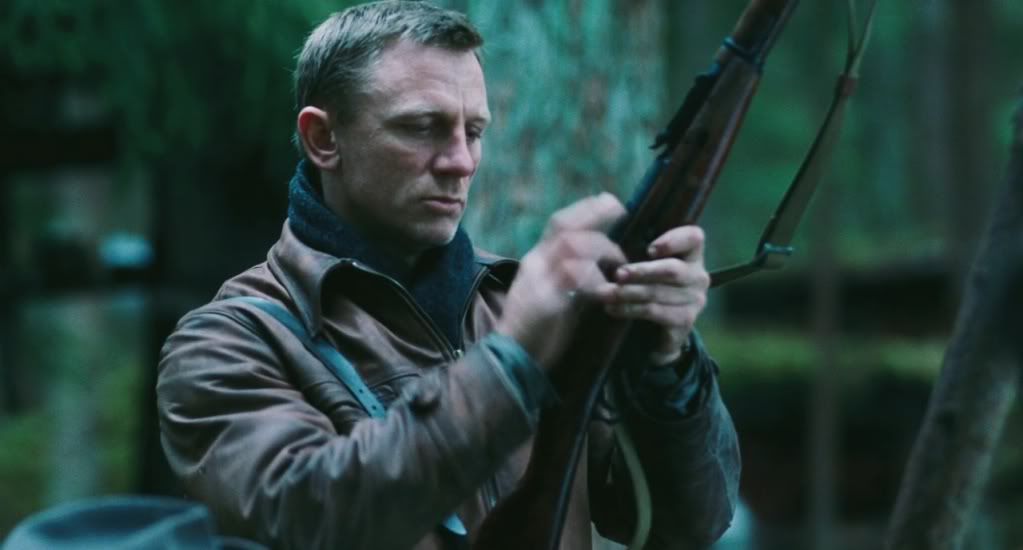
Normally, I'm all about Jews with guns, but Munich this ain't. For a while, Defiance, the latest from the reliably boring Zwick, would appear to be an act of creative growth of sorts, and though it is certainly an improvement over Blood Diamond, this tale of a Jewish community that survived for three years of WWII in the Belarussian forest remains as emotionally robotic and superficially deliberate in its storytelling as one would expect from blatant paint-by-numbers filmmaking. [C]

The extreme stylistic dissimilarity between this and Aronofsky's previous film (the out-there sci-fi fantasy existentialism of The Fountain) and this is just about surface deep; The Wrestler is a film as particularly embodied by its chosen style as its predecessor, and is just as eager to feel and be felt. Rourke is sensational as the washed-up former celebrity wrestler Randy "The Ram" Robinson, but for me it's Aronofsky's handheld takes that steal the show: following Randy about his routines, achingly, effortlessly evoking the time that hangs on every choice and missed opportunity, all of it rather bittersweetly framed in the film's anti-romantic view of northwestern America. If certain passages feel more or less calculated, the overwhelming majority thrives on the film's lived-in sense of class consciousness; there may be no more heartbreaking scene of 2008 than the wallop-packing closer. [B+]
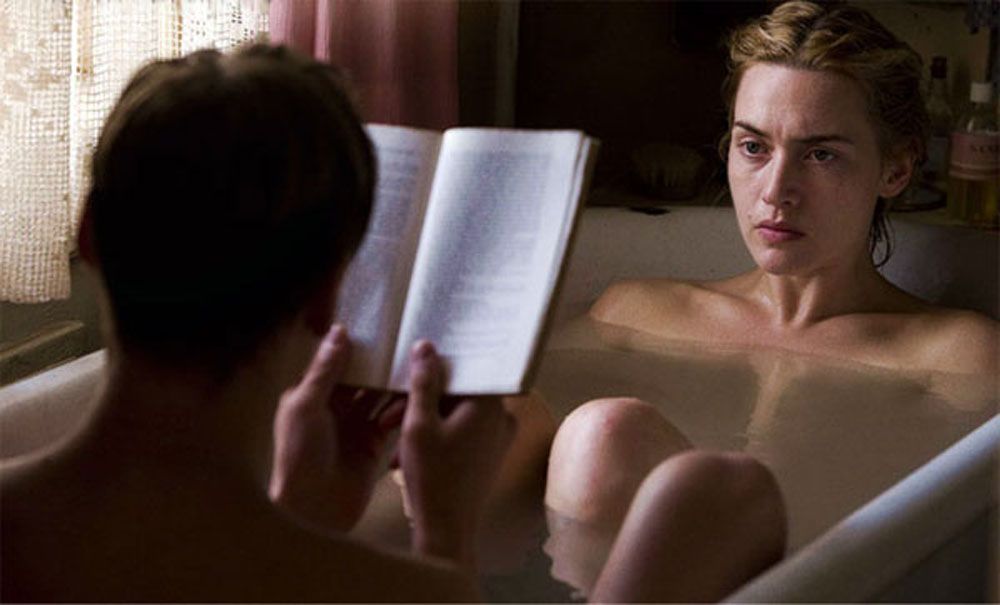
The Reader suffers chiefly from a distasteful thematic overemphasis, though not far behind is the film's rather insistent self-flattery. Kate Winslet is perfectly serviceable as a former SS agent who, while attempting to live a normal life in 1995 Berlin, has an affair with a 16-year-old literature enthusiast; after he sneaks a peek at her privates while she changes, it's only a matter of time before she's bawling her eyes out as he reads the climax of The Odyssey. Strangely dispassionate, there's little to chew on for a film so purportedly serious. The banality of evil -- the means by which normal, moral people (i.e. the overwhelming majority of the German population) find themselves accepting and aiding something as overwhelmingly horrific as the Nazi holocaust -- goes relatively unexamined amidst all the futzy melodrama and faux-sensationalist sexcapades, the entirely of which enmesh in one of the most confused/confusing thematic wrap-ups I've ever seen in a film. In all ways, it's just about illiterate. [C]
Jan 6, 2009
"What day is it, the date?!? WHAT YEAR?!?"
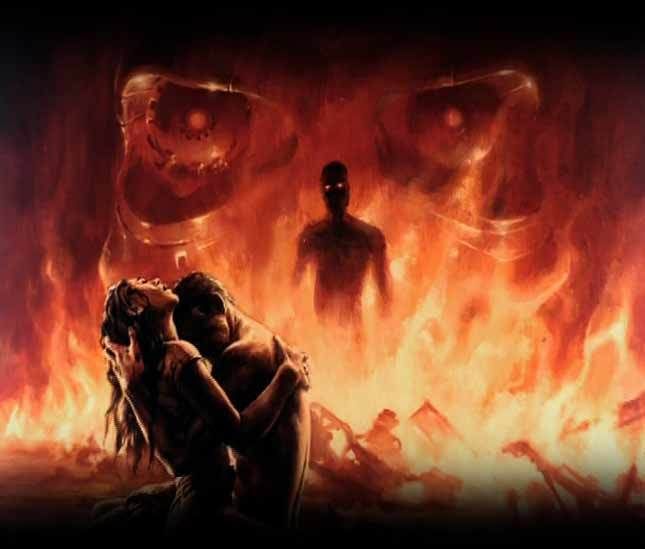
Fifth. January. Monday. 2009. The Terminator was announced as one of the latest additions to the National Film Registry.
It's going to be a good year.
Dec 30, 2008
2008: Year in Film

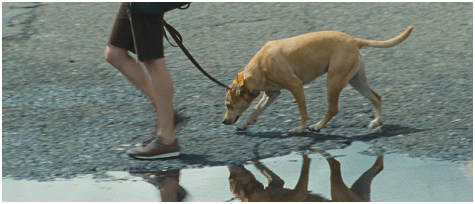
1. It is with crystalline clarity and unprecedented emotional poignancy that Kelly Reichardt explores life off the grid in Wendy and Lucy, a heartbreaking, life-affirming tone poem in which sacrifice and good intent are next to worthless in a world where the dollar reigns supreme, consumers are more highly valued than people, and poverty sickens the very well of society's soul.
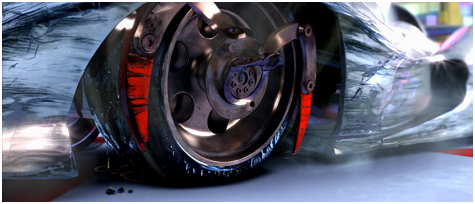
2. Behold every breathtakingly rendered frame of the deliriously conceived Speed Racer, the Wachowski Brothers' defiant foray into computerized cinema in which every exquisite editing device serves to bridge the past and present, channeling the archetypal beauty of youth's creative ambitions, subverting corporate greed (both literally and figuratively), and bringing dreams of destiny to life in a ravishing pseudo-reality.
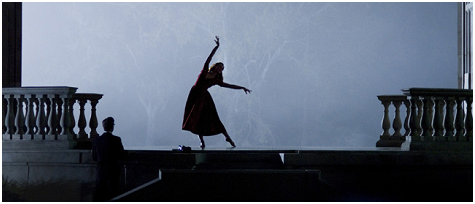 3. At once coolly assured, technically masterful and structurally unsound, The Curious Case of Benjamin Button proves both enrapturing and inescapably flawed as David Fincher charts the inescapable nature of life with surgical precision and a wrenching clarity that, ultimately, seems altogether limitless in its emotional capacities.
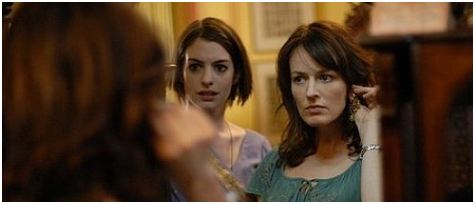
4. A cinematic capsule for our times doubles as a poetic antidote to national (and worldly) anguish in Jonathan Demme's Rachel Getting Married, in which all of society's petty categorizations (race, religion, gender, etc.) collapse to reveal a collectively beating, wounded, healing, loving heart that wants only the strength to carry on for another day.
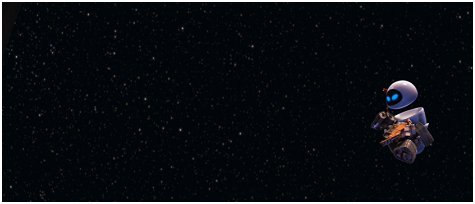
5. Not only a stellar achievement in animation but a landmark for cinema entire, WALL·E distills visual languages as far ranging as those of Charlie Chaplin and Stanley Kubrick into a cohesive, seamless whole, its environmental timeliness surpassed only by its insight into the perseverance of the human spirit and the nature of the soul.
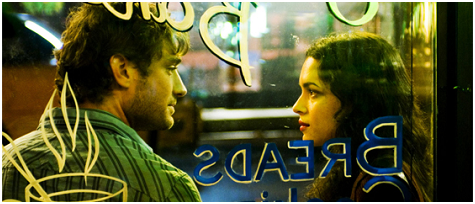
6. Arguably Wong Kar-wai's messiest, most indulgent fever dream to date, My Blueberry Nights' lyrical sense of one fated romance plays like a collective all-nighter, an implosive inebriation masking the greater longing for better times, lost dreams, unbroken hearts and missed opportunities.
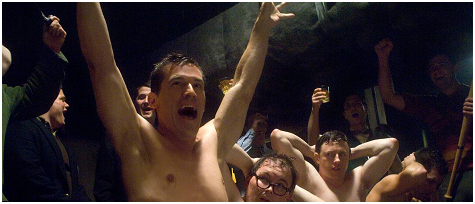
7. Oliver Stone the gadfly takes a backseat to Stone the humanitarian in W., here bypassing easy criticism for a wiser approach, re-contextualizing the persona of George W. Bush from that of a national buffoon into a modern day Greek tragedy and implicitly reminding us of our collective responsibility in the ongoing forging of history.
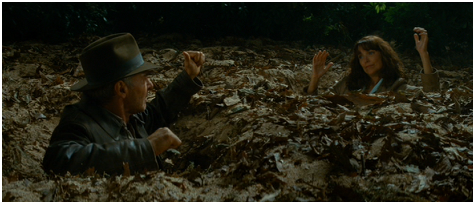
8. By far the most poetic film of the series, Indiana Jones and the Kingdom of the Crystal Skull may also be the most artful genre work of its kind. Shunning all manner of expectation and pretense, Spielberg earnestly emphasizes the intimate and emotional with wit and grace to spare, to say nothing of his imaginatively thrilling set pieces.
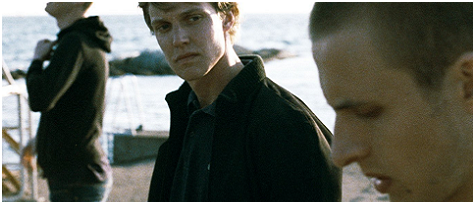
9. The debut feature of the year, Joachim Trier's sonically overloading Reprise fuses character, narrative, and a distinctly unique stylistic voice with effortlessly assurance, poignantly evoking the life-crushing burden of the tormented creative spirit and announcing a major new influence on the independent circuit to boot.

10. A greatest hits package of sorts for the indie auteur, Gus Van Sant's Paranoid Park utilizes an army of aesthetic components to forge an intoxicating representation of the teenage headspace's wandering spirit, evoking an intimate diary of the soul in the process.

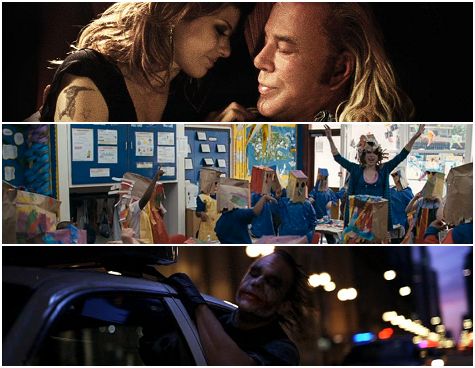
Boarding Gate, The Wrestler, Happy-Go-Lucky, Married Life, Flight of the Red Balloon, The Duchess of Langeais, Generation Kill, Dear Zachary: A Letter to a Son About His Father, The Dark Knight, Hellboy II: The Golden Army
Nov 13, 2008
City of God (2002): C
 It wasn't so long ago that the name Fernando Meirelles was synonymous not with overreaching arthouse pomposity, but the unbridled ambitions of new talent. City of God has always been overrated, but watching the film again suggests that such unchecked praise may have actually been the tipping point of the director's downfall. With a superficial adherence to the GoodFellas formula pandering to fanboys and critics, many mistook his stylistic distinction for aesthetic profundity, and Meirelles's style quickly became its own form of content, as The Constant Gardener superficially shuffled the same look, now heightened, into an altogether inappropriate narrative setting. Here, the mania of the Meirelles look - overexposed colors and jittery, caffeinated camerawork - is hit-or-miss in its evocation of ghetto life, often masterful in its distillation of exposition into pure sight and sound energy (particularly the tragic sequence at a dance party) but equally frustrating in its overall lack of narrative focus. Similarly problematic is the use of the protagonist Rocket's (Alexandre Rodrigues) narration to tell the story; as one of the few individuals to grow up in the film's Rio de Janeiro slums without being accosted by the local hoodlum culture, his relationship to the central conflicts remains minor and incidental while his own story remains largely unexplored and forgotten, thus exposing his thinly veiled role as a screenwriting device. Such a role feels even more disingenuous as the film's violence borderlines on exploitation, as such Pulp Fiction-reminiscent flashes function less to booth the audience's adrenaline than to diminish the gravity of portrayed suffering. The visceral and artistic excitement remains on surface-bound, where City of God remains a film of impressive, if superfluous, accomplishments.
Aug 25, 2008
Vantage Point (2008): D-
 A crowded highway, panic abound. The President has been shot! A young Spanish girl seeks her mother fearfully, uncautious of the danger as she wanders into the road. A van approaches at high speed, coming right towards her! Will they break in time!? The frame rate slows and the screen fades to white as the child screams, in shrill accent, "Ma-ma!" Now, the film retreats for the umpteenth time, flashing through previously glimpsed images as if on rewind, so as to show us this overly calculated series of events from yet another character's viewpoint. If this moment alone isn't the most shrill concoction to yet come out of 21st Century cinema, then keep me steered clear of any Ron Howard or Paul Haggis films yet on my blind spots list. Condensing the worst elements from both nighttime television programming (from shows like 24 to similarly rank stuff like CSI) and Greengrassian neo-realism into a trashy game of cat-and-mouse between the filmmakers and audience, Vantage Point aims to thrill with what amounts to a disingenuous and perpetual dick tease devoid of both stamina and payoff, trading in bland, phony archetypes that feign humanity while the film attempts ceaselessly, almost impressively, but ultimately horridly, to suggest that something of excitement or importance is happening during any one of its mentally numbing 90 minutes (needlessly busy editing schematics and overwrought, pummeling musical scores be damned). When the president is assassinated at an international political convention, chaos ensues and various characters -- reporters, cops, potential terrorists, secret servicemen, officials, and civilians -- each hold a piece to the puzzle. Except that there is no puzzle, only patchy storytelling, and from the unimaginatively literal implementation of narrative fluctuations to the film's inconsistent means of doling out information -- a phony attempt at manipulation that better serves to expose the film's contempt for viewers than it does hide the complete lack of otherwise purported sophistication -- Vantage Point proves so idiotic and paper-thin that it makes the canonized bullshit of The Usual Suspects look almost profound by comparison. More substantive than the endless running, shouting, double-crossing and identity confusion to be found in this debacle is, in my mind, the sad fact that even so many talented and well-cast performers couldn't raise this above its nearly bottom-of-the-barrel status. For movies like Vantage Point, life is too short.
Subscribe to:
Posts (Atom)