Showing posts with label capsules. Show all posts

Jan 10, 2013

Catching Up: Oscar Hopefuls Edition, Part II


Joe Wright's obsessively stylized (some would say over-) direction hasn't been my cup of tea in the past, but his boldly staged Anna Karenina is drunk enough on art direction alone that I'm now convinced his past efforts are worthy of a reappraisal. Here, the stage and cinema meet in a merged dimension that suggests Sucker Punch by way of masterpiece theater; warts and all, I was about in love with it by the ten minute mark when a symmetrically dispersing floor of paper pushers finds itself accompanied by an out-of-nowhere handful of roving musicians. Kiera Knightley seems to have lost some of her audience appeal in recent period pieces (how else to explain her master class turn in A Dangerous Method going almost completely overlooked?), but she's as well-used here as in Wright's past works, and it's almost high praise to say she stands out amongst the sumptuous surroundings (as her scorned husband, Jude Law lends additional moral complexity to the proceedings). The oppressive social expectations of women are explicitly examined via Tolstoy's classic story, but here even more blatantly, cinematically so via the film's interpretation of life as performance on the public stage, and what the film potentially loses through the elevation of style is gained back in multitudes through reflexive autocritique and self-devouring meta-ness. The hit to miss ratio is about even, and the ending in particular feels less than thought out, but the end result remains quixotically affecting, and more than the sum of its many delirious parts.
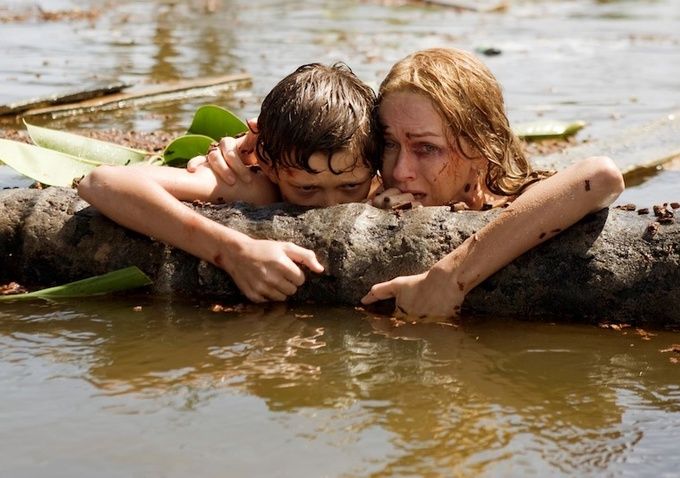

If there's anything in the way of legitimate human emotion to be found in the fraudulent The Impossible (the title is supposed to refer to the human spirit, or the statistical unlikelihood of the depicted events, but as a final reveal it suggests a party host unaware that they've just soiled themselves in front of the guests), you can chalk it up to the considerable talent of the cast, most of whom are wasted in this over-glorified horror shlock that thinks of itself as a Lifetime melodrama (I never thought I'd say this, but, if only). Spoilers ahoy, folks. The most existentially disturbing natural disaster in memory becomes a mere backdrop for a white family in peril, which is not to suggest the knee-jerk liberal political correctness I used to so frequently trip over, only that the larger scope of death and destruction is effectively whisked away by this misguided survivor's tale, which offensively implies that the preservation of a single family somehow diminishes the larger tragedy at hand, to which only lip service is offered in the form of dispassionately fleeting wide shots of mass suffering. Case in point: the film opens with darkness accompanied by the deafening rumble of a mounting wave, later an absurd point-of-view shot from the ocean itself, but the closing pan over the Thai landscape devastated by the 2004 tsunami barely registers an afterthought amidst all the life-affirming, "now it makes sense" hokum. Between these distasteful bookends is a whorish concentration of shamelessly manipulative suspense tactics (separated family members just missing each other) and pornographic levels of destruction nowhere near as terrifying as they should be. Of its many odious missteps, what reeks most about The Impossible is that it mistakes adventurous titillation for humanitarian mourning.


The biggest champions of Life of Pi describe a mountainous visual achievement that makes a profound statement on life, God, existence, etc., perhaps unfairly bringing to mind 2001: A Space Odyssey as a point of comparison. In short, I think Ang Lee's film, adapted from Yann Martel's "unfilmable" novel, is a remarkable achievement, but I think such hyperbolic praise does this gentle storybook of a movie a disservice, thematically and aesthetically. Stranded on a lifeboat in the Pacific Ocean after a shipwreck drowns his family en route to America, Pi (Suraj Sharma) survives his ordeal not only for nearly two-thirds of a year, but with the companionship of a Bengal tiger (amusingly named Richard Parker) who also escaped the sinking vessel. At least, that's one version of the story, which is relayed by the adult Pi (Irrfan Khan) through a flashback device that's belabored on the page but plays out as almost natural with Lee's understated flourishes. Visually, Life of Pi is pleasing, but despite its ground-up 3D visuals (or perhaps because of them), most of its compositions struck me as flat; initially disappointing, a second viewing convinced me these could satisfactorily be interpreted as the illustrations of a children's book, one that tenderly presents the young (and young at heart) with Great Ideas that, while enunciated and telegraphed, lose little of their vibrancy or wonder. Splashes of the audacity the director exhibited in Hulk could have been tripled for my taste, and there's some glorious natural imagery (a whale ascending through an jellyfish-filled ocean comes immediately to mind) that speaks for itself. I remain convinced that Martel's novel could have yielded a greater film in different hands, but Lee's work remains one to be grateful for.


Seemingly tethered together with random scraps of litter and pulp not unlike the makeshift home of its young protagonist, Beasts of the Southern Wild yearns to find eternal truths under impossible circumstances, and succeeds with flying colors by my watch. Quvenzhané Wallis is Hushpuppy, a young girl forced to survive growing up and the elements amid the absence of her mother and infrequent presence of her alcoholic, sickly father (Dwight Henry), who refuses to leave their home - "The Bathtub," a fictional, mystical community cut off from New Orleans by the levees - even when a Katrina-like storm brings floods, disease, and the threat of starvation. Much ado has been made about the film's social and gender depictions, criticisms that strike me as missing the gist of Hushpuppy's necessarily compromised life and vantage point: her tomboy demeanor, her tolerance of her father's recklessness, her cosmic view of the natural world (frequently manifested in the form of imagined Aurochs that symbolize the beasts, internal and external, with which she must reckon), all point to the thriftiness of someone forced to find their place in the world with minimal guidance, bereft of proper civilization or technology. Benh Zeitlin's debut feature goes for broke with earthy, abstract imagery (unlike, say, Killer of Sheep, Beasts' well-worn images are deliberately so), and only fleetingly does this fantastical facade reveal itself, as the locally cast extras sometimes push their archetypes to the breaking point. Those hiccups are quickly swallowed by Beasts' profoundly affecting weirdness, the coming-of-age of a character as naïve as she is remarkable.
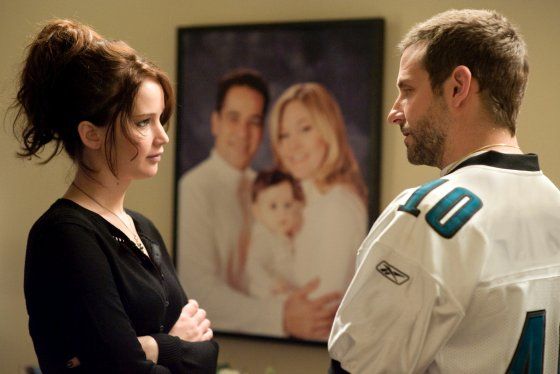

For all of its obvious storytelling shorthands and familiar narrative beats, I was smitten by the lived-in characters and relationships of David O. Russell's The Fighter, and his similarly unpretentious Silver Linings Playbook now occupies the same chamber of my moviegoing heart. Bradley Cooper and Jennifer Lawrence are Patrick and Tiffany, two young adults recovering from the devastating blows life has dealt them when they meet cute at a mutual friend's dinner party. No shortage of bellyaching has taken place over the film's purportedly demeaning portrayal of mental health disorders, yet as someone with more than their share of experience with depression, ADHD, OCD and PTSD (shall I continue?), such struck me as tastefully rendered within the confines of the film's chosen rom-com genre trappings, their portrayal lent genuine heft by Lawrence and Cooper's elastic sensibilities and smouldering chemistry. It also helps, I suppose, that I've learned to laugh at myself when it comes to some of my own emotional shortcomings, and perhaps even (despite being no fan of the team) being raised in the same region where the film takes place, where the Philadelphia Eagles are less of a sports team and more of a hallowed religion. Russell's work isn't exactly visually progressive (lots of visual snatches and impromptu cuts that seem more impulsive than lazy, which, despite my personal recommendation here, makes one wonder about the taste of those who deemed his work here Oscar-worthy), but Silver Lining succeeds less on the merits of aesthetics than its willingness to give in to crowd-pleasing effervescence. I wouldn't seal it in a time capsule for future civilizations like I would The Turin Horse, but I'll take it anyway.

Dec 31, 2012

Catching Up: Oscar Hopefuls Edition


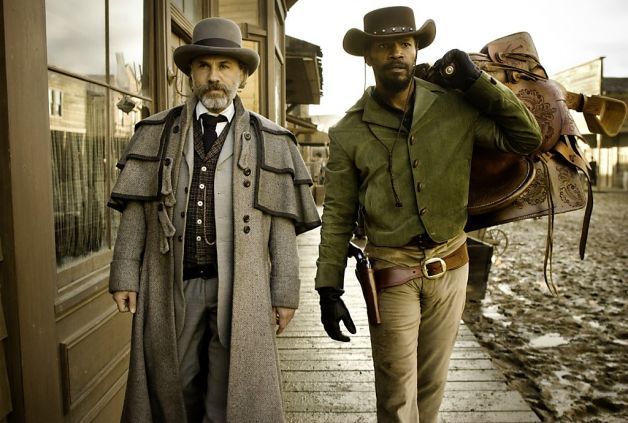
Quentin Tarantino's cameos in his own films are like signposts along the paths he's forged, their narrative and thematic functionality frequently overlooked amidst quips about his performance skills, excessive language, etc. His brief third act turn in Django Unchained might be his most obviously symbolic yet, a microcosmic reflection of a work that suggests someone brave or foolish enough (or both) to charge into a hellfire with dynamite strapped to their back. The absence of longtime editor Sally Menke is felt in this film's untamed sprawl and reinforced by a permeating melancholy; despite the anachronistic energy, cartoonish flourishes and brazen subversion of institutionalized dehumanization ("You want I should treat 'em like white folk?" "No, not like white folk."), this strikes me above all as a remarkably sad, boldly confessional picture, all the more remarkable for Quentin's restraint amidst material easily pushed over the line of taste. Jamie Foxx's titular slave-turned-bounty hunter rages (with glorious crimson strokes) against his captors but the scars (of whips, brands, and friends lost) remain, rendering his triumphs against the pre-Civil War establishment dubious at best. Impulsive choices (dialogue, in particular, feels less hyperbolic here than we've come to expect from this most conscious of writers) feel both mythic and lived-in, the film's relative imperfections complicating the knotty emotions of someone fully aware of their own creative and social privileges as a historical outsider. The trade-off is for something even greater than the sum of its parts, and what could in hindsight prove the most important contribution of an artist equal parts heralded and misunderstood.


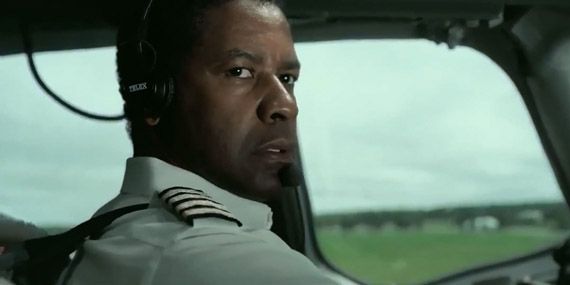
A thousand thank yous to Robert Zemeckis for showcasing a most terrifying (near) mass death sequence without a shred of the pornographic destruction or contempt of life that routinely infects the supposed entertainments of the multiplex, but one would be foolish to expect anything less from one of our great humanitarian mainstream artists. The first live-action film Zemeckis has helmed in the twelve years since Cast Away, Flight suggests the finely tuned studio work of Frank Capra or Jack Arnold, the material both blatant yet deep (the film's stairway conversation is a miniature masterpiece), the narrative structurally obvious on the page but raw and pulsating on the screen. A fortuitous convergence of events sees alcoholic/drug addicted vet pilot Whip Whitaker (Denzel Washington, alternately buried and on air, and leviathan at both) saving the doomed passengers of a malfunctioning jet, minus six, his lucid state the likely reason for his collected defiance of certain death, yet a professional and personal offense now inevitably confronted. What follows is a character drama fueled by devastating introspection: into addiction, into ego, into fear of death and life. Certain elements of this film hit close enough to home that I should confess a likely bias (the couple sitting nearest to me at a packed screening seemed disturbed by my persistent weeping), but we and our loved ones all must go sooner or later, and Flight's much-criticized turning point seems to me both natural and earned, for how else can we judge ourselves than by how we live up to those who passed before us? One of the great studio pictures of the year, and another reason to consider Zemeckis a major player.


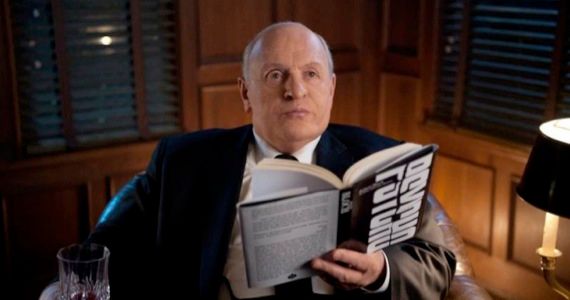
Hitchcock is relatively inoffensive if you consider it the inevitable feel-good runoff of the zeitgeist shift that displaced Citizen Kane with Vertigo on the Sight & Sound list earlier this year. Whatever the reason I don't hate the film like my cohorts mostly do (likely the fact that I've worked as a projectionist showing it the better part of a month; disposable as it is, it plays well with audiences, an achievement that's undeniably infectious), it's still an essentially useless consideration of the infamous director save for the few to whom it will introduce his body of work, otherwise amounting to little more than an adept dramatization of a few pages' worth of IMDb trivia. If you haven't seen Psycho, the making of which is explored herein, the factoids will be mostly lost on you, and despite the intolerably pronounced theatrics of the cast (as the titular Hitch (hold the cock), Anthony Hopkins spends too much time on a synthetic identity crisis to show us how interesting the man really was; he flashes a nasty smirk at the climax I'd liked to have seen more of), inane Psychology 101 visions and snarky historical perspective ("Let alone to flush one!"), I appreciated that the film in question is never itself glimpsed, only the reactions to such. (Yes, that sentence went on too long; final side note: how the hell did they pass up the opportunity to show off the giant shower head?) That's more likely the result of a copyright issue than a creative choice, but then, assuming the latter, even a blind squirrel finds a nut once in a while.


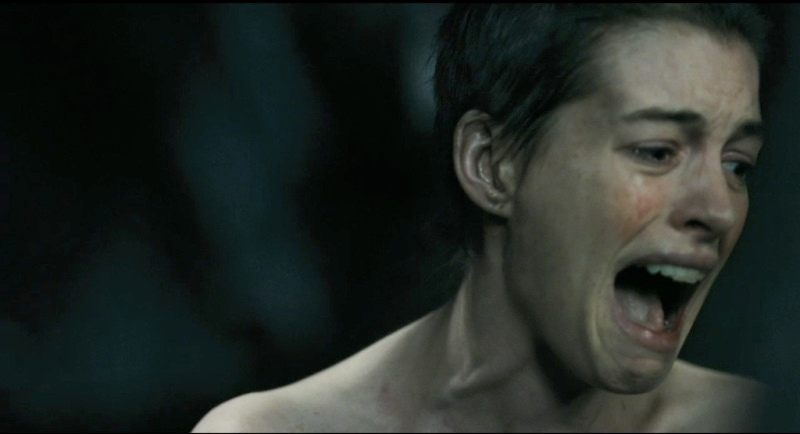
To get lost in the rhapsody of Schönberg/Boublil/Kretzmer's world famous musical, here, I'd have to overlook almost all of Tom Hooper's Les Misérables' visual qualities, at which point we'd no longer be talking about cinema, which is not to suggest that it should qualify as such in the first place. Feeling like one is suffering a migraine that will ultimately lead to blindness isn't my ideal approach to experiencing something attempting uplift and affirmation, and so this lavish production mostly embarrasses itself to these violated eyes. The choice to record the fifty-some songs live on the set, allowing for greater spontaneity and depth of performance, pays off only insofar as the cast is occasionally able to sign and act simultaneously (your mileage will vary depending on how much of the cast seems like they're mistakenly auditioning for Saturday Night Live). Little of that matters given Hooper's astonishingly inept technical handling: not merely fourth-wall breaking and emotionally overbearing, his roving, impatient camerawork feels like a drawn-out implosion of time and space, snippets of footage so randomly and haphazardly assembled as to approach a dadaist fever pitch if there were any sense of purpose behind it. Altogether, I'd doubt if it contained ten minutes of legitimate human emotion, no small achievement for a film with the singing talents of Hugh Jackman in the lead. (I prefer Sally Field's work in Lincoln but Ms. Hathaway arguably deserves and is surely overdue for the Oscar she'll garner for her lightning rod single take solo, about to become the most watched sequence since the Zapruder film.) My pity goes out to the craftsmanship and thesping talent that sank into this trench, and the millions of hours that will be wasted on it. The King's Speech wasn't my cup of tea by any stretch, but 2010's Oscar winning flake seems positively mountainous compared to this whimpering black hole. Fosse wept.


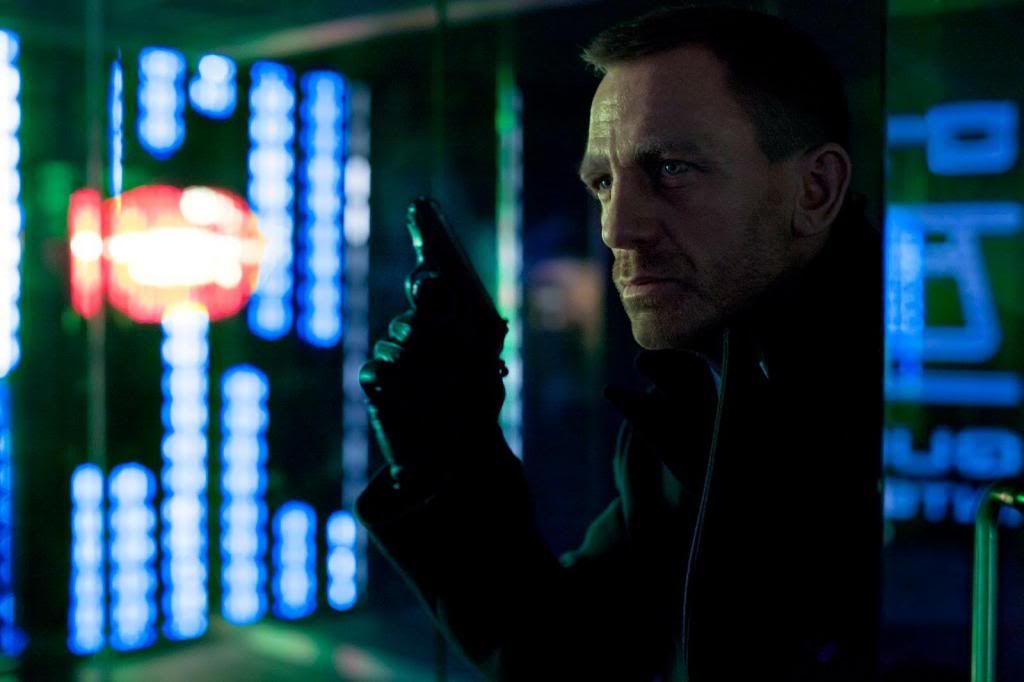
James Bond looks both forward and back in Skyfall, a triumphant return to competent action filmmaking (and then some) after the visually inept/atrociously scripted Quantum of Solace. If I don't quite prefer this fiftieth anniversary's love letter to its predecessors to Casino Royale's furiously self-reflexive genre deconstruction, so be it; these two high water marks have more in common than not, and both evidence the fact that Daniel Craig's line readings are never better than when he's tied to a chair. The stereotypes and trademarks are mostly in place here sans regressive offense (with no proper Bond girl in her way, Judi Dench's M is as prevalent and dynamic as Bond himself), but from the not-unjustified vengeance of Javier Bardem's nightmarish villain (shades, naturally, of Anton Chigurh, and an entrance that might be the single best piece of acting the series has ever witnessed) to the avoidance of field work by an old friend, what propels this grisly chapter is the characters' keen sense of agency (minus one exception that's fitfully disturbing). Bond's self-devouring manhood is both gift and curse, and from the soulful murmurs of Adele's powerhouse theme song to the countless lethal blows 007 deals and nearly suffers, Skyfall especially kicks ass in suggesting that it's far cooler to be tortured and resourceful than brash and destructive. It's also damn beautiful to look at, especially the elevator/skyscraper sequence. As self-aware milestones go, there's few comparisons. A great action film by Sam Mendes – who knew?

Mar 5, 2011

Viewing Log #4

Photo Sharing and Video Hosting at Photobucket
Uncle Boonmee Who Can Recall His Past Lives
(Apichatpong Weerasethakul, 2010) Is it that the Thai filmmaker is getting better, or am I just becoming that much more in tune with his wavelength? That question demands a reviewing of his Tropical Malady (which I liked, but didn't quite get; Syndromes and a Century was much more my bag), but for now, I'm simply grateful to have enjoyed this latest existential doodle from this most relaxed, assured, and profound of filmmakers. Life and death are blurred in ways equally mysterious and clear-minded in this fantasy mood piece, which deliberately indebts itself to 2001: A Space Odyssey via the inclusion of a red-eyed, shaggy-haired simian character, one of two deceased family members who appear to the titular relative in his final weeks in the flesh world we know. (What's more, the film actually deserves to be so audacious.) Ethereal, meditative, and surprisingly funny amidst it all; I can't wait to watch it again (and a third, fourth, and probably fifth time, at least.) [Rating: 4.5 out of 5]

Repulsion (Roman Polanksi, 1965). At age ten, I didn't know what to make of this surreal nightmare, but then, I was a late bloomer. This landmark psycho-sexual horror film (see here, Black Swan fans) strikes me largely as a tragicomedy in disguise; you may feel the urge to laugh out of sheer need to break the tension, and Polanski knows it. Featuring the fragile, tormented, and unwaveringly endearing Catherin Deneuve in the splintered lead: An easily distraught young woman whose instability is at least aggravated - if not caused outright - by the sexual attention of the men around her, be they dishonorable or not. The lines of reality to her perception are never clearly established (a subjective mindfuck that reveals itself more in hindsight), but it's terrifying in the moment nevertheless. The ticking of a clock seems to penetrate the very fabric of space in the film's haunting apartment locale (and that's the least nerve-racking of the noises to be heard), but nothing proves more frightening than when the sound goes away completely. A dead bunny may be the supporting performer of the year, and minus a single creative choice that probably amounts to little more than a petty personal preference, the film strikes these eyes as perfect. Criterion's Blu-ray is gorgeous, but then, you knew that already. [Rating: 5 out of 5]

Biutiful (Alejandro González Iñárritu, 2010) It ain't Babel, but it sure ain't 21 Grams, either. The former (essentially Crash Redux, complete with pseudo-ponderous zoom out finale) might have gone down smoother had it not been so obviously the product of a talent going down in flames in the name of after school special topicality, and while Biutiful pedals back on the subtext-as-plot insufferability, it continues some of the same bad habits the director has recently let get the better of him. (Button-pushing controversiality? Blanket miserablism? Check, and check.) Iñárritu hasn't meaningfully played with time since the aforementioned Grams, although here it at least affords a revisitation of one of the film's most interesting scenes. Javier Bardem is Uxbal, a small time player in the criminal underworld of Barcelona; amidst efforts to protect a band of immigrant workers and his own family, he is diagnosed with terminal cancer. With at least one subplot too many (or too scantly explored), Biutiful never feels like a full blossoming of what's being planted; it builds and builds, and deflates when seems like it should explode. Though seriously flawed, it remains a thoughtful, moral film. Iñárritu wisely leaves the cast to their own devices (Bardem's so prodigious that even the Academy couldn't not toss him another nod in recognition), and if the film is ultimately a failure (not my opinion), it's at least one of grand and genuine aspirations. Go back to the editing room, Alejandro: There's a great movie rattling around somewhere in there. [Rating: 3.5 out of 5]

The Illusionist (Sylvain Chomet, 2010) I caught this at the last showing on the last day of it's local run, which was good for my wallet, but not for my creative palate; I'd have seen it two or three more times if possible. I'm ashamed to say I'm entirely unfamiliar with the work of Jacques Tati, whose unfilmed script (written to his daughter, as both apology and love letter) was used by Chomet for this, his follow-up to the wondrous Triplets of Belleville. Nearly free of dialogue (much of which is reduced to indistinct remarks; the communication is in the tone and the remarkably drawn gestures), this story of an aging magician and the young girl he takes under his wing is the stuff of life, simply put. Eliminating the dialogue helps it to achieve some kind of universality: Yes, it's about these people, but it could be about anyone. Many riches to be mined here. [Rating: 4.5 out of 5]

Step Up 3 (Jon M. Chu, 2010) My interest in this inspired act of creation doesn't quite hit zenith levels, but I am able to say "best end credits in recent memory" without a second thought. The story, as it is, is pure bubblegum; you've seen it before, yes, but never so stripped down to the essence of the material. I know not a thing about dancing and couldn't bet my life on my ability to actually perform in any way not requiring or improved via alcohol, but this (back to the movie now), is pure, uninhibited artistry being channeled both in front of an behind the camera, a celebration of family, love and possibility. The cast members are quick-footed contortionistic masters of rhythm. Genuine and genuinely infectious, and it appears that - if watched in 3D - it'd have about four times the creativity and wit as the format did in James Cameron's Avatar. The latest example of what's possible when studio execs don't give a shit what the movie is, only that it exists in the first place to cash in the popular predecessors (neither of which I've seen in this case). I think it deserves midnight movie status, and I'm sure this guy thinks so too. IFC? Preferably someone else? [Rating: 4 out of 5]

Xtro II: The Second Encounter (Harry Bromley Davenport, 1990) This movie disturbed me as a child, but all I remember seeing were the gory money shots. Now, I've seen Alien and Altered States and, uhm, Sunshine, and the sheer redundancy of this film video is easily the more distressing factor. (Actually, I'm almost impressed by the special effects, seeing that this was a straight-to-video production.) Were the film entire just a few shades more ridiculous, it'd be perfect MST3K fodder, and if 4th generation Alien ripoffs are your thing, have at it. For me, it's a bit too preoccupied with keeping a straight face to ever really be the kind of fun necessary to overcome it's inherent awfulness; despite some sporadically amusing archetype riffing amongst the supporting characters, it never gains traction. Mostly, it's an unsatisfying game of Ten Little Indians, as it never even gets the cinematic basics right, probably more for lack of funding than anything else -- establishing and detail shots are so disconnected that nothing like visceral tension can accrue. The monster (a giant creature inadvertently transported to Earth from another dimension) never seems to occupy the same space as anyone else, and it doesn't help any that the score is like too many of its early 90s cheapo horror contemporaries: Cereal box synth music from hell. Alcohol might make this better, but it might make it a whole lot worse, too. Bad movie fans, proceed with caution. [Rating: 1.5 out of 5]

Dogtooth (Yorgos Lanthimos, 2009) If ever a film demands a second viewing, it's this one: It's savage and horrifying and wicked and funny in the same vein of humor that could also find Dead Baby Jokes funny (i.e. the subject matter isn't funny, but the mere nature of it, being so sensational and offensive, is), and on top of it all, it completely denies us of context, outside the elasticity for good and bad held by the human spirit. What you see is what you get, and what you see are two parents who mentally, emotionally and physically imprison their now-adult children to sickening lengths (by the time incest is suggested, it hardly comes as a surprise). That I'm aghast must be a form of overload, and as baffled as I am by this dark underbelly of a film, I did enjoy it. Probably an evolved form of the style and judgment usual dished out by Michael Haneke (who I do like, despite both Funny Games). Stay tuned for viewing numero dos. [Rating: 4 out of 5]

The Eagle (Kevin Macdonald, 2011) It's pretty much what you'd expect from a sword-and-sandals film starring Channing Tatum and released by Focus Features, which, for me, means it kicks ass. Perhaps inevitably, it lands as something of a cross-breed between 300 and The New World, which is to say it's both viscerally intoxicating and phantasmagorical. When's the DVD? [Rating: 4 out of 5]

Jan 14, 2011

Viewing Log #3.4

Photo Sharing and Video Hosting at Photobucket
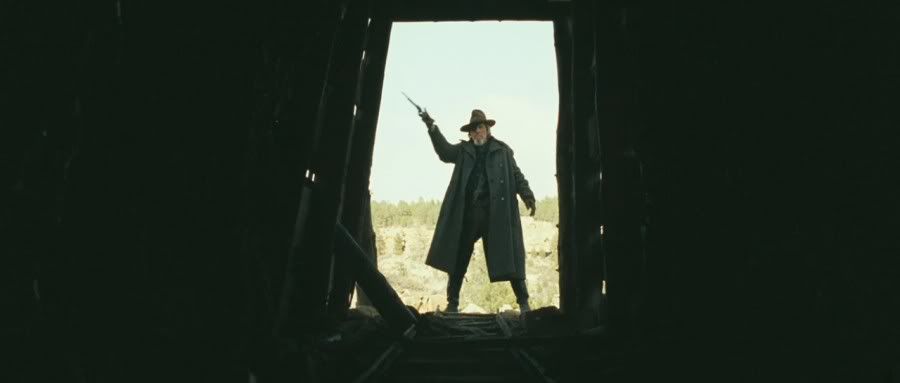
True Grit (Joel Coen and Ethan Coen, 2010). Although toned down from their usual, ironically detached style, this distinctly un-ironic remake/retelling of the original Charles Portis novel is every bit as assured and idiosyncratic as the Coens' other (albeit more subversive) western, No Country for Old Men. Never stepping on the toes of the original 1969 adaptation (an okay film elevated by at least one wonderful lead performance; the presence of the Duke never hurt anyone, either), theirs sticks closer to the reported darkness of the original novel, most notably in a touching denouement that amplifies the existential trappings of the film without literalizing them. As the young heroine Mattie Ross, relative newcomer Hailee Steinfeld is a tour-de-force of whiplash verbosity and razor-sharp wit, a maturity of character that sees her determined to avenge the murder of her father by the cowardly drunkard Tom Chaney (Josh Brolin). As her hired bounty hunter Rooster Cogburn, Jeff Bridges is at least as appropriate and iconic in the role as John Wayne was four decades ago. More proof for the usefulness of remakes by great talent (if anything, the '69 original is now a better film that it can stand alongside this one), the Coens' True Grit also functions as an equally somber and hilarious criticism/correction of racism past. As a nearly-definitive cinematic representation, one doubts it will ever be contested. [Rating: 4.5 out of 5]

Tangled (Nathan Greno and Byron Howard, 2010). Disney's postmodern retelling of the Brothers Grimm fairy tale "Rapunzel" certainly doesn't lack for archetypal recognition; more often than not, the film is suffocated by it. Seemingly an attempt to board the Shrek bandwagon without the excessive smartassery, this, the 50th animated production from the studio (and the most expensive animated movie ever made, at an unadjusted budget of $260 million), gets at least as much right as it does wrong but the final effect remains one of a barely-triggered gag reflex. Narrative abbreviations curtail much in the way of accruing emotional resonance as the film rushes through back story to the present where Rapunzel remains locked in a tower, convinced by her evil faux mother (who, at several hundred years old, needs the girl's anaconda-like hair for its life-giving qualities) that the outside world is too dangerous to venture. As a singer, Mandy Moore's pop voice is pleasant enough, but her ability as a voice actor is too limited, perhaps simply inexperienced, to lend much in the way of characterization to the lead role -- the princess remains firmly less than the sum of her parts. The guys aren't much better off, and frankly, I found the songwriting terribly shrill and annoying, and this coming from someone who once wore out virtually every Disney VHS through The Return of Jafar. When Tangled does work, however infrequently, the results are often breathtaking, sometimes among the finest in the studio's canon. Leave it to Rapunzel's sidekick chameleon, Pascal, to pick up the slack the rest of the time. Someone give this little guy a movie all his own. [Rating: 2.5 out of 5]

Tron: Legacy (Joseph Kosinski, 2010). These eyes didn't glimpse 1982's Tron until adulthood, so it isn't through the rose-tinted lenses of nostalgia that I say I believe that film to be very nearly a masterpiece, a Metropolis-esque utilization of technology fused with a technologically-slanted narrative that is at least as important to the evolution of digital cinema as later behemoths like Jurassic Park and Terminator 2. This long-gestating sequel recognizes that relationship and capitalizes on it in the form of a pseudo-philosophical recalibration of the original concept that owes as much to the past two decades of video games as it does to 2001: A Space Odyssey. Jeff Bridges reprises his original role, now trapped inside "the grid" as an exiled Zen master betrayed by one of his own creations: Clu, made in his own image and named after the departed program from the original film and whose purpose to create the perfect world turns malevolent as he attempts to weed out the impure from his digital domain. The recreation of a younger Jeff Bridges is at least as startlingly realistic as the young Arnold Schwarzenegger's digital cameo in Terminator Salvation but his lingering presence quickly triggers the uncanny valley effect to sublime (if not necessarily deliberate) results; the photo-realistic nature of the character (with the exception of his mouth, which never seems quite as spot-on as the rest of him) suggests something too good to be true. Musings about science and religion never transcend lip service but a plot development involving naturally occurring digital life is plenty to chew on amidst the surreal neon images, less revolutionary (and trippy) than the 1982 effects but never lacking for imagination or visceral thrill. The climax, involving something not unlike a reverse big-bang, is a masterstroke. If only Disney could always be this kinky. [Rating: 4 out of 5]

Dec 18, 2010

Viewing Log #3.3

Photo Sharing and Video Hosting at Photobucket
The Fighter (David O. Russell, 2010) If all studio movies had at least half the emotion as the crowd-pleasing The Fighter, there'd be far less to bitch about in this business of film reviewing. An exquisite example of indie sensibilities fused with mainstream cinematic formula, this Rocky-esque tale earns its way into your heart with good old-fashioned legwork, Capra-corn lite with a dusting of grit. Drug-addled family ties fuel this underdog tale of a fighter held back by his possessive and paranoid family, as well as a breathlessly genuine romantic subplot (Amy Adams, what I wouldn't do for you) and a very creepy bunch of girls who make Deliverance proud. It may not be great movie art (a distinction I care little about when I enjoy myself so much), but there's more feeling to it than most of the "great" event movies of late combined. No weak links here; Christian Bale is a standout as a crack addict. For the film and cast entire, let's hope that Oscar knows the real deal when it sees it. [Rating: 4 out of 5]

Unstoppable (Tony Scott, 2010) Confession time: This is the first Tony Scott movie I've seen, period. Seems like I've picked a good time to buck the trend, as this is as pure and breathless as damn near any mainstream action movie in recent memory. The subject matter - a massive runaway freight train carrying toxic goods through developed areas, and the scrappy efforts of money-hungry business heads and Regular Guys to stop it before derailment - has an archetypal purity, and the cast plays it as myth in action (Rosario Dawson in particular lends a quotidian balance). The shaky-queasy camera is used tightly, sparingly, like thick brush strokes; like Michael Bay, Scott's stylistic hang-ups are becoming instinctive, fluid and, dare I say, artful. Looks like I'll be catching up on Top Gun soon. Appropriately trashy, single-mindedly visceral and free of all excess, Unstoppable promises, and delivers. [Rating: 4 out of 5]

Burlesque (Steve Antin, 2010) If Showgirls is the Mt. Everest of self-reflexive, faux-trashy cinematic subversion, Burlesque is that hill from that Hugh Grant movie. Small potatoes to Verhoeven's masterpiece, however, are still quite good, and what astonishes most about this debut feature of pop singer Christina Aguilera is its total absence of irony (I suppose we've come to expect it). Chances are you know you've seen this movie before, before you even watch it, and the filmmakers play against that expectation in frequent character asides that refreshingly strain and deviate from the domino-like plot structure. Stanley Tucci's queer eye and Cher's dictatorial command cushion contrast the wide-eyed determination of Aguilera's aspiring dancer Ali; between a rock and a hard place, she emerges like a butterfly from a weather-worn cocoon. The film recycles cliches with feeling, verve, and savory camp wit; its purity is close to that of Speed Racer. [Rating: 3.5 out of 5]

Dec 5, 2010

Viewing Log #3.2

Photo Sharing and Video Hosting at Photobucket
Black Swan (Darren Aronofsky, 2010) Clearly the work of a talent, Black Swan is also indicative of Darren Aronofsky's creative weaknesses as a filmmaker – shortcomings, mind you, that he has largely avoided, or put to good use, in all of his previous films. But this tale of Nina Sayers (Natalie Portman), an obsessive, self-destructive dancer intent on landing the lead role in the titular play, feels more like a deliberate stylistic exercise than a legitimate act of creation: it invites the common criticism that Aronofsky's style is technically proficient but soulless. The gonzo visual design – grainy handheld camerawork, desaturated colors, and a frequently implemented rotation shot that suggests an inverted fish-eyed lens – is ultimately one lacking much in the way of genuine subtext. What you see is what you get, and pretty as everything is, nothing is allowed to simmer long enough to accrue much meaning or verve – it doesn't even invite comparative thoughts of Aronofsky's own obsessive creative processes. It would be unfair to bring up Mulholland Dr. for comparison, but even unto itself, Black Swan's purported mindfuck is exceedingly low on legitimate crazies (I'm looking at you, derivative mirror freak-outs, here a totally wasted sight gag), and with credibility-stretching gotcha! moments peppered throughout like half-hearted Polanski shout-outs, only sporadically does it manage to rise above a connect-the-dots Pysch 101 thesis programmed with base stimuli. Clint Mansell's score propels Nina's psycho-sexual breakdown with ravenous thrust, but the screenplay by Mark Heyman, Andres Heinz and John McLaughlin (commissioned by Aronofsky, who worked on several versions of it over the past decade) grounds things in an embarrassingly creaky psycho-mother device. Everything comes out too neat and tidy to court true madness: a few scenes added or a few scenes removed would likely be a step in the right direction, just to take off the Pavlovian edge. Aronofsky's fingerprints make this worthwhile for his fans, but his connection to the material seems more professional than personal – he fails to make us feel why. Portman is fearless and grounded; even Barbra Hershey, whose part, as Nina's controlling mother, is a thankless rut, manages something in the way of characterization (her nuance makes the script's two-dimensionality hurt). The finale – sharp, unapologetic, and something close to schizoid – is inspired, and, like a handful of other sequences, worth rooting around for. But the film entire doesn't earn it. [Rating: 3.5 out of 5]

Let Me In (Matt Reeves, 2010) Let the Right One In gets something of a tonal inversion in the remake Let Me In, a triumph of imaginative, intelligent adaptation and breathtakingly assured direction; it joins Werner Herzog's Nosferatu and David Cronenberg's The Fly as one of the greatest horror movie remakes. It might even be better than Thomas Alfredson's excellent 2008 original (as singular as any vampire film); each is now better for the other having existed, too. The template is the same: Abby (Chloe Grace Moretz) is a normal 12-year-old girl in appearance, but has been so for many years as a vampire (blood, good; normal food, bad; daylight, very bad); she has a human partner of sorts (Richard Jenkins) who aids in the necessary killings to gather her required food. They've just moved into the same apartment complex as Owen (Kodi Smit-McPhee), an actual 12-year-old staying with his mother during a heated divorce and frequent target of bullies at school. The two loners first meet in the courtyard; what develops bears a certain childhood-pure love that frequently touches profundity. Whereas Let the Right One In was cold, transient and light on action, Let Me In basks in a glow of circa-1982 Spielberg nostalgia. Changes from the original script are light (a botched murder attempt is reworked here in a boffo car sequence), so what you're getting is something not unlike the same song from a different instrument. The director, Matt Reeves (of the good-but-not-great Cloverfield), displays heretofore unseen levels of talent; the veteran and child actors are entirely excellent, tragic, and heartbreaking. Let the Right One In may be the better film, but I think I prefer the B-side. [Rating: 4 out of 5] (both)

Casino Jack (George Hickenlooper, 2010) Purporting subversion via its plots indictment of corrupt financial establishments, the social timeliness of Casino Jack nevertheless proves unable to transcend crutch-bearing lip service to an undemanding middlebrow taste (the opening “based on a true story” tag is the first tell). Angry but ultimately aimless, it embodies the apathy of all those bad liberals who talk about how terrible things are and continue about their day. Chronicling the events leading up to the conviction of former “superlobbyist” Jack Abramoff (Kevin Spacey), the implied critique of lobbying – the means by which cash is permitted to influence votes in Congress – is one-note and, unless you've been living under a rock for the past few years, far from revelatory and quite tame where it intends to infuriate. The script, by Norman Snider, is too reliant on Abramoff as a relatable surrogate to genuinely scrutinize him and his behavior – he stays warm and fuzzy compared to the reptile he should be – and although Spacey is fine to watch, he can't elevate a whitewashed script and insufficient character material. The film itself feels dispirited, all action and no thought. A handful of framing devices are the only memorable bits; Casino Jack never elevates itself above the ideologically confused and comedically lukewarm (Jon Lovitz is wasted, Barry Pepper miscast, etc.). It mistakes entertainment for enlightenment and frivolity for expose. [Rating: 2 out of 5]

Legion (Scott Charles Stewart, 2010) Legion kicks ass in fits and spurts. Things go Night of the Living Dead-meets-The Terminator at an isolated highway diner when an elderly patron starts babbling obscenities about death before mutating into a wall-crawling, scraggly-toothed menace. She's an angel, one of countless revealing themselves on Earth in a divinely mandated mission to kill Charlie (Adrianne Palicki), a waitress on site, whose unborn baby is destined to save mankind. Some earnest genre thrills are had – the cast, particularly Dennis Quaid, is entirely game for the material – but Legion ultimately flounders on the points of brevity and redundancy; the payoff starts too soon, and when we finally get to the climactic showdown between Paul Bettany's heavenly renegade Michael and the still-working-for-God Gabriel (Kevin Durand; razorblade wings are tops), the movie can't help but be staying out its welcome. A few minutes shorter, and an ending that doesn't outright quote the beginning of the movie, and we might have had something special here. [Rating: 3 out of 5]

Harry Potter and the Deathly Hallows, Part 1 (David Yates, 2010) I'm no expert on the subject matter, but I've read the entirety of J.K. Rowling's Harry Potter series, enjoyed all (Year 2 was shaky, though), and chastised none of the respective films for the disinclusion of any particulars from their source material (I'm no fan of certain reworkings in Half-Blood Prince, but those are dramatic issues, not fan squabblings). Cut from largely the same cloth as its promising, flawed predecessor, this first half of The Deathly Hollows feels scraggly and, even unto its abridged self, a bit incomplete; all the better for a tale of refugees living moment to moment, unsure of their next move, and continuously being pushed to the edge of their resolve. For you muggles, an escalating war in the wizarding world has forced Harry and his two chief cohorts to flee for their lives; the dark side, aka the Death Eaters, have infiltrated society and now pull many powerful strings. Although his poeticism falls short of its intended reach (the film only almost jumps off the screen), David Yates remains the best director the series has seen after Alfonso Cuarón (whose Prisoner of Azkaban remains tops). Awkward longings and impenetrable adolescent emotions make this something of an angst-ridden chamber piece. Yates doesn't let the action turn visceral, and even when people are together, loneliness abounds (to think of what Werner Herzog would have done with the passages in the forest!). Judging by this first half, this touchstone series is well on its way to getting the sendoff it deserves. [Rating: 4 out of 5]

Nov 29, 2010

Viewing Log #3.1

Photo Sharing and Video Hosting at Photobucket Anchorman: The Legend of Ron Burgundy (Adam McKay, 2004) Adam McKay's debut feature is a freewheeling ode to the scatological and puerile, and on those base terms, it's nearly perfect. Will Ferrell is the titular news anchor, an oafish personality equal parts confident, idiotic and adored (when found to be hitting on a girl unaware of his celebrity, he blabbers, eventually finding the words “I own many leather-bound books, and my apartment smells of rich mahogany”). Ferrell sells masculine insolence with Shakespearean conviction and something like gravitas; his minions – the overenthused jock Champ Kind (David Koechner), self-absorbed Brian Fantana (Paul Rudd) and mentally challenged Brick Tamland (Steve Carell) – round out the comedic archetypes. It's a great stupid comedy for smart people. Newcomer Veronica Corningstone (Christina Applegate) plays the straight man to their horseplay – it's the 70s and she's breaking ground as a female anchor – before subsiding to Burgundy's inexplicable charm. The film's riffing of the era is light and incidental; after the sublime skewering of media whoremongering (best rendered via the hilarious story of a pregnant panda), it's the shameless gender dynamics that receive the most time in the spotlight of this breezy palate-cleanser. Though never more than a romp, it's a hell of a good (and good-hearted) one. Quotability abounds, and Steve Carell steals the show; McKay knows how to use his actors. The PG-13 version is preferable; one "fuck" goes a long way. [Rating: 4 out of 5]

Resident Evil: Afterlife (Paul W.S. Anderson, 2010) While disappointing compared to director Anderson's previous picture - the borderline transcendent vision of colliding metal and flesh that was Death Race - Resident Evil: Afterlife nevertheless reveals itself as something of an heir to the anti-masterpiecedom of Plan 9 From Outer Space, Ed Wood's 1950s invasion saga being routinely named the worst movie ever made. Afterlife is more self-aware than Plan 9, which is expected for a film made in 3D (an almost sublime implementation, a rare success here for the format) but also necessary in justifying the singularly mindless forthrightness of the proceedings. It's drunk on overwrought visceral hooey and a near-total lack of concern for everything else. The fourth in the series, this music video/video game hybrid super-streamlines the narrative even at the expense of minor continuity (the DVD needs to come with a drinking game feature, do you hear me Sony?) to somewhat incredible effect (Afterlife is too smartly made to not be deliberately stupid). This retarded effect proves almost intoxicating amidst the chic gloss; the film is almost profoundly lightweight. Easily the best of the bunch, the postmodern Afterlife is close to great trash. [Rating: 3.5 out of 5]

The Town (Ben Affleck, 2010) There's no sophomore slump for Ben Affleck, who leaves a far more indelible mark on the crime genre here than in his wan, if thoughtful debut Gone Baby Gone. On paper, The Town is awash in clichés but they're pitched with real texture and pathos; you might not even notice. Affleck lends the material an everyday, everymanness without sacrificing artistry (on both sides of the camera; he plays the lead), and events unfold with graceful ease. As a friend closer than family to Affleck's Doug MacRay, Jeremy Renner is an utter chameleon as Bahstan hothead James Coughlin, a prison vet ready to put it all on the line again for the mandatory Last Big Score. An opening crawl informs us that this town has spawned more bank and armored car thieves than any other in the world. Cop and robber antics are presented as matter-of-fact, methodical, and often nasty (in both directions) so as to cut through the yellow tape; there may be no more chilling moment this year than when someone decides to look the other way (and nor do we blame them). A centerpiece heist holds a candle to Michael Mann's Heat. The cast is uniformly game, restrained, earthy, and will probably prove superior to at least half of those nominated for Oscars next year. [Rating: 4 out of 5]

Oceans (Jacques Perrin and Jacques Cluzaud, 2009) Oceans is fine in its stateside, theatrically-released form, with a voiceover by Pierce Brosnan that's notable for achieving Disneyland tactfulness without actually triggering the gag reflex. Nevertheless, in literalizing so much of what's onscreen, this verbal narrative can't help but detract from the awe-inspiring images. If possible for yourself, I say it's preferable to watch the film with an alternate language track sans subtitles; the DVD and Blu-ray releases offer English, Spanish and French language tracks, so assuming you're not trilingual, go for it). A success in purely visual storytelling, Oceans somehow squashes the largest ecosystem on Earth into Happy Meal form while still maintaining a sense of wonder. Jaw-dropping images aplenty; a sequence in which birds and dolphins feast on a school of fish must be seen to be believed, while a humorous scuffle between a shrimp and lobster is better than anything in Iron Man 2. Compactly profound, appropriately humbling, and this is just the tip of the iceberg. [Rating: 4 out of 5]

Easy A (Will Gluck, 2010) Forgive me for this: Easy A gets a B for effort but it's really C grade material. Critically thoughtful but only almost subversive, this star vehicle for the badass beauty that is Emma Stone looks at the social mechanics of peer pressure and rumor corrosion but never really fully considers them; it's Daria, de-fanged. Straddling an uneasy line between caricature and satire, Will Gluck's follow-up to Fired Up! (making this probably the film improvement of the year) chronicles the domino effect that ensues when 17-year-old Olive (Stone) agrees to “date” her gay friend so as to alleviate his everyday difficulties in a homophobic environment: he compensates her financially, and she agrees to a public stunt and the allowance of subsequent gossip. Soon, a business is established: Anyone in need of faux sex status is a welcome customer to the socially defiant, steadfastly virginal renegade. Certainly better than your average piece of American Pie backwash, Easy A still panders to the knee-jerk crowd it aims to be so critical of, wasting its not insubstantial comedic energy on pedestrian histrionics and, at a few moments, proving downright infuriating in its handling of the material. (Inconsistent with the thoughtful Olive’s personality is her having to re-read “The Scarlet Letter” for basics anyone could have gathered from a review pamphlet.) Eventually, lessons are learned and happily ever after ensues. Competent direction only almost compensates for the half-baked script; Stone elevates the material to the near sublime in its best moments. [Rating: 3 out of 5]

The Girl With the Dragon Tattoo (Niels Arden Oplev, 2009) As a page-turner, this is understandably – maybe even defensibly – hot shit. But on the basis of the much-lauded roll of celluloid posing as an actual movie known as The Girl With the Dragon Tattoo, this solemn soap opera wank job already stands a chance at the title of Skankiest Film of the Decade. It plays like TV, but it's awful however you cut it. The whodunit, gender-conscious plot is beside the point; the talent of the performers seems drawn into a black hole, equal parts lurid sensation and gutless titillation. But it's not even enjoyable trash; it's witless, suit-and-tie porn posing as Great Art. That David Fincher is attached to the American remake is fitting for material that suggests a wannabe Seven in Da Vinci Code robes of nothingness. [Rating: 1 out of 5]

Scott Pilgrim vs. the World (Edgar Wright, 2010) This intoxicating contraption approaches one-of-a-kind wonder but drops the ball pretty much instantly; how did this overburdened and confused script make its way to production? Edgar Wright's ode to videogame adoration and unrequited teenage love has enough conceptual vigor and idiosyncratic awesomeness for three movies, but most of that kinetic energy fizzles when the deadweight annoyance that is the titular characters girlfriend Knives (Ellen Wong) is either onscreen or guiding the action (read: most of the time). Pivoting primarily on Scott's (Michael Cera) longing for the elusive punk princess Ramona (Mary Elizabeth Winstead), Pilgrim's decision to complicate his head-over-heels attraction with issues of emotional codependency and infidelity renders what should have been an expressionistic act of postmodern genius as something akin to a bad high school soap opera. Scott's issues stop inviting pity and start inviting scorn; unrectified, they just sit there, while the nails-on-chalkboard Knives further suffers as the most developed character of the lot (she's too grounded here to act as a mere point of flagellation; on the manga page the film was adapted from, she probably has more room to breath). The high points – the opening credits, Scott's various CG-tinged "battles" with Ramona's former boyfriends, and other sequences host to Wright's tripped-out, button-mashing embellishments – are worth the slog, but it essentially amounts to a case of what could have been. [Rating: 3 out of 5]

Aug 19, 2010

Viewing Log #3

Photo Sharing and Video Hosting at Photobucket
The Other Guys (2010, Adam McKay) Missed the first twenty minutes or so of this, so a full review will have to wait. But the 80+% I did catch is the makings of a comedy classic, a remarkable balance between familiar buddy cop genre trappings and sheer lunacy, people acting ridiculous just outside the lines of acceptability (which goes a long way in showcasing how ridiculously we get along most of the time). Watch your beverage intake whenever Ferrell's moderately lame-brained police accountant speaks, especially to or about his wife (the ravishing Eva Mendes). Wahlberg has also displayed some fabulous comedy chops these past few years. And that freeze frame bar sequence... The end credits are among the years high water marks in cinema. The team of McKay and Ferrell is now four for four. UPDATE 12/13: I have since watched The Other Guys twice more. Dwayne Johnson and Sam Jackson (who were already absent from the picture the first time I saw it) hold their own in a diverse and hilarious cast; this may be Ferrell's finest performance since Anchorman. Savory, like wine, but ridiculous as all hell. [Rating: 4 out of 5]

Cop Out
(2010, Kevin Smith)
As something of a Kevin Smith fan, this mostly hurt to watch. Smith's heart is certainly in the right place as far as the raucous comedy spirit is concerned (he's already made one certifiably great pure laugh-fest, Jay & Silent Bob Strike Back; Clerks., while profoundly hilarious, strikes me as a bit more seminal). That said, this, his first movie not of his own writing, is the wrong material to channel it through. Willis and Morgan go through their roles with a fairly zealous enthusiasm, salvaging scraps of humor along the way, and it seems like everyone was having fun (in front of and behind the camera) in just that way that often takes a good comedy off the ground; pity that most of the material sounds like improv misfires. Good or bad, Smith's own writing is honest (and modest) and also helps legitimize his fairly conservative (in style, not beliefs) filmmaking methods. I'm hoping I can see that again soon. [Rating: 2 out of 5]

Clash of the Titans (2010, Louis Leterrier) I might actually prefer this to the 1981 original, a tonally stilted wannabe that doesn't deserve the swansong work of Ray Harryhausen that's primarily responsible for its generally high regard (the stop-motion Medusa sequence is admittedly a masterpiece in special effects history). Backhanded compliment, yes, but such is fitting for this remake's ruthlessly basic approach to all things, which allows neither empathy with the characters nor substantive visceral engagement with the computer-generated behemoths. It's watchable and decently staged, but only occasionally cool. In other words, it's 10,000 BC's non-retarded little brother. [Rating: 2.5 out of 5]

Date Night (2010, Shawn Levy) Minus Fey and Carell's ingeniously paired charm, this is really boring stuff. Thank you, Hangover, for making overly calculated screenplay 101's posing as off-the-cuff works of uncontrolled insanity the norm for mainstream middlebrow comedy. Even more than that overrated frat fest, Date Night tries too hard to be freewheeling, and the effect is plain top-heavy (and downright embarrassing on more than one occasion). Only a fairly unique car chase involving J.B. Smoove's taxi driver really takes off, and while the end takes us to some nice places, the preceding movie hasn't earned it. Carell, Fey... you deserve better. [Rating: 1.5 out of 5]

Despicable Me (2010, Pierre Coffin, Chris Renaud and Sergio Pablos) This cute riff on spy movies is high bar stuff for kids, and pleasant enough for adults. Steve Carrel flexes his chops nicely but his work is nothing compared to what he achieved in Over the Hedge. The "minions" -- plentiful child-sized yellow critters who aid Carrel's aspiring supervillian -- offer the most plentiful sight gags, but very little here sticks after all is said and done with. [Rating: 3.5 out of 5]

The Karate Kid (2010, Harald Zwart) The original - classic status notwithstanding - is nothing great, but at least it has the assurance of a relatively singular, personal vision. I don't regret the fifteen opening minutes I missed for one second...nor the majority of the second half, as I quickly bored and took to pleasuring myself with female company ("of the opposite sex," says Meatwad). This trifle's been scrubbed clean of anything involving poetic or emotionally invested storytelling (only the strong performance of Jackie Chan keeps things grounded in real feelings); it clicks together like an overly schematic videogame. Karate Kid '10 never ends. Its time merely runs out.

Salt (2010, Phillip Noyce) This will probably remain the best pure action movie of the year, the most potent rush since Boarding Gate. Streamlining the espionage thriller to its finest essences (narrative setup and character establishment is knocked out within fifteen minutes), Salt efficiently moves its pieces into place and proceeds to knock over the dominoes for a gloriously unrelenting hour. The equally fluid and chaotic visual style tramples The Bourne Supremacy and steals its chocolate milk. Story-wise, who's who should seem obvious but isn't necessarily so amidst the present-tense immediacy of it all, and this little spitfire thrives on such classic (and classy) tricks. Confirms Jolie's goddess status; her acting strengths and capabilities (and sex appeal) have never been so perfectly utilized. Let's hope the ending doesn't open the door to a sequel; it's far better as sheer existential propulsion. [Rating: 4 out of 5]

Second Viewings: Inception went down far more smoothly the second time around (for the record, I'm done with IMAX until they re-release 2001 or something of comparable worthiness), but it's still among the most inanely contrived attempts at profundity since The Usual Suspects. Once the screenwriting dust settles and zero-g stuff kicks in, some cool images abound (not so much the city folding in on itself - yawn, says this Escher fan - as the slow-motion shots of the van turning corners, Joseph Gordon-Levitt kicking ass, etc.) and excellent parallel editing make this worthwhile in parts, but Nolan's exposition renders the majority of it a waterlogged bore. I wish the setup dovetailed more into the science at work (where are the dreamworlds stored?, and what the hell is that noise like a humidifier?); less talk, more show. For the sake of entertainment, I can buy it, but if you want to really blow my mind, make me believe it. [Rating: 3.5 out of 5]

Toy Story 3's narrative compactness is a bit less affecting once you're familiar with it (like many of its kind, this one's too brisk; the original had a pace tightened to perfection), but another look also reveals that this is one near-perfectly constructed machine, just a bit too well-oiled to let the emotions soak in to their fullest capacity. Still superior is the preceding short Day & Night (directed by Teddy Newton), a morally and politically charged look at our perception of reality (and each other) and easily the best of Pixar's shorts to date. [Rating: 4/4.5 out of 5] (TS3/D&N)

Jul 5, 2010

Viewing Log #2

Photo Sharing and Video Hosting at Photobucket
Toy Story 3 (Lee Unkrich, 2010) The better they get, the tougher it is to reconcile Pixar's storytelling flaws from their commercial art savvy (which is to say, the more sublime their surroundings, the more strongly said flaws will stand out). Structurally, Toy Story 3 extends the arc of the previous two films with what seems like retrospectively inevitable perfection. If the 1995 original was about who we are and the lauded sequel where we come from, this long-gestating, final chapter (so they say, and I sincerely hope so) primarily concerns where we are going. The usefulness of our familiar characters (some of whom have departed since we last saw them, gone from Andy's room via trash or trade) is waning in light of their owners growing up, but Andy's intentions of saving his toys goes awry, their ultimately being donated to a nearby daycare center. The manipulative, greedy actions of other toys test the resilience of Woody, Buzz and company once again, with the the plotline's similarities to earlier adventures masked in part by endearing genre indulgences (a Great Escape-inspired jailbreak sequence involving Mr. Potato Head is downright trippy and positively the shit), and, less successfully, by comedic deviations that tread close to the snotty territory of the Shrek sequels. Ken and Barby's time in the spotlight should be reduced by half, and a misguided running gag has the audacity to impede upon a moment of shocking brilliance, yet 3's hit to miss ratio remains remarkably high even with these blemishes. The philosophical bend – that all things must, ultimately, come to pass – culminates in a profound image of solidarity as soul-searing as anything this side of Snow White, animated or not (and even manages to one-up the hellmouth sequences of The Brave Little Toaster). But for a nip tuck, Toy Story 3 might be a masterpiece. Heck, I'll take it anyway. [Rating: 4 out of 5]

Green Zone (Paul Greengrass, 2010) I'd likely be damning Green Zone for relatively facile political messages if it weren't for the regrettable fact that more than a fair share of people out there are in desperate need of them. More than just Americans ignorant to the business side of politics (a corruptive force host in both major parties – democract with a small d, thank you), the general possibility, likely probability of hostile manipulation on the part of the powers that be is the primary learning point routinely lost on those mentally tamed by media noise in virtually any developed country. This stylistic, if not outright thematic follow-up to United 93 (which, as a plainly presented dramatization of recent history, is already starting to look better as the part of a larger whole) will likely prove irritating to those who smelled bullshit early on in the Iraq invasion; that being said, a pivotal statement dramatically shifts the tides at about the halfway point, succinctly, devastatingly encapsulating the experiences of Matt Damon's Roy Miller (based on real-life Army chief warrant office Richard Gonzales), a weapons investigator whose experiences in combat have made him determined to send word up the ranks that their lies a disconnect between the intelligence being provided (active weapons labs in Iraq) and the actualities on the ground (there's nothing there). When the picture shifts into action mode, it becomes a probing meditation on truth, from Washington politics to more basic xenophobias. Greengrass's shakicam is honed, precise, and linear, a step in the right direction from his gaudy Bourne sequels. The script remains formulaic yet fully felt, elevated by tender humanitarianism and poetic gashes of emotion, none more brutal than the body of a defensive young man – having made the foolhardy decision of reaching for the family gun when American troops raid his home – collapsing, instantly, into his wailing mother's arms. [Rating: 3.5 out of 5]

The Wolfman (Joe Johnson, 2010) While the final product is only arguably necessary as far as remakes are concerned, Joe Johnson's respectable ode to Universal's classic horror films certainly has fun on its side. Knowingly precise in its new school replication of old school filmmaking styles, this generally faithful retelling of the 1941 classic gives the Lawrence Talbot character (then, Lon Chaney, Jr.; now, Benicio Del Toro) a Freudian twist, complicating his lycanthropic curse with the damning bonds of family. The whole thing only occasionally becomes more than a capable homage to what came before, but it's one expert and loving enough to float the proceedings on borderline cheesy enthusiasm alone. The broadly skilled cast (Hugo Weaving is tops, but Del Toro, Emily Blunt and Anthony Hopkins bring their game faces) might have you think it was great literature being enacted, and while The Wolfman often veers towards the realm of camp, no irony is to be found herein. The broad monster violence and novel cinematic devices used to milk said gore's potency (less is more, tried and true) offer modest delights, which is far more than can be said for most horror outings. [Rating: 3.5 out of 5]

Jul 3, 2010

Viewing Log #1

In which I take inspiration from RWK and attempt to give voice to more of these thoughts.

Photo Sharing and Video Hosting at Photobucket
Kick-Ass
(Matthew Vaughn, 2010) Like a runner lacking both legs and prosthetic replacements, Kick-Ass fails for two reasons, and is an equally unfunny sight. With both lack of focus and lack of thesis, this comic book inspired bit of tomfoolery at once doesn't know what it's saying and yet refuses to shut the hell up during what amounts to a genre dress-up play date from hell. A conceivably cool riff on Spider-Man's tale of empowered adolescence scatters its potential here on dead zone teenage sex comedy stuff and ironic, thoughtless violence. It's energy sans release. The movie invites parallels to “Watchmen”, so the comparison seems fair, even if Moore's magnum opus squashes it like a bug. Whereas that novel's escapades gained meaning and substance through that story's fully realized alternative world (to say nothing of rich characterization), Kick-Ass is pure good guy/bad guy cartoon simplicity, a watered-down setting in which its intended subversions are rendered moot. Nick Cage's Adam West antics should have been indulged more, while the prepubescent Hit Girl's sexual lingo is mere posturing, scarcely provocative, a iceberg cap without the foreboding mass hovering beneath. My man Fernando said it first, but the jab is worth repeating so pick your alternative title of choice: Half-Ass, Slow-Ass, Dumb-Ass... [C-]

***

Dear John (Lasse Hallström, 2010) Whether it's the wannabe Home Alone inanity of Getting Even With Dad or the Hallmark romance of Dear John, it would appear that movies can't invoke coin collecting in any fashion without making me smile. Past hobby biases notwithstanding (shit gets expensive...), this latest film based on the work of Nicholas Sparks (nevermind, I forgot about The Last Song) isn't so much offensive as it is relatively lifeless, a technically competent (if only just), decently acted bit of straight-faced cheese unfortunately based on a template wanting for genuine passion. Props for a mainstream movie going full-force with a relatively unconventional love story – concerning love's resistance to time, war, disease, distance, and more of life's heavy blows, it's more Scenes from a Marriage than Dirty Dancing. If you've seen both of those films, you're less likely to enjoy this one than if you've only seen the latter. [C+]

***

Valentine's Day
(Garry Marshall, 2010) With an interlinked plot to make Paul Haggis's Crash look like a virtuous embodiment of subtlety by comparison (read: I really dislike 2005's “best picture”), Valentine's Day is slick and watchable enough to make one occasionally forget just how stupid the whole enterprise is. From Queen Latifah's boringly racist phone sex banter (movies of this sort are so boring these days that Blazing Saddles is on the verge of being outright revolutionary again) to Jennifer Garner's faux waitress performance to what may be the most thanklessly gullible wife in screen history, this rom-com-dram-zzz flick barely musters a single genuine laugh to bolster its otherwise routine “all you need is love” proceedings with a bit of memorable flavor. That a third-act bit of sexual subversion aims to qualify as such seems to speak more to the regression of our culture than the nature of the flick, but whatever, it's lame either way. If it isn't terrible, it's certainly forgettable. I imagine it might make good mental comfort food for the occasional, most likely female broken heart. Plus, with this cast, I'm sure about half of Hollywood got a paycheck out of it. [C-]

***

Remember Me
(Allen Coulter, 2010) Sometimes the worst filmmaking choices are those in which the good intentions can still be felt. Take Remember Me, a brooding chunk of Gen Y malcontent gone for soap opera legitimacy. An opening act of violence sets the standard for a necessarily awkward witness to humanity's capacity for inhumanity, but it's a bar this politically conscious tale altogether fails to rise to in subsequent efforts, and them some. Two young adults, a boy and girl, fall in love amidst their raging against their parental machines in modern Brooklyn. Without spilling details, suffice to say that, in what is at best a misguided attempt to respect violence by averting it visually, Will Fetter's script takes some godawful missteps in its final pages in rendering the events in the cocktease style of a trashy thriller. That lump of coal notwithstanding, the framing and lighting are notably precise, if perhaps over-thought, the acting capable if less than truly inspired. I'd probably dislike it more if I lived in New York. [C]

Jan 7, 2010

150: Anvil! The Story of Anvil, Capitalism: A Love Story

Photo Sharing and Video Hosting at Photobucket ANVIL! THE STORY OF ANVIL (Sacha Gervasi, 2009): Seemingly poised to go down as the true-doc equivalent to This is Spinal Tap, Anvil! chronicles the herculean efforts of the still-kicking, mostly forgotten titular rock band to once again make their mark on music culture. What follows transcends thrash metal culture and becomes a working class tale of doing what you love at all costs, as the band slogs through modest day jobs to pay bills and raise families, all the while having churned out a dozen albums and occasionally touring abroad since the mid-80's, now striving to raise the not-insubstantial production fees to record the aptly titled This is Thirteen. Anvil never condescends to its subjects - two best friends for life whose passion knows no bounds, even as it steeps itself in potential delusions of grandeur without a place in the "real world" (an interview in which a family member calls them out for being overgrown boys is practically heartbreaking in its insensitivity, even if it is true from a common sense perspective). If the band seems on the verge of rediscovery by the film's end, such is a development director Sacha Gervasi seems acutely aware of, framing their (spoilers ahoy) climactic appearance at a Tokyo rock festival less as an arrival at a long-awaited destination than as a triumphantly new beginning. B

Photo Sharing and Video Hosting at Photobucket CAPITALISM: A LOVE STORY (Michael Moore, 2009): Moore's heart is in the right place, but Capitalism ultimately proves too half-assed a cine-essay to bear any substantial impact outside the choir it eagerly preaches to. From an emotional standpoint, this excavation of the decaying capitalist values further widening the gap between the American rich and poor fails to stoke the flames of moral atrocity high enough to qualify as expertly rendered propaganda, instead shifting focus too quickly from the tragic and unjust (the powerful gorging themselves on the losses of others; the "dead peasants" section is a must-see) to the tritely sentimental (a trip to his father's former place of employ in Flint, Michigan) and meekly scabrous (his usual gadfly-esque demonstrations come off as limp-dick here). Capitalism ultimately hopes to suggest a dawning sense of empowerment in the American people via a strike sequence in which factory workers barricade themselves inside their workplace. The real tragedy here, however, is that it more or less lets off the hook the greedy fuckers responsible for exploiting the lower classes, effectively tossing pebbles at its targets when it should be heaving boulders. C+

Jan 4, 2010

150: (500) Days of Summer, The Princess and the Frog

Photo Sharing and Video Hosting at Photobucket (500) DAYS OF SUMMER (Marc Web, 2009): Bearing a degree of emotional sincerity atypical to its indie-approved brand of self-identifying quirk, the gimmicky (500) Days of Summer can be said to succeed in spite of itself. Honesty is key here, as the central conceit - the roughly year-and-a-half long emotional rollercoaster the main character, Tom Hansen (the always superb Joseph Gordot-Levitt), experiences as a result of his relationship with Summer Finn (Zooey Deschanel) - is explicitly titular, explored in bits and pieces shuffled back and forth in time. Many have compared the film to Annie Hall (which also begins post-breakup looking back), but more appropriate to these eyes is Scenes from a Marriage, albeit through a far inferior, twee lens. Abound conventions (the supporting characters en masse) and the occasional nugget of overwrought wit (the final "gotcha" moment) threaten, but fail, to cripple the leads' revelatory sincerity, best marked by two scenes, both transcendent, one an upper (bluebird), the other a heartbreaker (park bench). B

Photo Sharing and Video Hosting at Photobucket THE PRINCESS AND THE FROG (Ron Clements and John Musker, 2009): While at times suggesting a manic greatest-hits package of Disney's modern catalogue - complete with ready-for-Broadway musical numbers and supporting characters bordering on racial stereotypes - the emotionally earnest The Princess and the Frog more routinely reminds one of the Mouse House's original golden days. Much has been touted about the utilization of an African American character - the first among the Disney line of "princesses" (to say nothing of other ethnic backgrounds already represented) - but advertising campaigns be damned, the film is most progressive in its decision to not emphasize the color of its hard-working heroine's skin, but rather the cultural and economic roots that drive her desires and passions (see an interesting angle on the film's purported race card here, and then here). The New Orleans setting is surely an olive branch apology of sorts for Katrina and its portrayal of history a bit idealistic, but as far as instilling humanistic values across class boundaries (far and away more substantial than the racial kind, argues the film), The Princess and the Frog is nearly unparalleled. B+

Dec 31, 2009

150: Up in the Air, The Hurt Locker

Photo Sharing and Video Hosting at Photobucket THE HURT LOCKER (Kathryn Bigelow, 2009): Arguably the first great war film for our generation (warts and all, I'd include Redacted's inclusion on such a list, but I digress), Kathryn Bigelow's The Hurt Locker is, among many things, a model example of examining the universal (political) via the singular (personal). Plot is scant, the thematic rumblings better for it: after an insurgent attack kills the leader of an Explosive Ordnance Disposal team in Iraq, Sergeant William James (Jeremy Renner) fills in his shoes, quickly turning heads as a reckless "wild man" in his devil-may-care approach to the constantly life-threatening tasks at hand. Among the best of recent shaky-cam implementations (take that, Greengrass), Bigelow's roughly-hewn approach emphasizes the rush of battle and complicates typically easy psycho-sexual metaphors (Jarhead) into something far more existentially confrontational. A singular, obvious screenwriting tactic is all that upsets this transfixing and vital vision. A-

Photo Sharing and Video Hosting at Photobucket UP IN THE AIR (Jason Reitman, 2009): Like its antisocial protagonist - a "Terminations Expert" (George Clooney) hired out to companies solely for the purpose of delivering pink slips - Up in the Air's problems lie primarily in a an inability to communicate and an indecisiveness as to what it wants in the first place. The film bites off more than it knows how to chew (particularly the confused third act) and asks us to swallow it wholesale. Purportedly a reflection of our Current State of Affairs, the film trots out a healthy mixture of celebrities and non-actors for tearful employment dispatches, yet these sequences never accrue a sense of purpose beyond mere lip service to social trends (Oscar, are you listening?), one reinforced by the fairy-tale sense of remove the film takes to its chief subject. Responsibility to the fellow man takes a backseat to Screenplay 101 hysteria, made largely palatable by an able cast of celebrities (finally, a film that recognizes Vera Farmiga's luminous screen presence) whose knowing smarm almost relegates this bout of well-polished bullshit to the realm of auto-critique where it belongs. Without having achieved that status, Up in the Air is merely oblivious. C

Dec 29, 2009

Catching Up: Sherlock Holmes, Precious: Based on the Novel "Push" by Sapphire


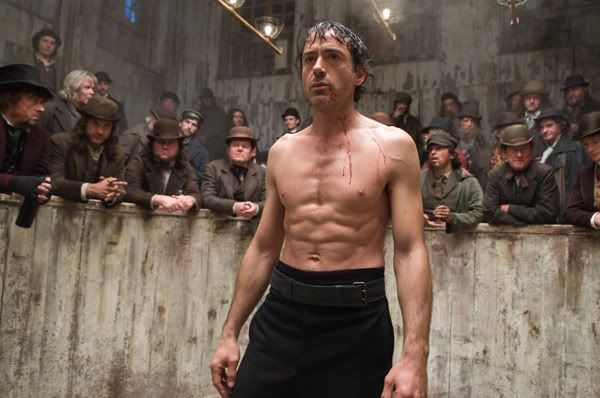
Guy's raucous filmmaking tendencies mesh amiably with big-budget sensibilities in this retooling of the classic literary sleuth; save for a pleasantly traditional plot not far from Scooby-Doo territory, not a gear at work is less than fully realized. Zimmers's score amplifies Ritchie's verve with epic swirl, although the in-combat editing often frustrates action unlike the too-disconnected fisticuffs of Batman Begins. The camera's eye is swoon-worthy yet less gonzo than either Revolver or RocknRolla, a well-made choice in that it allows a precise, seemingly effortless Robert Downey, Jr. (quickly becoming the movie star of our time) to more fully take the reigns. He and Jude Law's interplay (some of the best in recent memory) is delivered sans gay panic, which is to say such implied humor is just that (implied). The increasingly savory Ritchie has delivered a miracle: a film in the National Treasure format actually worth a damn. [B+]


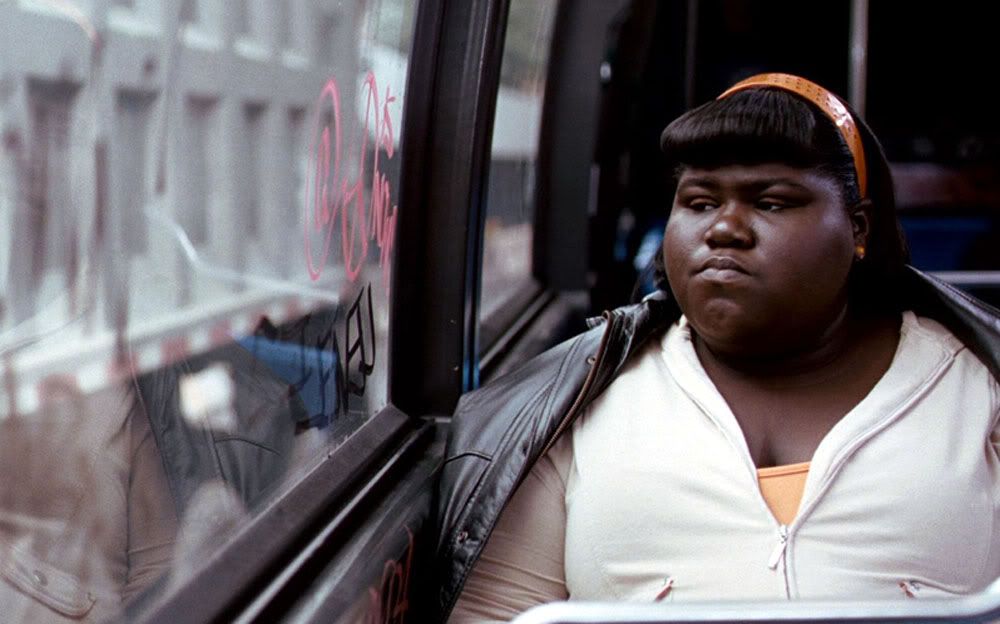
Precious wants, so very badly, to give us perspective into the trials of its prototypical inner city youth that it arguably goes overboard in its callow flaunting of unpleasantries (rape, greasy foods, rape again, AIDS...). The titular teenage black girl (in an acutely realized, broadly pitched performance by Gabourey Sidibe; Oscar, are you listening?), described as a composite character, trounces Larry Gopnik for sheer suffering quota. Armond White's invocation of Griffith is appropriate, if misplaced; the film has a powerful, if comparatively shrill, sense of unfolding human drama. Precious's escapist daydreams are as slap-it-on-thick as anything by Paul Haggis, so no wonder Ebert and Oprah want to make love in its shadow. At the end of the day, it comes out on top - if barely - because its flaws are more so of the executional than the conceptual kind, the whole more than the sum of its parts. [B-]

Dec 10, 2009

Catching Up: 35 Shots of Rum, 9, Brüno


This is the first of Denis' I've had the privilege of experiencing, a designation worth emphasizing in the case of a film this sumptuous and full of life. Absent is heavy-lifting or forced artistry; 35 Shots of Rum seems less a narrative work of cinema than a poet's stream-of-consciousness ruminations somehow caught in the medium. Quixotic opening shots of the minimalist story's central railway systems (acting as something of a silent metaphor for the characters' lives) set the pace for this deliberate yet effortless look at the uneasy family unit maintained by four neighbors (one father and daughter, one younger man and one middle-aged woman) and the universal trials and pleasures experienced by all over the film's unstated period of time. Life charges forward with unforgiving absolution - the enigmatic cafe sequence, perhaps the greatest sequence in any film this year, is almost regrettable in its eventual mortality - and so does 35 Shots of Rum gaze wisely and humanely on our collective need to love, be loved, and ultimately let go. [A+]


Terminator light, the animated post-apocalypse 9 is only half as emotive as its gorgeous surface would suggest. Near ground zero of the now-past war between man and machine resides a small handful of puppet-like creations (think humanoid potato sacks), each having been given their own integer, struggling to survive in this most unforgiving of environments. The titular 9 (Elijah Wood, who needs to stop playing the chosen one like Morgan Freeman needs to stop playing the elderly saint) is the last to awaken, and proves a necessary gadfly to the existence carved out for the others by the overly cautious 1. Character design is the biggest triumph here, from the tender emotions imparted by their synthetic bodies to the various distinguishing attributes scattered about (the kino-eye flickering of the twins ravishingly equates the cinema with the soul). A visual triumph, the screenwriting is nevertheless a buzzkill, particularly in the assumptive profundity to be found in the many otherwise unexplained, pseudo-spiritual plot developments. Substance abuse might improve the experience, but alas, 9 unto itself is only half-baked. [B-]


The first 45 minutes of Bruno, the follow-up to overrated Borat: Cultural Learnings of America for Make Benefit Glorious Nation of Kazakhstan, is not only funnier than that entire feature, but might be the most concentrated bit of cinematic hilarity since Aqua Teen Hunger Force Colon Movie Film for Theaters. Shamelessly pushing buttons and breaking through boundaries of social acceptability, Sacha Baron Cohen's stunt as a hopelessly inept, homosexual German fashionista trying to gain celebrity tries to be nothing less than the most offensive bit of trailblazing since The Birth of a Nation. Left unto these stunts alone, the film soars: from the trap set for Paula Abdul (without furniture in his new residence, Brüno pays his minority staff bonus to pose as tables and chairs) to the sure-to-be-infamous TV pilot involving a talking penis ("Does this look like the dancing of a talentless idiot?!"), Brüno is the revelatory act of a Socratic gadfly. Were such also the case for the limply plot-oriented second half - which loses focus and becomes base in its exploitation (which is to say, it recalls Borat) - this might have been one for the ages. [B-]

Jan 9, 2009

Review Catch-Up: Doubt, Slumdog Millionaire, Defiance, The Wrestler, The Reader


Praise be to John Patrick Shanley for adapting his own work in a manner that can actually be classified as cinematic, but methinks it is really Meryl Streep and company that guides Doubt into the realm of the worthwhile. Script-wise, things are about as unambiguous as they come, and so Streep's turn as a nun convinced of her priest's inappropriate relationship with an alter boy becomes less of a "did he/did he not do it" escapade than a morality play in which unnecessary evils are accepted in hope of a greater good. There's Oscar prestige gloss here for sure, but the cast seems to approach it as if it were pulp; their eagerly mucking about the film's thematic underbelly almost justifies the relative triteness with which the material is presented. Hoffman's persona finds one of its best outlets yet therein, Amy Adams continues to endear, and though Streep's excellence has been misused much of late, her fascinating facial concentrations are a tour-de-force unto themselves. [B-]


I've seen this film twice to date, and both times I've noticed distinct whiffs of The Wizard of Oz amidst the film's superbly romanticized climax; not so much in shared filmic qualities than in how both sidestep customary storytelling pretenses to go for the emotional jugular. As regarding the lifetime of experiences that aid the most unlikely of gameshow candidates -- a young boy (Dev Patel) whose ghetto life has provided him with a most extensive and varied array of skills and ever-so-helpful factoids -- Slumdog is comparable to Uma Thurman's adrenaline shot in Pulp Fiction, a kinetic fireball of a movie in which every vibrant image and titillating edit trigger vast networks of emotional response. Boyle's flashback device would appear to be a hindrance to the whole, but Slumdog is nothing if not more than the sum of its parts, its collection of instantly iconic pop experiences effortlessly translating across the boundaries of age and culture into a superbly humanized modern-day fairy tale. [B+]


Normally, I'm all about Jews with guns, but Munich this ain't. For a while, Defiance, the latest from the reliably boring Zwick, would appear to be an act of creative growth of sorts, and though it is certainly an improvement over Blood Diamond, this tale of a Jewish community that survived for three years of WWII in the Belarussian forest remains as emotionally robotic and superficially deliberate in its storytelling as one would expect from blatant paint-by-numbers filmmaking. [C]


The extreme stylistic dissimilarity between this and Aronofsky's previous film (the out-there sci-fi fantasy existentialism of The Fountain) and this is just about surface deep; The Wrestler is a film as particularly embodied by its chosen style as its predecessor, and is just as eager to feel and be felt. Rourke is sensational as the washed-up former celebrity wrestler Randy "The Ram" Robinson, but for me it's Aronofsky's handheld takes that steal the show: following Randy about his routines, achingly, effortlessly evoking the time that hangs on every choice and missed opportunity, all of it rather bittersweetly framed in the film's anti-romantic view of northwestern America. If certain passages feel more or less calculated, the overwhelming majority thrives on the film's lived-in sense of class consciousness; there may be no more heartbreaking scene of 2008 than the wallop-packing closer. [B+]


The Reader suffers chiefly from a distasteful thematic overemphasis, though not far behind is the film's rather insistent self-flattery. Kate Winslet is perfectly serviceable as a former SS agent who, while attempting to live a normal life in 1995 Berlin, has an affair with a 16-year-old literature enthusiast; after he sneaks a peek at her privates while she changes, it's only a matter of time before she's bawling her eyes out as he reads the climax of The Odyssey. Strangely dispassionate, there's little to chew on for a film so purportedly serious. The banality of evil -- the means by which normal, moral people (i.e. the overwhelming majority of the German population) find themselves accepting and aiding something as overwhelmingly horrific as the Nazi holocaust -- goes relatively unexamined amidst all the futzy melodrama and faux-sensationalist sexcapades, the entirely of which enmesh in one of the most confused/confusing thematic wrap-ups I've ever seen in a film. In all ways, it's just about illiterate. [C]