Showing posts with label reviews i now disagree with. Show all posts

Dec 31, 2012

Catching Up: Oscar Hopefuls Edition


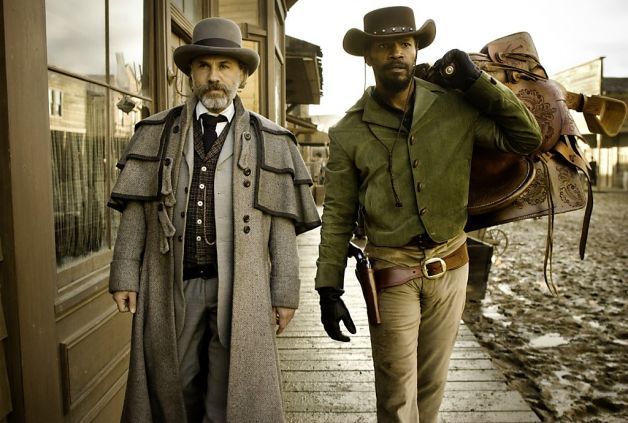
Quentin Tarantino's cameos in his own films are like signposts along the paths he's forged, their narrative and thematic functionality frequently overlooked amidst quips about his performance skills, excessive language, etc. His brief third act turn in Django Unchained might be his most obviously symbolic yet, a microcosmic reflection of a work that suggests someone brave or foolish enough (or both) to charge into a hellfire with dynamite strapped to their back. The absence of longtime editor Sally Menke is felt in this film's untamed sprawl and reinforced by a permeating melancholy; despite the anachronistic energy, cartoonish flourishes and brazen subversion of institutionalized dehumanization ("You want I should treat 'em like white folk?" "No, not like white folk."), this strikes me above all as a remarkably sad, boldly confessional picture, all the more remarkable for Quentin's restraint amidst material easily pushed over the line of taste. Jamie Foxx's titular slave-turned-bounty hunter rages (with glorious crimson strokes) against his captors but the scars (of whips, brands, and friends lost) remain, rendering his triumphs against the pre-Civil War establishment dubious at best. Impulsive choices (dialogue, in particular, feels less hyperbolic here than we've come to expect from this most conscious of writers) feel both mythic and lived-in, the film's relative imperfections complicating the knotty emotions of someone fully aware of their own creative and social privileges as a historical outsider. The trade-off is for something even greater than the sum of its parts, and what could in hindsight prove the most important contribution of an artist equal parts heralded and misunderstood.
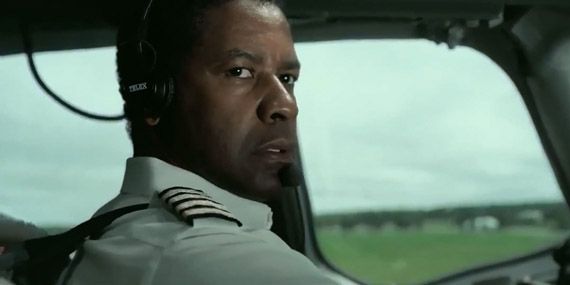

A thousand thank yous to Robert Zemeckis for showcasing a most terrifying (near) mass death sequence without a shred of the pornographic destruction or contempt of life that routinely infects the supposed entertainments of the multiplex, but one would be foolish to expect anything less from one of our great humanitarian mainstream artists. The first live-action film Zemeckis has helmed in the twelve years since Cast Away, Flight suggests the finely tuned studio work of Frank Capra or Jack Arnold, the material both blatant yet deep (the film's stairway conversation is a miniature masterpiece), the narrative structurally obvious on the page but raw and pulsating on the screen. A fortuitous convergence of events sees alcoholic/drug addicted vet pilot Whip Whitaker (Denzel Washington, alternately buried and on air, and leviathan at both) saving the doomed passengers of a malfunctioning jet, minus six, his lucid state the likely reason for his collected defiance of certain death, yet a professional and personal offense now inevitably confronted. What follows is a character drama fueled by devastating introspection: into addiction, into ego, into fear of death and life. Certain elements of this film hit close enough to home that I should confess a likely bias (the couple sitting nearest to me at a packed screening seemed disturbed by my persistent weeping), but we and our loved ones all must go sooner or later, and Flight's much-criticized turning point seems to me both natural and earned, for how else can we judge ourselves than by how we live up to those who passed before us? One of the great studio pictures of the year, and another reason to consider Zemeckis a major player.
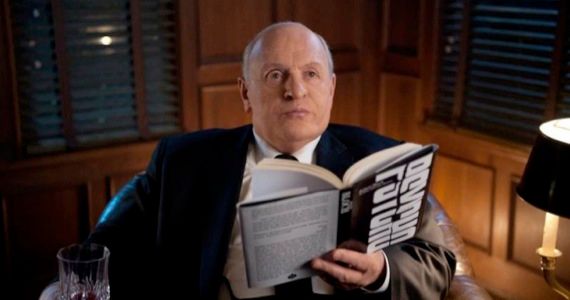

Hitchcock is relatively inoffensive if you consider it the inevitable feel-good runoff of the zeitgeist shift that displaced Citizen Kane with Vertigo on the Sight & Sound list earlier this year. Whatever the reason I don't hate the film like my cohorts mostly do (likely the fact that I've worked as a projectionist showing it the better part of a month; disposable as it is, it plays well with audiences, an achievement that's undeniably infectious), it's still an essentially useless consideration of the infamous director save for the few to whom it will introduce his body of work, otherwise amounting to little more than an adept dramatization of a few pages' worth of IMDb trivia. If you haven't seen Psycho, the making of which is explored herein, the factoids will be mostly lost on you, and despite the intolerably pronounced theatrics of the cast (as the titular Hitch (hold the cock), Anthony Hopkins spends too much time on a synthetic identity crisis to show us how interesting the man really was; he flashes a nasty smirk at the climax I'd liked to have seen more of), inane Psychology 101 visions and snarky historical perspective ("Let alone to flush one!"), I appreciated that the film in question is never itself glimpsed, only the reactions to such. (Yes, that sentence went on too long; final side note: how the hell did they pass up the opportunity to show off the giant shower head?) That's more likely the result of a copyright issue than a creative choice, but then, assuming the latter, even a blind squirrel finds a nut once in a while.
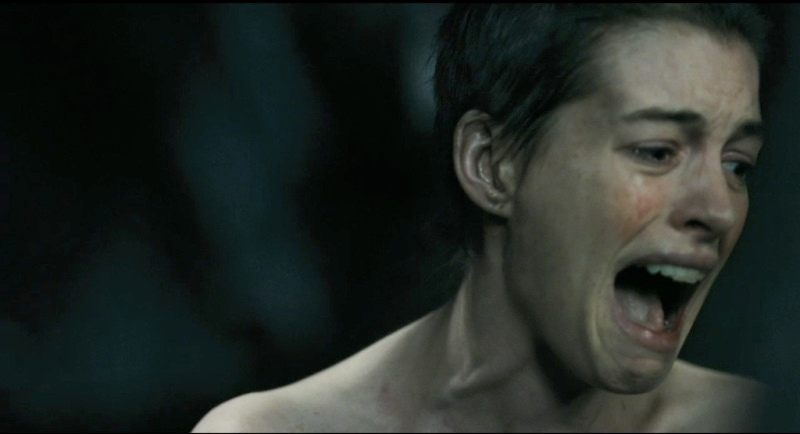

To get lost in the rhapsody of Schönberg/Boublil/Kretzmer's world famous musical, here, I'd have to overlook almost all of Tom Hooper's Les Misérables' visual qualities, at which point we'd no longer be talking about cinema, which is not to suggest that it should qualify as such in the first place. Feeling like one is suffering a migraine that will ultimately lead to blindness isn't my ideal approach to experiencing something attempting uplift and affirmation, and so this lavish production mostly embarrasses itself to these violated eyes. The choice to record the fifty-some songs live on the set, allowing for greater spontaneity and depth of performance, pays off only insofar as the cast is occasionally able to sign and act simultaneously (your mileage will vary depending on how much of the cast seems like they're mistakenly auditioning for Saturday Night Live). Little of that matters given Hooper's astonishingly inept technical handling: not merely fourth-wall breaking and emotionally overbearing, his roving, impatient camerawork feels like a drawn-out implosion of time and space, snippets of footage so randomly and haphazardly assembled as to approach a dadaist fever pitch if there were any sense of purpose behind it. Altogether, I'd doubt if it contained ten minutes of legitimate human emotion, no small achievement for a film with the singing talents of Hugh Jackman in the lead. (I prefer Sally Field's work in Lincoln but Ms. Hathaway arguably deserves and is surely overdue for the Oscar she'll garner for her lightning rod single take solo, about to become the most watched sequence since the Zapruder film.) My pity goes out to the craftsmanship and thesping talent that sank into this trench, and the millions of hours that will be wasted on it. The King's Speech wasn't my cup of tea by any stretch, but 2010's Oscar winning flake seems positively mountainous compared to this whimpering black hole. Fosse wept.
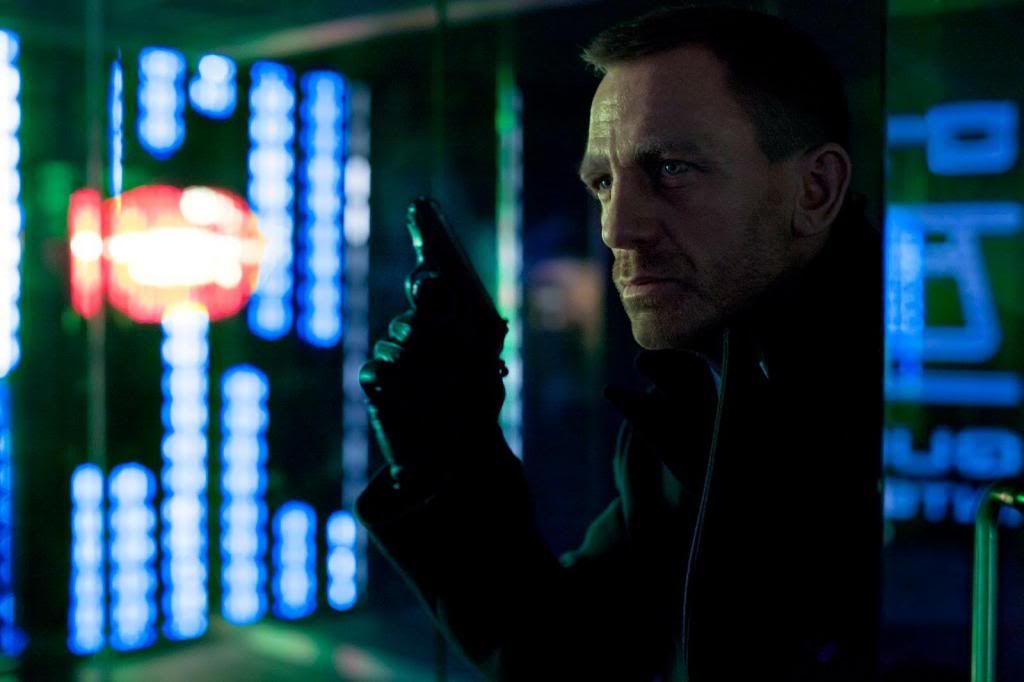

James Bond looks both forward and back in Skyfall, a triumphant return to competent action filmmaking (and then some) after the visually inept/atrociously scripted Quantum of Solace. If I don't quite prefer this fiftieth anniversary's love letter to its predecessors to Casino Royale's furiously self-reflexive genre deconstruction, so be it; these two high water marks have more in common than not, and both evidence the fact that Daniel Craig's line readings are never better than when he's tied to a chair. The stereotypes and trademarks are mostly in place here sans regressive offense (with no proper Bond girl in her way, Judi Dench's M is as prevalent and dynamic as Bond himself), but from the not-unjustified vengeance of Javier Bardem's nightmarish villain (shades, naturally, of Anton Chigurh, and an entrance that might be the single best piece of acting the series has ever witnessed) to the avoidance of field work by an old friend, what propels this grisly chapter is the characters' keen sense of agency (minus one exception that's fitfully disturbing). Bond's self-devouring manhood is both gift and curse, and from the soulful murmurs of Adele's powerhouse theme song to the countless lethal blows 007 deals and nearly suffers, Skyfall especially kicks ass in suggesting that it's far cooler to be tortured and resourceful than brash and destructive. It's also damn beautiful to look at, especially the elevator/skyscraper sequence. As self-aware milestones go, there's few comparisons. A great action film by Sam Mendes – who knew?

Dec 18, 2009

Avatar (2009): B-

Screened in true IMAX 3-D.
 
Oh, how far the mighty have fallen. More than a decade in the making, the much-hyped, ravenously-followed-even-before-its-production Avatar is nothing less than the third time (assuming the unofficially reported tallies of $350 million) director James Cameron has delivered the most expensive movie ever made, after the then-record-setting budgets of 1991's Terminator 2: Judgment Day and 1997's Titanic. But whereas his previous works are typically remembered for both their savory implementation of groundbreaking special effects (always in the name of dramatic storytelling) as well as their sterling entertainment-oriented blockbuster artistry, the top-heavy Avatar stretches the worth of its visuals like silly putty frosting atop a narrative rendered with muted fervor and transparent emotions. Always a technocrat, the thrum of Cameron's modern classics stems primarily from a constant surge of suggested spontaneity; to its incalculable detriment, nary a moment goes by in Avatar that doesn't feel as though it's been overly thought out at the conceptual stage only to be all but processed to death on screen. In hindsight, the title seemingly refers less to a central plot element than it does the thought that the film itself is just an empty suit awaiting occupancy and a pulse.

This sci-fi epic would be a masterpiece if judged solely on its technical merits; on their strength alone, one can imagine a tweaked silent-film version being infinitely superior to the one now playing in theaters with no less than Roger Ebert warning the masses, "Good luck getting a ticket before February." Surely, Avatar will go down as yet another Cameronian landmark in the evolution of cinematic wizardry, yet no amount of razzle-dazzle can begin to compensate for a dusty storyline plagued by both a cumbersome screenplay that could well have been written in less time than it takes to watch the film itself (imagine Pocahontas, or rather, The New World, filtered through a sci-fi lens and simplified to its good guy/bad guy essentials) as well as an overly polished form of acting that never expresses emotion and feeling even half as much as it merely dictates plot details and spelled-out character motivations via streamlined sound bytes. That Cameron has worked successfully in such broad strokes before is not to his advantage here. Unlike the larger-than-life vividness of his Terminator films or the earnest, knowingly cheesy cliches of Titanic, what the genuinely humorless (Cameron's one-liners and sight gags have never felt so strained) Avatar most sorely lacks is a personal touch.

The world created for Avatar – the exotic alien planet of Pandora, where, a century and a half into the future, humans from a resource-deprived Earth hope to extract valuable minerals for profit at the expense of the computer generated locals (enter broad allegories to everything from Native American genocide to the current Iraq War) – is a CG wonder to behold, and as such is the film's bread and butter. Even The Lord of the Rings' Gollum can't touch the level of physical detail instilled into the digitally-rendered Na'vi (the indigenous Pandora inhabitants), who transcend previously expected special effect barriers, convincing even these most scrutinous eyes that what is on display is true flesh and blood. With the sincere hope of better enjoying this project in the potentially more story-friendly context of a 2D, non-IMAX exhibition, I plan on seeing it again, if only to better absorb the detail work that sparkles in every frame. Such minor touches – the way the ground-level vegetation lights up as it is walked on, like the sidewalks in Michael Jackson's Billie Jean video, or the rush of the wind as the Na'vi ride dragon-like creatures down the side of a cliff face - are among the fleeting, genuinely feeling joys to be found herein. Alas, barring such a second-viewing turnaround, Avatar represents the maiden wreck in the eyes of this otherwise unabashed Cameron devotee. The ideal viewing experience may very well 3D, but where it matters most, the overwrought Avatar proves regrettably flat.

Jun 26, 2009

Transformers: Revenge of the Fallen


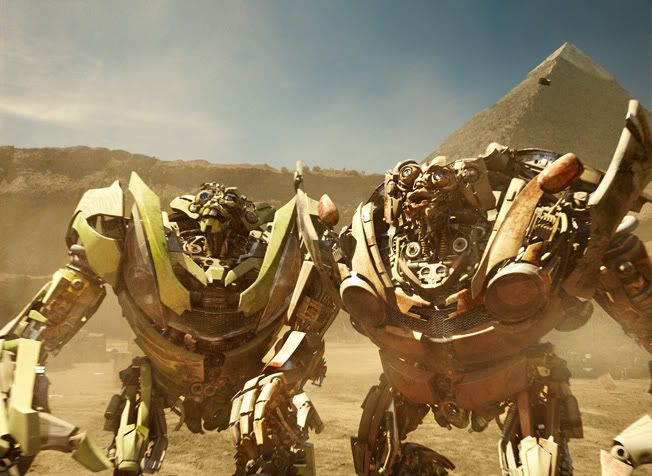
I’m sick of this notion that movie critics don’t like to have fun. Like any broad accusation, it's pure cop-out, especially when founded on the basis of but a handful of films, as is usually the case. Though a minority opinion in my circles, I liked the first Transformers. It was big, loud, and dumb in that manner that recalls the childhood ambition of instilling life in one’s toys. More importantly, it stayed just behind the line of headache-inducing excess that stands as the starting point of this new film. Transformers: Revenge of the Fallen is to its predecessor like a medieval torture chamber to a playground, but that won’t keep many from swallowing it hook, line and sinker, quickly and indiscriminately. I can only hope that my feelings here are the general consensus – not just for critics, but for human beings. Few elements of Fallen are completely odious unto themselves, but rolled together it becomes a wave of inescapable proportions – a literal tsunami of shit.

Jun 8, 2009

Up (2009): B

Up is quintessential Pixar, which is to say, it bears witness to both the accomplished artistry one comes to expect from a studio now enjoying its tenth (and tenth consecutive) critical and box office hit, as well as the well-worn formulas apparent in most bodies of mainstream cinema. To these eyes, Pixar hasn’t made an outright bad film to date (although Cars treads awfully close at times), and has in fact been a paragon of virtue as regards the telling of tried-and-true tales with a genuine sense of urgency. Nevertheless, while expertly rendered, the last third of Up is schematic compared to the assured and breathtaking first hour. An opening sequence, in which elderly protagonist Carl Fredricksen's (Edward Asner) life story is told (and, implicitly, that of his wife, Ellie), ranks with WALL-E’s first half as Pixar’s finest moment to date. Rather than give up his dreams in old age and enter assisted living, Carl—an accomplished balloon salesman in his time—ties some thousands of balloons (echoes of Herzog’s The White Diamond) to his home and makes way for Paradise Falls, South America, the wish-fulfilling journey he and Ellie never made in her lifetime. En route, Carl discovers an inadvertent stowaway: Russell (Jordan Nagai), an eager Wilderness Scout trying to complete a merit badge when he mistakenly boarded the soon-to-be airship. The vignettes that follow in their adventure are inflective and revealing, touching on the film’s themes of spiritual comfort via the tenuous interactions of the films eclectic characters. Alas (spoilers ahead), the late addition of an antagonistic feels disingenuously like a studio machine clicking into place where a beautiful, wild organism once roamed, and the incurred tonal disjunction proves enough to damage the film’s very foundation as well as the genuinely bittersweet ending. Far more lopsided than WALL-E, Up fails to reach the stratosphere.

Oct 1, 2007

Dawn of the Dead (2004): C+


Zack Snyder's zombies are like his stylistic flourishes: big, dumb, and obvious. Which isn't to say that either is totally lacking in fun or worth. This Dawn of the Dead is, at least theoretically, a more preferable kind of remake than one that simply regurgitates the storyline of the original, superficially updating it technologically while failing to add to the texts that have come beforehand. Rather than attempting to one-up or simply duplicate the 1978 film - an impossibility and a futility, respectively - Dawn 2004 reinvents its source material, here channeling Romero's satirical, restrained gore into a full-fledged action film. Whereas the elder zombies lurched, these fellows sprint like trained athletes - an illogical attribute, given they're supposed to be dead and rotting, but one we can grant given the generally fantastic nature of the genre (one could endlessly quibble over the physical makeup of the zombie - are they actually dead, or simply infected a la 28 Days Later's rage virus? - but let's focus on aesthetics).

Unfortunately, even unto its own newfound set of completely different standards, this Dawn is heavily lacking, and - ironically enough - may have been a better film had there been less effort put forth on the part of its creative forces. Snyder's intentions are of the inoffensive and purely entertaining sort, but his style is nothing short of fascistic; this Dawn of the Dead almost literally force feeds its fun to the audience, dishing its characterization and exposition out with an matter-of-fact attitude totally free of irony, jumping from visceral peak to peak in hopes of wearing out the audience like a nonstop roller coaster. It isn't enough that you could be entertained, you must be, and Dawn of the Dead is absolutely terrified of letting the attention of the audience wander for even a second. Truly, it is film manifest as industry over art, but at least it is honest enough to not pose as anything more than the slick piece of production it proudly lays claim to.

In this regard, this Dawn of the Dead is sporadically entertaining but also disappointingly fleeting; the characters are emotional vacuoles and the undead but Olympic sprinters with bloody makeup on, lacking not only personality, but conviction. The unfolding carnage is often arresting but it strikes only in the moment (as noisy spectacle often does), the film's establishment of locations and moods too scant to leave any lasting impression; we never truly feel that this is the end of the world, and thus the undead become not an overwhelming force to be reckoned with but a pesky special effect that a few cardboard characters succumb to every now and then. Snyder's style alternates between jittery camera work and static, slow-motion shots of Really Cool Things Happening, a distancing approach that reveals his total lack of investment or concern for the events being portrayed. But hey, it looks cool, right?

Dawn of the Dead isn't so much a movie than a cinematic model kit assembled step by step, line by line, and while James Gunn's reworked screenplay follows the core of Romero's storyline verbatim, the film only effectively reworks its predecessor once, in a hilarious mid-act montage that plays up the film's witty pop culture awareness. This sequence - which employs a lounge act cover of Disturbed's "Down With the Sickness", a clashing musical choice that effectively underscores the nasty wittiness of the images on screen - truly gets at the film's superficial would-be appeal, but it's also one largely lost on the its smarmy callousness. Only one human death is meant to convey any sense of sorrow - a father, infected and soon to be undead, says goodbye to his daughter - but Snyder's attitude is mandated and disingenuous. How are we supposed to care about who lives and dies if the film we're watching clearly doesn't in the first place?

This sense of sleek nastiness might have been something, though, had it grown beyond mere posing, the many shocks and twists to the plot but simple button-pushing given the general transparency of the film's human components. Parallels are drawn between its own unfolding destruction and the theological ravings that 9/11 was brought about by immorality in America, but like so much else in the film, it's an empty shout-out lacking a sense of inquisitiveness or weighty morality (truly a disappointment, given what Romero could have done with the idea). Its machine lacks ferocity, and while Snyder's advertising aesthetics don't lack for immediacy, they look and feel (or rather, don't feel) less like a movie made by human hands and more like a feature length advertisement endlessly tweaked for mass appeal.


Feature: 31 Days of Zombie!

Sep 2, 2007

Halloween (2007): C+

Remakes, as a whole, have never gotten my goat. To this viewer, cinema is less about individual stories than about our individual modes of sharing them, and so it is often the case that a number of voices will each have their own interpretations to contribute to a specific tale, all of them worthy of equal consideration and regard (to allow those instances where the film in question is made purely for money to speak for the whole is nothing short of foolhardy, and yet this is the trend amongst both the critical and public movie going bodies). Few films, if any, can qualify for the title of "definitive", though our gut reaction as fans of certain titles might be to assign that very label. Therefore, as a matter of principle - and as a declared, unwavering fan of John Carpenter's original 1978 masterpiece - this new version of Halloween has as much a right to exist as any other, original or remake.

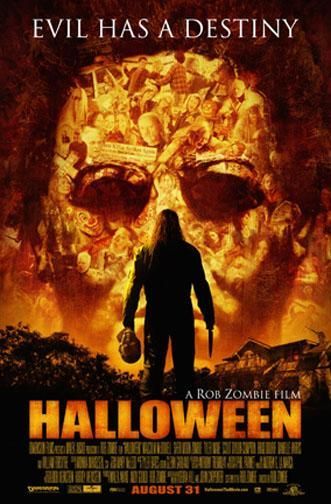
That being said, the film just isn't very good. Instead of a taut, minimalist thriller in which tension builds most during periods of silence an only slivers are known regarding the main villain, this new film spends considerable time developing the young Michael Myers before sending him off to oversee the slaughterhouse, his killing streaks motivated by an abusive home environment and the endless taunts of school bullies. The question, then, isn't whether or not the film improves upon or even lives up to the original - a near impossibility, in this case - but whether or not it stands up unto itself. Unlike the brilliant genre deconstructions of The Devil's Rejects, this Halloween only intermittently taps into the sleaze that defines its brand of grindhouse terror, making for an uneven and unsatisfying experience, despite its scattered moments of potency. When Halloween scores, its ferocity is formidable, but too often does its overzealousness upset the scenery. The opening white trash scenes are downright hilarious but fail to convince of their emotional brutality on an organic level; the blunt naturalism of the 1978 performances has been replaced by an excess of gimmicky acting, as if to compliment Zombie's louder-is-scarier dynamics, which come so hard and fast that they barely have time to simmer into the mind. From its matter-of-fact opening titles, the film is as aggressive as they come in the genre. Here, though, it would appear as if it were attempting to compensate for something.

Zombie must be given props for his extensive reinvention of the original film, a daring but necessary act given the breadth of its influence. Nonetheless, in attempting to distance his own creation from Carpenter's, he's left it without a identifiable voice of its own, defined less by its own qualities than those it lacks in relation to its predecessor. Zombie's respect for the story is considerable, but his decision to humanize Myers is ultimately a counterproductive one; we're watching less of an evil psychopath than an enraged hunk (imagine the Geico caveman crossed with The Terminator) whose motivations feel incomplete and, ultimately (spoilers ahead) - given a late act of mercy - slightly unbelievable. Halloween 2007 externalizes all that was internal in the original, in effect forgetting that the scariest of evils are those we can't see in the flesh. Despite its better efforts, this film fails in inflicting fear onto the soul.

Jul 11, 2007

Harry Potter and the Order of the Phoenix (2007): C+

Harry Potter needs a vacation. Of course, his status as the Chosen One will forever prevent him from getting one – that is, at least until the events of book seven, the much anticipated Harry Potter and the Deathly Hallows – conclude his decade-long mythology (or so we’re told). This fifth film sees his darkest onscreen hour yet, a point that has been used as a springboard for both positive and negative criticism and almost entirely to superficial ends at that, either lamenting the “loss of magic” like a mother would her departing offspring, or simplistically equating growing menace and tragedy with heightened artistic and entertainment value. Like many who fight the good fight, it sucks to be Harry, but his is a saga that deserves far better when it comes to such cinematic retellings. Thus far all five films have been crafted with great attention to detail and respect for their source material (albeit in varying ways and with somewhat different priorities), and to say that any of them have been less than serviceable would be to foolishly denounce a great deal of craft and workmanship. Unfortunately, this encapsulates most – if not all – of the problems with these films; sans Alfonso Cuarón’s sterling Prisoner of Azkaban, every one of them has been a slave to the page from which it was derived, more focused on cramming in nuances and details than in developing a singular tone or creative, aesthetic thrust, too timid to stray from the success these stories have found on the page in putting them on the entirely different medium of the screen (it is telling that a great many purists hate the third, most loosely-adapted film with a fiery passion). Like many, the Potter fan inside of me – yes, I have my copy of book seven reserved, and will be in line when the clock strikes twelve in just over a week’s time – enjoys these films enough in the moment, but their Xeroxed joys are fleeting ones, despite their undeniable visceral thrills. Even Columbus’ blandest moments stand as more than box office draws (his style lacks distinction, but it would be unfair to say he didn’t care about these characters), but these are less films than they are carefully constructed additions to an unprecedented cultural phenomenon – strip away the hype and all that remains is an expertly made but emotionally bereft machine in need of lubrication. That The Order of the Phoenix features some of the series’ strongest components yet makes this all even more aggravating to the internal aesthete; Daniel Radcliffe has never been better is the title role, and the film is a welcome visual improvement over Goblet of Fire's stagy synthetics. Narratively, though, it remains streamlined to a fault and thuddingly literal-minded, deserving of the savory, meandering approach Rowling allows in her arguably overlong but undeniable feeling texts. Cuarón understood that cinema often requires the sacrifice of facts for feelings, a reality that leaves this barely satisfactory affair clinging to its literary predecessor for life support.

Jan 9, 2007

Brick (2005): C+

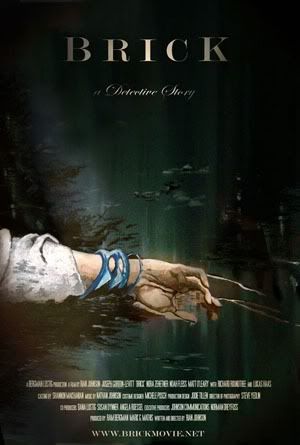
Brick exemplifies the difference between a cinematic talent show and mere karaoke. In an admittedly unique move, the film transplants classic film noir conventions into the more seemingly untainted setting of a modern American suburban high school. Flattery may be the most sincere form of praise, but here the catch comes with the fact that it does so without any sense of moral quandary – it’s rhythmic imitation is impressive, but it yearns for soul beneath all the visual pizzazz and hard-boiled dialogue. Rather than extending this genre-transplanting concept in such a way as to examine the strains that develop between the various social factions already existing within the tumultuous high school habitat (itself an intense social nesting ground for many an American adolescent, myself speaking from long-valued experience), it simply assigns the types of goth, loner, jock and nerd to their appropriate noir counterparts (as good as the acting is across the board, nobody here has the opportunity to play anything other than character types). When Brendan’s (Joseph Gordon-Levitt) ex Emily (Emilie de Ravin) goes over her head into a drug-laden underworld, he optimizes his personal connections and cunning wit to find out what happened to her and why, to predictably mixed Chinatown-esque results of resistance and cooperation. It’s audio visual synchronization is regularly spot-on when it comes to replicating the trademarks of its source material, but Brick quickly takes on the aura of a production bent on completing a checklist of genre clichés more so than digging into the soul of those very trademarks. Often absorbing but never more than first-class mimicry, Brick exists primarily as a reassuring pop quiz for film majors, which is to say it’s aesthetic only goes skin deep.