 Harry Potter films - such as they must exist, given their tentpole status for Warner Brothers - seem to require certain concessions from everyone outside the core target of Fans of the Books. Rather than attempting immersion on purely cinematic levels, a consideration of these films seems fair only when hinged on such "under the circumstances" attributes; only the bold Alfonso Cuaron totally broke free from studio oversight (or at least felt like he did) in Prisoner of Azkaban, the third film. Now three films worth of aesthetic recoil later, The Half-Blood Prince comes to us encumbered by similar issues of narrative balance as the majority of its predecessors - what matters to making this a good film versus what matters in selling this to a zealot-like audience? Personally, I prefer coming to these films as I always have - fan of the books, but with only faint memories of reading them (I've only read the first more than once). Tellingly, the best of the films have been those that made me feel least like I was re-reading their source material on the screen, and so I found Prince's almost whispy, broad-stroke handling of the plot more satisfying in the manner of pure cinema than that of a tedious connecting of the dots. Not every decision made in streamlining this story was wise, however - the climax is foreshadowed for virtually the entire film, first breathtakingly subtle (in an opening pre-title scene with Harry and Dumbledore) , but only to go directly into thuddening blatancy. Visual and verbal wit reigns as the special of the day, however (yes, this is how some high schoolers talk), while thoughtful compositions, in their vast, almost embracing depth, suggest a silent film made today. The effects are less annoyingly attention-grabbing than I'd come to anticipate - instead, they're more texturally banal so as to ground the proceedings in a believable habitat in which magic is a simple fact of life (as opposed to a box office draw). Were the film more consistently awe-inspiring (a madhouse chase through a wheat field suggests the Days of Heaven climax by way of Lynch), or the cast but a sliver more emotionally game (while quite honed and precise in their ever-deepening displays, these veterans nevertheless seem a little tired, even if such is otherwise appropriate given the long-term status of their characters' plights), and this might have been the most sterling Potter entry to date. Such as it is at first glance, it comes close.

Jul 15, 2009
Harry Potter and the Half-Blood Prince (2009): B
Harry Potter films - such as they must exist, given their tentpole status for Warner Brothers - seem to require certain concessions from everyone outside the core target of Fans of the Books. Rather than attempting immersion on purely cinematic levels, a consideration of these films seems fair only when hinged on such "under the circumstances" attributes; only the bold Alfonso Cuaron totally broke free from studio oversight (or at least felt like he did) in Prisoner of Azkaban, the third film. Now three films worth of aesthetic recoil later, The Half-Blood Prince comes to us encumbered by similar issues of narrative balance as the majority of its predecessors - what matters to making this a good film versus what matters in selling this to a zealot-like audience? Personally, I prefer coming to these films as I always have - fan of the books, but with only faint memories of reading them (I've only read the first more than once). Tellingly, the best of the films have been those that made me feel least like I was re-reading their source material on the screen, and so I found Prince's almost whispy, broad-stroke handling of the plot more satisfying in the manner of pure cinema than that of a tedious connecting of the dots. Not every decision made in streamlining this story was wise, however - the climax is foreshadowed for virtually the entire film, first breathtakingly subtle (in an opening pre-title scene with Harry and Dumbledore) , but only to go directly into thuddening blatancy. Visual and verbal wit reigns as the special of the day, however (yes, this is how some high schoolers talk), while thoughtful compositions, in their vast, almost embracing depth, suggest a silent film made today. The effects are less annoyingly attention-grabbing than I'd come to anticipate - instead, they're more texturally banal so as to ground the proceedings in a believable habitat in which magic is a simple fact of life (as opposed to a box office draw). Were the film more consistently awe-inspiring (a madhouse chase through a wheat field suggests the Days of Heaven climax by way of Lynch), or the cast but a sliver more emotionally game (while quite honed and precise in their ever-deepening displays, these veterans nevertheless seem a little tired, even if such is otherwise appropriate given the long-term status of their characters' plights), and this might have been the most sterling Potter entry to date. Such as it is at first glance, it comes close.

Jul 3, 2009
Public Enemies (2009): A-
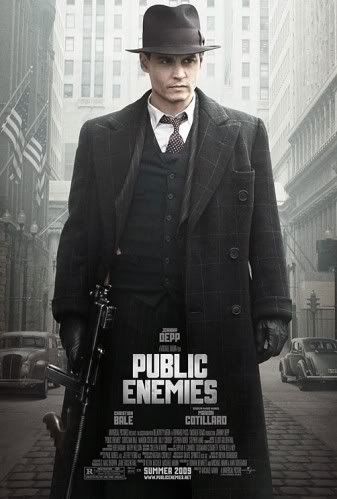 If Miami Vice was Michael Mann's freestyle celebration of identity and the need for spiritual release, Public Enemies is that work's paralleling, appropriately somber meditation on mortality - a harrowing rattle from its opening scenes of shackled prisoners marching in unison through the subsequent, episodic exploits in which legendary gangster John Dillinger and his cohorts fall to the determined lawmen in pursuit. Comparable to Heat's cop/criminal plot structure in surface details only, Enemies' primary characters aren't defined so much by existential hang-ups as they are by hunger for life. "I want it all, right now" tells Dillinger (Johnny Depp) after wooing lower class beauty Billie Frechette (Marion Cottilard); Christian Bale, effectively correcting his egotistical turn in Terminator Salvation, siphers off any trace of movie star charisma with exquisite understatedness as FBI agent Melvin Purvis, head of the team assigned to capture Dillinger. Though less ravishing than Vice, Public Enemies again finds Mann forging new ground in the digital arts; heavy grain emphasizes an anti-romantic view of material typically overshadowed by its own cinematic mythology, a subversive choice that comes full circle when Dillinger attends a Clarke Gable gangster film on the night of his death. Public Enemies diminishes one's expected visceral distance - every gunshot and bloodstain bears the heft of an unfolding present tense, none more cage-rattling than the chilling image of Baby Face Nelson (Stephen Graham) firing erratically as bullets riddle his chest, collapsing only to exhale a final, frosty breath.
Jul 2, 2009
The On-Line Review Presents: The 50 Greatest Films
Iain Stott of The On-Line Review is asking critics and film-lovers to compile lists of their choices for the "fifty greatest films". For my own purposes, I made this as much of a balance as possible between personal favorites and - as near as anyone can objectively tell such a thing - the actual "best" films I've seen. Many that I weren't able to include damn near broke my heart; apologies, in no particular order, to James Cameron, Charlie Chaplin, Sergio Leone, Luis Buñuel, Dario Argento, Michael Mann, Milos Forman, Paul Thomas Anderson, Wes Anderson, Jonathan Demme, F.W. Murnau, Quentin Tarantino, Abbas Kiarostami, James Whale, Harold Ramis, Sophia Coppola, Hiroshi Shimizu, Peter Jackson, and many more. I'd rather not have anyone think of this as a definitive selection, but rather an in-the-moment representation of the works that I consider most important and influential to myself (even then, I'd probably have had to include another 50 just to cover all the essentials). Below is my photo essay top ten.

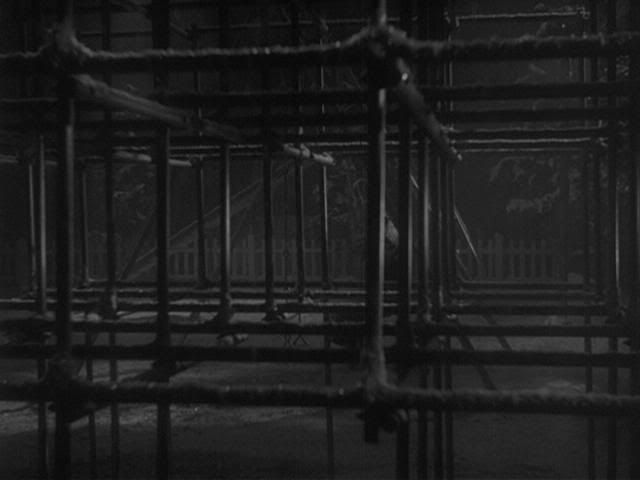
2. Ikiru (1952, Akira Kurosawa)
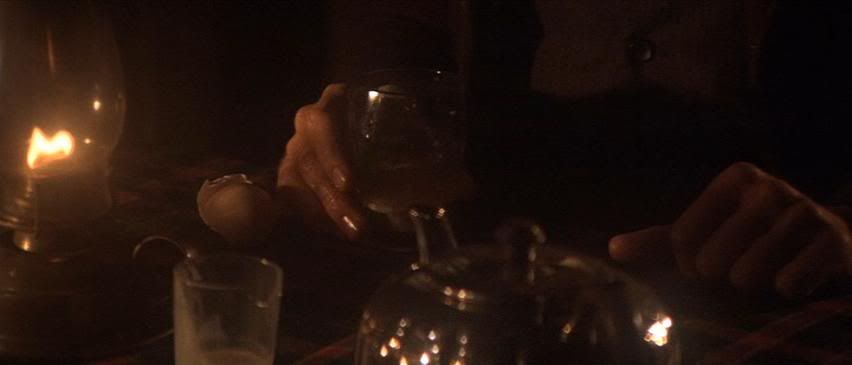
3. McCabe and Mrs. Miller (1971, Robert Altman)

4. Citizen Kane (1941, Orson Welles)
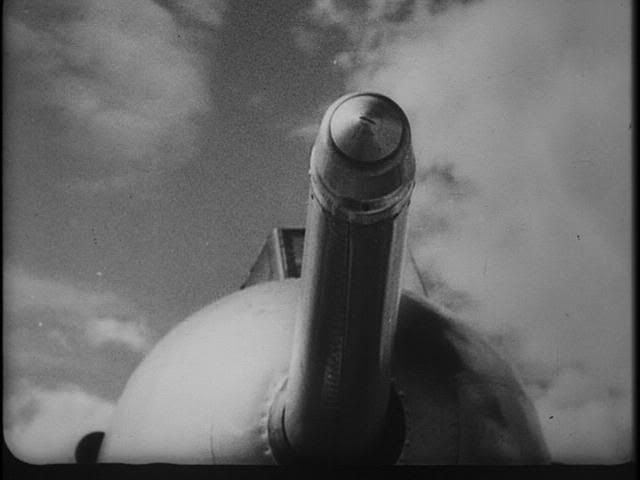
5. Dr. Strangelove, or: How I Learned to Stop Worrying and Love the Bomb (1964, Stanley Kubrick)

6. Aguirre, the Wrath of God (1972, Werner Herzog)
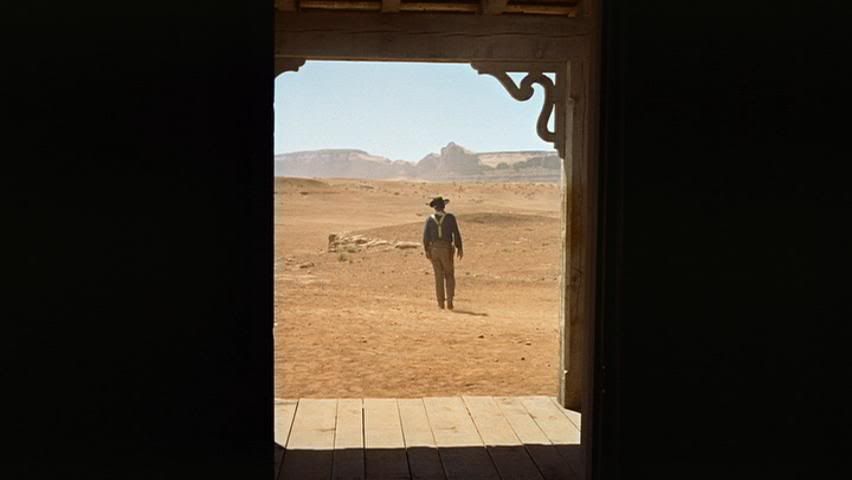
7. The Searchers (1954, John Ford)
9. Breaking the Waves (1996, Lars Von Trier)
2. Ikiru (1952, Akira Kurosawa)
3. McCabe and Mrs. Miller (1971, Robert Altman)
4. Citizen Kane (1941, Orson Welles)
5. Dr. Strangelove, or: How I Learned to Stop Worrying and Love the Bomb (1964, Stanley Kubrick)
6. Aguirre, the Wrath of God (1972, Werner Herzog)
7. The Searchers (1954, John Ford)
9. Breaking the Waves (1996, Lars Von Trier)

Jun 26, 2009
Transformers: Revenge of the Fallen
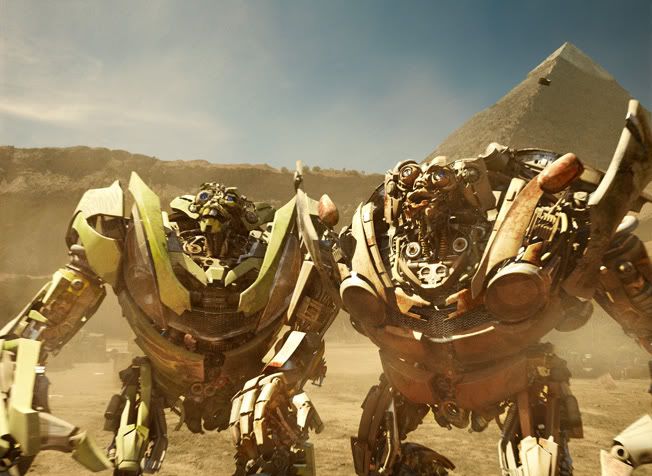
I’m sick of this notion that movie critics don’t like to have fun. Like any broad accusation, it's pure cop-out, especially when founded on the basis of but a handful of films, as is usually the case. Though a minority opinion in my circles, I liked the first Transformers. It was big, loud, and dumb in that manner that recalls the childhood ambition of instilling life in one’s toys. More importantly, it stayed just behind the line of headache-inducing excess that stands as the starting point of this new film. Transformers: Revenge of the Fallen is to its predecessor like a medieval torture chamber to a playground, but that won’t keep many from swallowing it hook, line and sinker, quickly and indiscriminately. I can only hope that my feelings here are the general consensus – not just for critics, but for human beings. Few elements of Fallen are completely odious unto themselves, but rolled together it becomes a wave of inescapable proportions – a literal tsunami of shit.
Jun 19, 2009
Under Our Skin (2009): C+
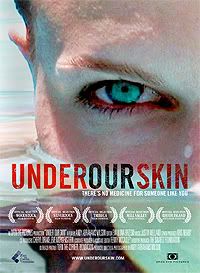 The best thing I can say about Under Our Skin is that I never for a moment doubted the sincerity of its intentions. Director Andy Abrahams Wilson comes to the material - the much-overlooked (and largely deliberately ignored) epidemic of Lyme disease - with personal experience in the matter (his sister was diagnosed). His stake shows in the film's unflinching intimacy with its subjects, which is to say, perhaps altogether too much. So unwaveringly focused is Under Our Skin on human suffering that it only intermittently rises above the worth of pure information; the film intends to elicit empathy via a series of paralleling biographies illustrating various patients' battles with the disease, but instead - perhaps expecting audience callousness - achieves overkill (the incessantly somnambulistic score alone trumps the sorrow on display with trite, arty manipulation). The effect is that of a dramatic stranglehold, inadvertently weighing down the doc's aspirations to civic change; by the time it touches on the hows and whys of Lyme's silent spread, the film (and audience) is far too drained to work up the appropriate levels of anger in response to the government and medical corruption at work. The disease - similar in symptoms to syphilis and AIDS, among others - remains largely a mystery, and the medical community remains fiercely divided over both its overall severity and the effectiveness of varying methods of treatment; numerous doctors have lost their licenses over the attempted treatment of Lyme patients (some even persist in suggesting that most incarnations of the disease don't really exist; a Simpsons clip illustrates how society has swept the danger under the rug). Suffice to say, many who stand against further research bear financial conflicts of interest (many of those representing the self-declared authority on Lyme bear ties to stricken insurance companies), having sacrificed public safety and quality of life in the name of private sector profit. Only in its investigation into these downright evil motives does Under Our Skin take on the necessary role of activist, and for the sake of those sorrowful faces (and, undoubtedly, many more to come), I wish it had gone further and deeper.
More information on Lyme disease can be found at the links provided here.
Jun 18, 2009
Screening Log: Dirty Harry, Godzilla vs. Hedorah, Godzilla vs. Gigan and The Limits of Control
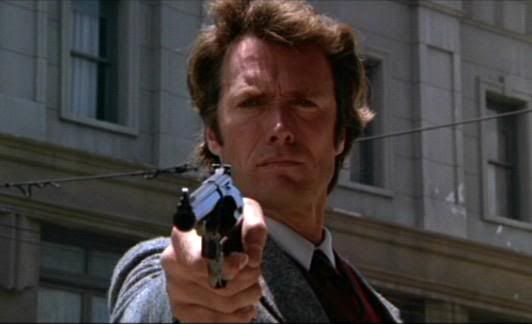
Classics like Dirty Harry make me wish that I’d been born earlier (in this case, to have been able to call it out from day one). Even if you’re able to look past its flimsy support of fascism (more on that later), this is frequently as sloppily constructed a genre film as those that are typical to today’s multiplexes. The film’s must-see benefit is its pivotal status in the ascent of Clint Eastwood to stardom, yet even as an isolated element, it’s hard to conceive that such an awkward performance ever came to hold such sway in the culture. Harry Callahan’s signature “Do you feel lucky?” line works neither as a roll-of-the-dice gamble (as initially suggested in the film’s early bank robbery shoot-out) or bitter menace (as we come to know it through repetition). Here, Eastwood lacks the sincerity of his character's purported grizzle, and his my-way-or-the-highway bravado comes off as cheap posturing in a film desperate to seem like the authority on justice or morality. Frankly, the guy’s an idiot (Callahan, not Eastwood), and so is any filmmaker that expects intelligent audiences to believe that a hard-boiled San Francisco officer would lack even a rudimentary understanding of American civil rights as pertaining to the acquisition of evidence – a inanity upon which the borderline propagandistic plot hinges. The central villain, who goes by the pseudo-ominous moniker Scorpio (Andrew Robinson), is a hilarious amalgamation of the 70s counterculture – good (sports a peace symbol), bad (deliberately gives cops a bad name) and ugly (rapist, sniper, kidnapper of children, etc.) – upon which viewers can project all their negative feelings about dem der longhair hippie sonovabitches. Dirty Harry (as Callahan is known, for always taking the ugliest of jobs) might embody some ultra-fascist fantasy, but the straw-man arguments made here skew towards caveman us-versus-them idiocy. [C-]

Godzilla vs. Hedorah (aka Godzilla vs. the Smog Monster) was always my least favorite of the numerous monster-mashing sequels as a child; rewatching it these years later, there’s something reassuring in having my then-budding tastes confirmed. Though more stylistically distinct than most of its counterparts – dabbling in 70s psychedelics, surreal animated divergences, and jazzy introductions for the titular lizard – this entry is also among the most lifeless of the series, a not insubstantial designation given the central conflict of two high-rise monsters duking it out with life on Earth as we know it hanging in the balance. The opening images of untold tons of garbage collected in the ocean sets an appropriately queasy tone; soon, multiple tadpole-like Hedorah monsters are born of the mineral waste, laying waste to ships at sea before merging together into a creature capable of coming ashore and, eventually, flight (the parallels to basic evolutionary theory are amusing, but, alas, go relatively untapped). Enter Godzilla to save the day, here cast as something of a wrestling icon; the glove, suffice to say, doesn’t fit, thanks in no small part to the lacking choreography on display. The image of the massive smog beast sucking fumes off of pollutant factory pipes proves almost indelible, but little else registers in this awkwardly overt forerunner to An Inconvenient Truth’s cautionary environmental warnings. [C-]

It especially pales in comparison to the similarly themed Godzilla vs. Gigan (aka Godzilla on Monster Island, released stateside in 1977), itself among the most efficient and exciting of the series since the 1954 original; in it, cockroach-like aliens attempt to wipe out humanity so as to clear the Earth for themselves, their home planet now a lifeless wasteland after years of abuse. Jun Fukuda’s imaginative set pieces dwarf the poorly staged, drawn-out confrontations between Godzilla and Hedorah; mounting tensions between the monsters and military have an almost musical rhythm, while the montages of assembling infantry (comprised of both real military vehicles and blatant model stand-ins) building up to the monster’s attack exemplify the childlike wonder implicit in the latter-day Godzilla. As a newcomer, Gigan isn’t as creatively conceived a villain as the film would have you think (outside of close encounters, the buzz-saw in his belly seems a remarkably useless weapon), and Ghidorah has always struck me as somewhat flippant, with little to no apparent coordination or cooperation between the three heads. Nevertheless, such is of little consequence given Godzilla and the spiky Anguirus’ cheeky, one-two displays of badassitude. Inner eight-year-old, you may now commence having a blast. [B+]
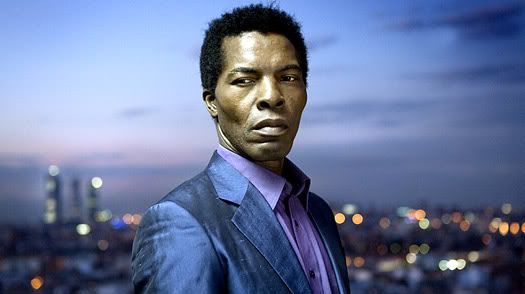
The Limits of Control may be the best movie I haven’t enjoyed in recent memory. Seen under just about the least ideal of circumstances, Jim Jarmusch’s polarizing exercise in stylized minimalism struck me as accomplished, intoxicating, and ultimately, infuriating; was it the film that got under my skin, or was it the horrendous day I’d been having? Had it been screening in any New York City theater besides the Angelika Film Center (a location at which, I feel confident in saying, there is no quality cinematic experience can be had by yours truly), I’d have resubmitted myself to it’s super-cool suave for another go around, but until the DVD release, I’m willing to give it the benefit of the doubt. Following the hyper-methodical activities of a character known only as Lone Man (Isaach De Bankolé), The Limits of Control seems to exist neither in complete reality or complete fantasy, what with its own audio/visual signifiers occasionally spilling over the lines we rely on to define our realities. Many reviews spilled on plot details not actually revealed until well into the picture (thus, I found, diminishing the impact of their reveal), proving how few among our critical establishment can actually discern between those films in which hard story is primary versus secondary; perhaps more worryingly, how many even care to? Here, repetition takes on an ethereal quality, though I’m not entirely convinced that the oft-repeated philosophies and sound bytes work any better when taken as emotional manipulators instead of intellectual stimulators. More so than any 2009 release to date, I anxiously await a second viewing. [B]
Jun 16, 2009
Terminator: Salvation
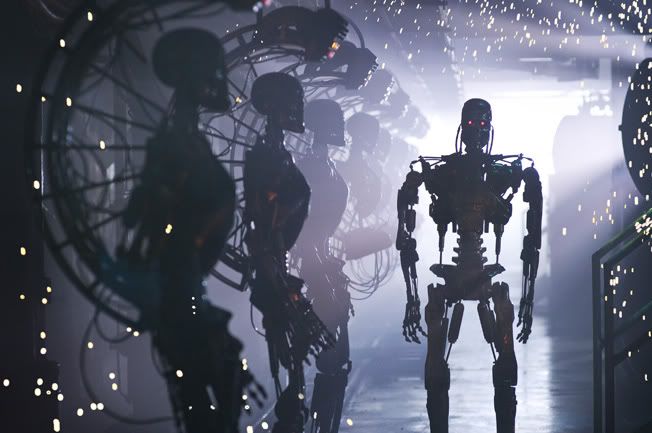
Let’s cut to the chase: is McG to blame for the semi-smoldering wreck that is Terminator Salvation? For whatever it’s worth, not in the eyes of this died-in-the-wool fan of the series—not enough, that is, to warrant making him a scapegoat for the entire mess. Surely this is, at the very least, a problematic film. I’ve half a mind to call it an outright bad one, and I’ll admit bias enough that it might simply be beyond my critical lexicon to put the words “bad” and “Terminator” next to one another in the same sentence. (You see, Cameron’s original is half the reason, if not more, that I am the way I am now, and yes, count me as a fan of Jonathan Mostow’s Rise of the Machines.) Don’t think I’m blind, though—there are parts of Salvation that "bad" would be too good a descriptor for, and some of the sins committed here are unforgivable. But like a rodeo performer up against an angry bull, I find myself tipping my hat to McG for his sheer willingness to take on this wild beast of a movie. He gives it his all, though I can’t imagine anyone’s "all" being nearly enough to repair the damaged goods that went into this production.
Subscribe to:
Posts (Atom)