Showing posts with label directors cuts. Show all posts

Sep 18, 2007

Quentin Tarantino's Death Proof: The Full Cut


A word of warning: do not drive immediately after watching this film. Especially if you're like me, in that you can't miss the transition of a street light from yellow to red by half a second without getting nabbed by the boys in blue. The vehicular thrumming of Death Proof is far too seductive a call to refuse once you're out in the parking lot, and if you're not careful, the pedal's to the metal before you've even realized it. I've done it twice so far.

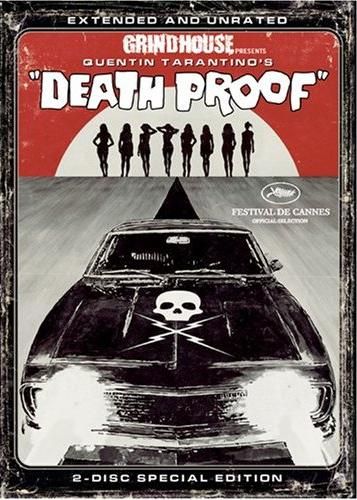
The same heed goes for this newly released on DVD version of Tarantino's film, here in its original form, uncut and unedited. Make no mistake, this is no "Unrated" DVD in the sense that an extra F bomb and pair of nipples were spliced back into the mix so as to better popular the racks at Best Buy; the 113 minute version of the film is Quentin's original cut, as it existed before the necessary editing that was undertaken to compact the feature for his collaboration with Robert Rodriguez in Grindhouse. I, a fan of alternate versions of films (even when I don't prefer them to the original cut), am grateful it is here for us to see, as the two versions, side by side, offer us more of a window into the creative process and the mind of the artist behind the camera. The only downfall is that we have to wait for the full Grindhouse experience, the release of which is surely part of yet another DVD milking plan.
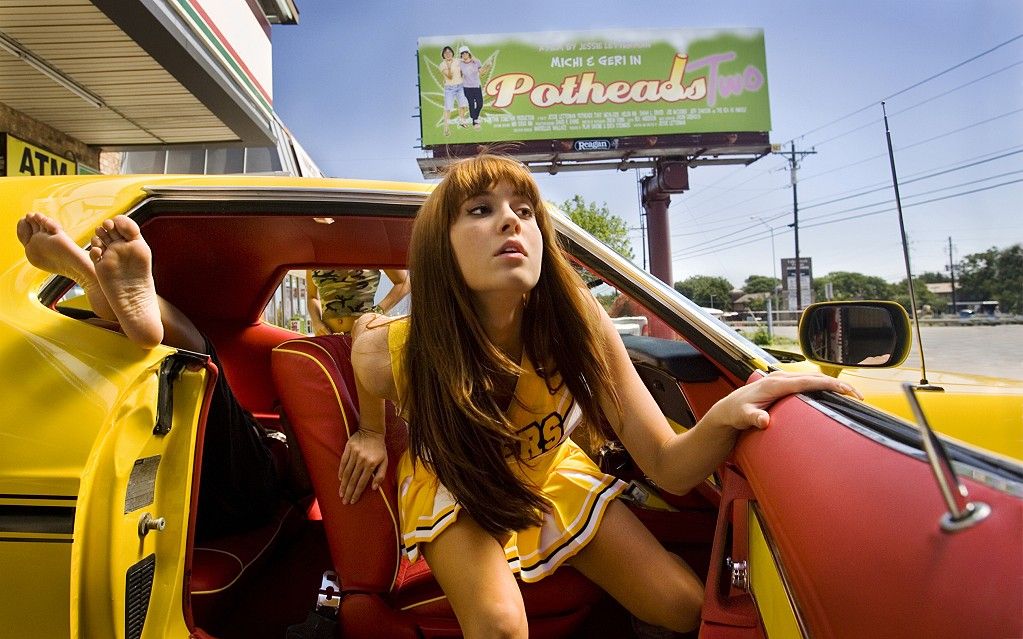
So, let's cut to the chase: do I prefer Death Proof a la Grindhouse, or stand alone? Having just finished watching the new cut not 90 minutes ago, my initial impressions are telling me the former, although, seeing as it took me two viewings to come around to the shorter version so as it is, such is a view that could very well change. But my sense is that leaner is better in this case. QT is, among many things, an incredible structuralist filmmaker; from Reservoir Dogs to both Kill Bills, I believe he knows how to provide a film with exactly what it needs, beginning to end, at any given moment, from his tiny, surprising character reveals to whatever hook or melody is required to compliment the mood at hand. So many of these choices defy the usual expectations that it suggests a higher force being channeled, one that even Quentin is unaware of (the same is true of all great artists, to some extent). That his work exists, at least superficially, in the realm of "entertainment" has been a hindrance to their appreciation, methinks; the language is different from what we expect of greatness, but the words remain the same. Though they're blatant regarding their many direct influences and inspirations, Tarantino's films aren't just remixes of films past - they're conversations within the culture, between past and present, breaking down the barriers between the screen, the audience, and the maker.

I'll certainly be revisiting Death Proof 2.0 again in the future, but moments of it felt less than constructive at this first meeting, a rarity for its director. When Stuntman Mike (Kurt Russell) stalks Abernathy (Rosario Dawson) and her sleepy feet in a restored scene now opening the second act, it seems but a pandering set-up for her destruction of his face with her bitchy boots at the film's end. This sequence is interesting, though, in its functioning as another one of Tarantino's stylistic reflections on his own work; the scene begins as a black-and-white reel that later and quite abruptly shifts to color, as if restoring itself mid-process (whereas Kill Bill: Volume 1 was forced to censor itself via the color shift during the Crazy 88 fight scene). Though my thoughts are that additional qualities of the film will ferret themselves out over time, it is an altogether different animal, both in its length and in its being removed from the schlocky (though immensely fun) Planet Terror as the opening act. It is my hope that fans will treat it as such, rather than as a "real" version meant to replace the shorter cut altogether. Both are valuable unto themselves, but even more so with the other in hand.

At a base level, nothing that was removed from the 2-hour cut was necessary, per se, either plotwise or thematically, although much of it is a great deal of fun. The best of the new footage is, without a doubt, Butterfly's lapdance as requested by Stuntman Mike; a sexy, restrained number that better humanizes both our instinctive killer and doomed prey before the terrifying moment of truth. Here, I think, it is obvious just how much Quentin loves and respects women, even if he only knows how to express it through politically incorrect expressions of pop culture. Its absence helped Grindhouse pacing wise but its presence here aids in the dimensionality of these characters, a quality to Tarantino's work that I believe he rarely gets due credit for. Films are his life and actors are part of his most intimate family, and his camera is not unlike a loved one nurturing them, savoring their growth and achievements.

What else is new? I detected some fresh dialogue amidst the Jungle Julia and company's nuttering in the opening scenes (it should be stated here that all my comments are based on memory - no notes were taken during my viewing of the film), while a daytime scene after their arrival to the first club depicts Mike watching from a distance, planning his attack in the shadows. Scenes such as this are cool but, I believe, unnecessary in that they externalize what was previously implied through exchanges and pacing. Arlene (Vanessa Ferlito) and her whiny would-be boyfriend discuss their make out plans outside Warren's bar, whereas the previously existing scene of their coming back inside already told us everything we need to know. It's a testament to Quentin's knack for characterization that I find myself enjoying even frivolous time with these individuals, but sometimes a little mystery in the margins is preferable to the overall experience.
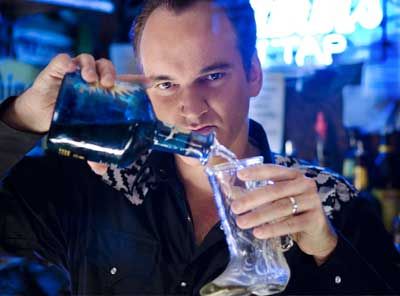
Shorter or longer, though, I still believe that Death Proof is indicative of a new phase in Quentin's artistic career, though I suspect it is one we won't be able to truly appreciate except in retrospect. His past cinematic and cultural navigations have contained their own form of profundity as achieved through a reflexive self-analysis (a point on which I disagree with many of my fellows), as well as a distinct, although implicit, sense of morality that has carried over into Death Proof's scathing genre deconstruction. These all remain in the same voice and form but something within seems even more explosive than in those films prior. Is this some new level of auterism only to be revealed with time and additional entries on his resume? Or is this simply the same old Quentin, but with additional years behind him? Either way, Death Proof doesn't simply comment on its genre inspirations - it adds to their very legacy.

Mar 26, 2007

Alien: Resurrection (1997): B+

Alien: Resurrection's indebtedness to the work of Ridley Scott and James Cameron has been a damning one indeed - critics and filmmakers alike seem inherently unable to appreciate a perfectly good movie when it (a) follows in the footsteps of a canonized classic and (b) decides to take adapted material in a new direction. Change this film's title, a few key character names, and the titular extra terrestrials, and you'd still have the aesthetic essence that makes it - in my humble opinion - such an underrated and jolly good time. Had this been a stand-alone film, maybe more people would have picked up on its assaulting tongue-in-cheek comic book glee -- as an additional sequel to a franchise that had been flailing the last time around, it seemed destined to poor reception. What a pity. Roger Ebert is of the opinion that the movie hasn't "a single shot...to fill one with wonder." I beg to differ. An art director's wet dream, Alien: Resurrection has more visual flair than any of George Lucas' Star Wars films, and at times is damn near as fun.

Seeing as this retrospective is approaching the film's tenth anniversary, I'll make plot details brief. Ripley died in Alien³, having jumped into a vat of molten steel so as to kill the gestating alien queen inside her chest, thus eliminating this most dangerous of life forms. Some 200 years later, government scientists have recreated Ripley from frozen blood samples, alien embryo intact and all. Several unfortunate side effects abound: Ripley retains some of her memories via genetic instinct, including her anti-alien sentiment, and the cloning procedure resulted in the mingling of some of Ripley's and her "child's" DNA, bestowing our beloved heroine with super-human sensitivity and, yes, acid-tinged blood. The motherly instinct she once had for Newt now translates to a sixth sense of alien life forms, and her newfound attitude predisposes her to a series of hilarious feminist one-liners.

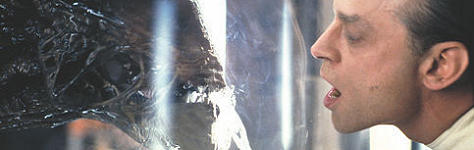
Hired to replicate the look of his City of Lost Children, Jean-Pierre Jeunet (who would later go on to make the popular Amélie) films Resurrection like a comic book fascimile of Ridley Scott's original; fish-eyed lenses, exaggerated dialogue and wide-eyed overacting abounds, however grounded by the film's meticulous vision of its futuristic environment (the detail work is impeccable) and no-bullshit sense of moral codes. A space crew delivering some precious "cargo" to the aforementioned scientists provides the film's diverse cast of characters - broadly drawn personalities embodied by eager performers willing to find subtlety in archetypes. The newborn Ripley gives veteran Sigourney Weaver something more substantial to chew on, but for the most part everyone on board is simply having a good time, even (and particularly) when that simply involves going through the motions of genre conventions. The brilliant and undervalued Brad Dourif contributes greatly to the film's anti-vanilla kinkiness, while Ron Perlman foreshadows his grungy Hellboy attitudes well within the realm of the R rating ("I am not a man with whom to fuck!").

At its core, Resurrection isn't much more than another extra terrestrial slasher movie with a countdown affixed to the end - a Poseidon Adventure set in outer space. Yet whereas most films of this type focus on gruesome body counts or overly serious dramatic set pieces, this unheralded sequel lends both attention and concern to its characters, while its pitch-perfect exercising of scenes viewers are likely to have seen dozens of times before lends them a refreshing degree of raw efficiency (the set design and enriched cinematography, on the other hands, just makes it fucking cool). Alien may have been heavy on vaginal imagery, but Resurrection is downright erotic with its deep blacks, slimy, shiny surfaces and deliberately stylized action. Every film in the Alien series - discounting the godawful video game that is Alien vs. Predator - is notable for their own distinct vision and feel. Alien: Resurrection may not have Scott's uncompromising claustrophobia, Cameron's relentless bombast or (what was left of) Fincher's primordial desolation, but it does have enough suave, attitude, and visual flair for three movies of its kind.


Notes on the Special Edition

I'm a sucker for Director's Cuts and various alternate versions of just about any movie in question - whether superior or inferior to their original versions, they provide us with an opportunity to see "what if," something I find invaluable when considering how much even the slightest change can alter the tone or intent of an entire film. In the case of Alien: Resurrection, Jean-Pierre Jeunet considers the theatrical release to be his Director's Cut (and rightly so, in my opinion), the new version assembled for the monolithic Alien Quadrilogy DVD box set standing as little more than a curiosity for fans. My hope is that a curiosity it will remain, it containing little more than the excess fat rightfully left on the cutting room floor, the majority of the new footage containing little more than throwaway dialogue - character interactions that, while not necassarily bad (although some of them certainly are), detract from the film's otherwise sleek efficiency. Otherwise, however, the most significant changes are the newfound bookends: a completely different opening credits sequence, initially abandoned due to a lack of special effects funding (thank goodness for that, seeing as it is possibly the worst sequence in any Alien film to date, AVP included), and an extended ending in which Ripley and Call share a conversation after having landed on earth. The latter is certainly the better of the two (the former, however, is more interesting), but I sense that none of the words spoken in this sequence really compliment what is otherwise expressed in the images of earth as seen in the original ending. When giving this DVD a spin, take the theatrical release any day of the week.

Dec 13, 2006

Miami Vice (2006): A+

As much as DVD technology has furthered film culture by providing the average moviegoer with a wider range of selection – as well as windows into film production processes and other special feature insights – the format has quickly dug out its own dark underbelly of downfalls. Specifically, I’m speaking of “Unrated” DVD cuts, alternate versions of movies that exist primarily to sell more copies thanks to the sensational implications explicit on the cover. Many of these are as superfluous as the films they butcher, but in the case of the surprisingly genuine The 40-Year-Old Virgin, the additional scenes add nothing and rob the cumulative effect of its emotional and humorous punch. The flipside to this whorish money plundering, however, are the Director’s Cuts that allow visionary filmmakers to further their talents in ways snubbed by box office-obsessed studio executives; Peter Jackson’s Lord of the Rings trilogy being the beacon example, the footage shelved for the already epic theatrical cuts deepening the overall experience on both visceral, emotional and spiritual levels.

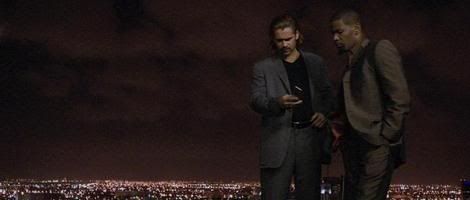
Photo Sharing and Video Hosting at PhotobucketSomewhere between these poles lies Michael Mann’s alternate cut of his overlooked Miami Vice, crafted in the editing room some two months after the lukewarm reception of the theatrical cut. Why exactly this version exists is never made absolutely clear: Mann expresses frustrations in his commentary track, stating that he hoped to make a more accessible cut of the film for the Average Joe moviegoer, but never fully backs any of the changes as preferential to their predecessors. That the two versions are only available in separate DVD packages suggested studio encouragement, but nonetheless, that both now exist provides an interesting study into the mechanics of how a film works. My preference lies completely with the theatrical cut, although some of the changes in the unrated version are interesting in their own manner. I would argue, however, that a number do more in illuminating what not to do, they being unnecessary clumps of fat amidst a narrative that was a rigorously lean and efficient as anything in Mann’s catalogue. I did and still do think Miami Vice is among the best films – American or otherwise – of 2006, and four viewings have not diminished my love.

Photo Sharing and Video Hosting at PhotobucketTo the untrained eye, Miami Vice contains a lot of “empty space”; scenes of characters staring, silently interacting, or traveling from one place to another. Yet to criticize the film for lack of substance is almost insulting; like many great films, Miami Vice is directly in tune with its characters’ desires, motivations, and frontal psychological torments. Mann’s recurrent themes are at work here perhaps more soulfully than he has ever conveyed before: the strains of conforming to a chosen life are explicitly manifest in the main characters’ profession of undercover police work (just as society conditions its members to perform certain roles, Sonny Crockett and Rico Tubbs perform as a matter of life or death) and implicitly expressed in their longing gestures and rigorously developed behavior patterns. The cast as a whole deliberately internalize their characters, sporting none of those bullshit actor-y facial tic mannerisms. Every tight stare is like looking into the void where someone’s soul used to be, or is currently being sold in the name of a greater cause.

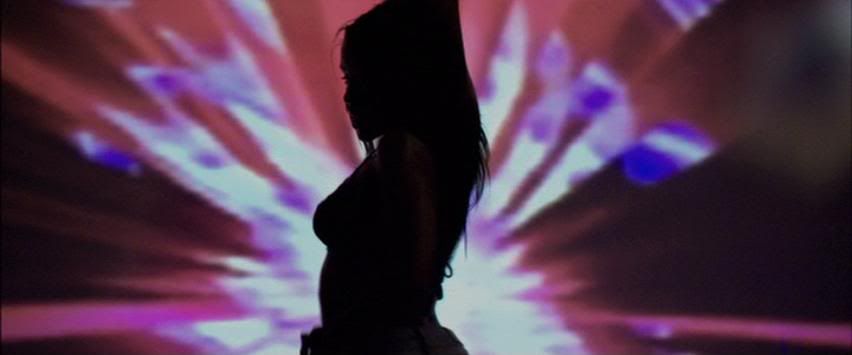
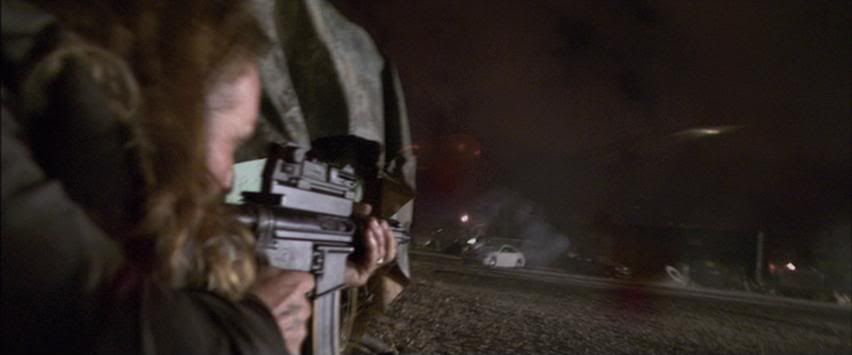
Photo Sharing and Video Hosting at PhotobucketInformation is doled out like a downhill freight train; constantly accelerating and completely unforgiving to those who can’t keep up. Opening in the midst of an attempted bust at a disco club (theatrical cut only), the film leaves details to be caught – not explained – and relationships to emerge through inferred details and observed interactions. Ultimately, the plot is light on complexity, but Vice treats it with authentic detail work, while the thematic essence and visual splendor is allowed to simmer through the storyline to the forefront of the screen. Mann’s digital work here is nothing short of revolutionary, its grainy edge not only a throwback to the days of Assault on Precinct 13's rough-hewn edginess, but also allowing for breathtaking clarity of focus and range of nighttime color palate (not to mention Mann’s penchant for eye-popping natural imagery). This Miami is alien and intense – like these characters’ slightly out-of-body lifestyles – turgid like an embittered dog on a leash. It is as foreboding as it is raw; during the climactic shootout, the camera hobbles around like a fearful bystander, blood spattered on the lens.

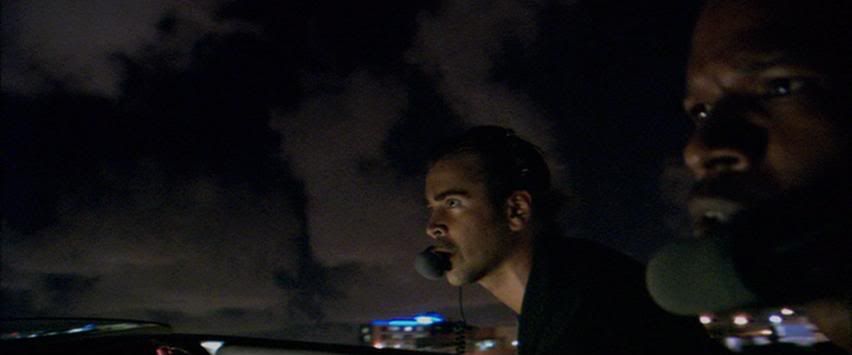
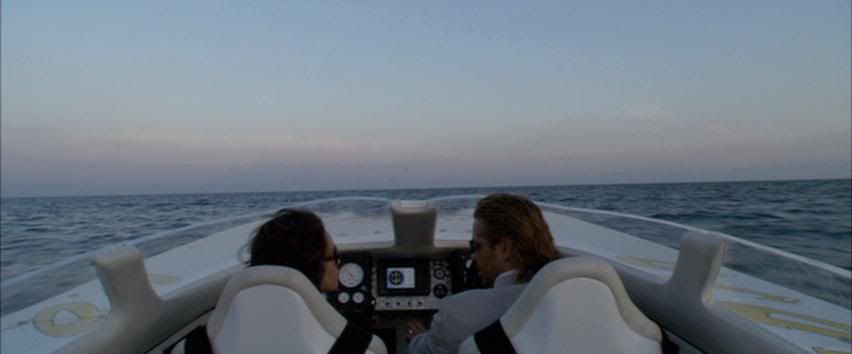
Photo Sharing and Video Hosting at PhotobucketArguably, the most incidentally damaging thing about Miami Vice is its title, the film’s commitment to preserving the original 80’s series’ qualities being minimal at best. Mann cares little about cool cars, sexy women and action spectacles (even though Vice has them all), instead observing with due patience the roles that emerge between actors on both sides of the world of drug trafficking, where notions of good and bad exist murkily amidst a shaded world of cops, criminals and confidants. When Sonny and Isabelle - one and undercover cop, the other a drug trafficker – coast towards Cuba along a seemingly endless ocean horizon, the image of the lone speedboat amidst the deep blue reserve is reflective of the whole film and possibly even Mann’s entire catalogue. Intensely driven towards a singular goal, his characters are ideologically committed even at the expense of themselves and their loved ones. That Miami Vice begins and ends (theatrical cut, again) without opening credits or a standard denouement is telling: life extends beyond the frame, and goes on beyond that which we’re able to see for ourselves.

Theatrical vs. Unrated

The most significant alterations between the original and unrated cuts of Miami Vice occur in three chunks: a completely different opening, one additional expository scene, and a soundtrack alteration during the third act shootout. Other minor bits and pieces have been reworked: lines of dialogue have been nipped, scenes tucked, etc. Some will surely prefer this version, it being more streamlined and working a bit harder to appeal to the majority. While the unrated cut is still a good film, this saddens me; it feels like poor reviews caused Mann to question his own artistic instincts, the result being a work that is noticeable below its full potential.

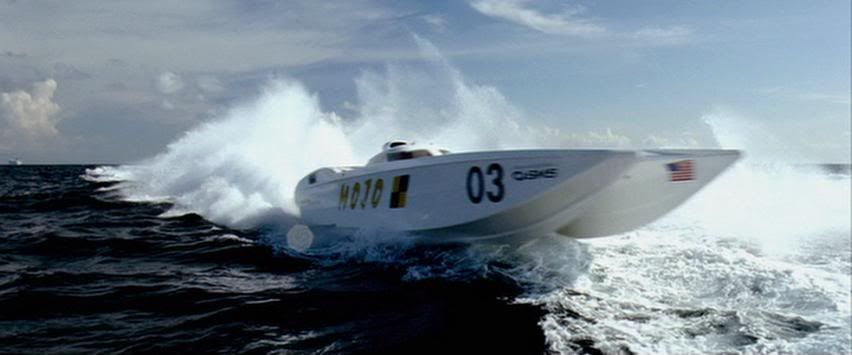
Photo Sharing and Video Hosting at PhotobucketWhereas the theatrical cut opened startlingly inside a dance club to the beats of Linkin Park, the unrated version begins on a more subdued note, beginning with a great shot that rises out of the bubbly ocean depths only to find itself in the middle of an offshore speedboat race, opening credits superimposed over the images. A brief montage of the racing crafts follows before an undercover Sonny and Rico listen in on their fellow racer Neptune (their undercover presence unbeknownst to him) as he sets up a deal with a well-established pimp to go down at the same club later that night. The scene feels cut from the same cloth as the rest of the film, but my preference lies with the punchier theatrical opening, which doesn’t so much lead viewers into the film as it injects them.

The second occurs after an undercover Sonny and Rico have been given their first assignment; Rico learns via cell phone that fellow cop and girlfriend Trudy received a bouquet of flowers she mistook as a gift from him. Upon checking the accompanying note, it becomes clear they are a warning from the Aryan white power group their organization had attempted to infiltrate. The following scene sees the two at a diner discussing the implications, the film’s themes of self-sacrifice explicitly articulated in a manner that negates them more than it illuminates. This largely unnecessary (and damaging) foreshadowing also serves to diffuse the sexy energy the film had been accruing, a blow from which the unrated cut never truly recovers.

Finally, Mann’s second guessing sees the inclusion of Nonpoint’s cover of Genesis’ “In the Air Tonight” shifted forward from the end credits to the buildup before the gun battle at the docks, the effect of which is less foreboding than it is like that of a typical music video. The push and pull between image and sound strikes some effective chords in this version, but it can’t hold a candle to Klaus Badelt’s subtly brooding score, and it robs the end credits of the existential punch previously provided by the same song.

Photo Sharing and Video Hosting at Photobucket
DVD Details

Universal has truly made a whore out of itself here. Rather than including both versions of the film on one set, fans will need to purchase essentially the same thing twice in order to get all the goods. Most infuriating is the distribution of the special features: the R-rated theatrical cut gets only two short featurettes, while the commentary and other minor indulgences are included solely on the unrated DVD (yeah, the commentary is unrated-cut specific, but with some editing it could have been formatted to the R-rated version as well, if only to be serviceable). Nonetheless, Mann's commentary is illuminating and full of details and insights, even if it feels rather instructional. Image quality is even better here than in theaters, which makes sense considering it’s digital origins, while audio is appropriately meaty and reflective of Mann’s proficient mixing. Anyone who had difficultly deciphering the dialogue in theaters will likely experience the same problems here; for the non-hearing impaired, the disc does justice to the theatrical experience. A hidden surprise comes in the form of the film's narrative guide for the hearing impaired, which proves almost as entertaining as the film itself ("The trailer explodes!"). Overall, casual viewers will want to pick up the superior Unrated package, but fans of the theatrical version will have to settle for a slimmer special features department if they don't want the viewing experience unnecessarily botched.