
Jan 12, 2007
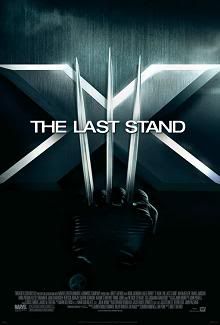
X-Men: The Last Stand (2006): D+

Ice Age: The Meltdown (2006): C-
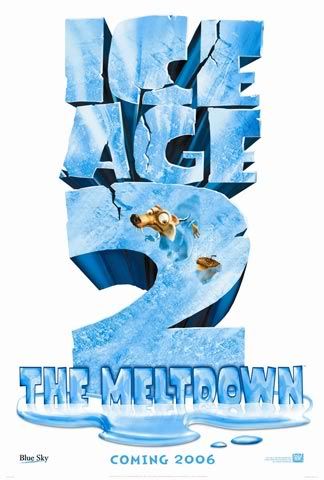
Losing the dullard human element from the first film, The Meltdown sees the original motley crew in the same unfortunate position as the rest of the animal population. The ice that has existed for thousands of years is melting, and high grounds must be reached quickly if anyone is to survive the rising waters. With this handy road-movie plot in hand, the film launches new characters and meandering conflicts into the mix to pass the time in lieu of any real story or substance to be had. Sith doesn’t get enough respect, Manny (Ray Romano) might be the last of his species, and Diego (Dennis Leary), the sabertooth tiger, is afraid of water. These newfound obstacles are not only thematically pointless (in that they disappear only because the plot demands them to at key points, rather than any tangible character or story development), but are laced with the kind of hipster humor marked with a five-minute expiration date once their shallow pop culture references fade from the public spotlight.
I don’t know who’s more irritating amongst the new characters: the possum brothers voiced by Seann William Scott and Josh Peck, or the mammoth (who thinks she’s a possum) voiced by an overenthusiastic Queen Latifah (somebody get me out of here). Amidst all the cheap visual gags and unnecessary musical numbers is a giant narrative vacancy occupied by a plot that even straight-to-video features tend to rise above. For as endearing as Scrat’s antics are, even they can’t sustain the lackluster jokes that pass for humor for the bulk of the ninety-minute running time. If there were any creative justice in this world, the effort put into Ice Age: The Meltdown (as well as the mandatory future sequels) would instead be channeled into a series of cartoon shorts featuring Scrat alone (who is, truthfully, the only reason anyone sees these damn things). They could be aired before various children’s and family films, and would later be compiled into a DVD collection. That, of course, would be the right thing to do (indicated most tellingly by the fact that this film's teaser trailer was composed entirely of the film's funniest two minutes). But that route wouldn’t bring in a $60 million opening weekend, would it?
The Birth of a Nation (1915): A
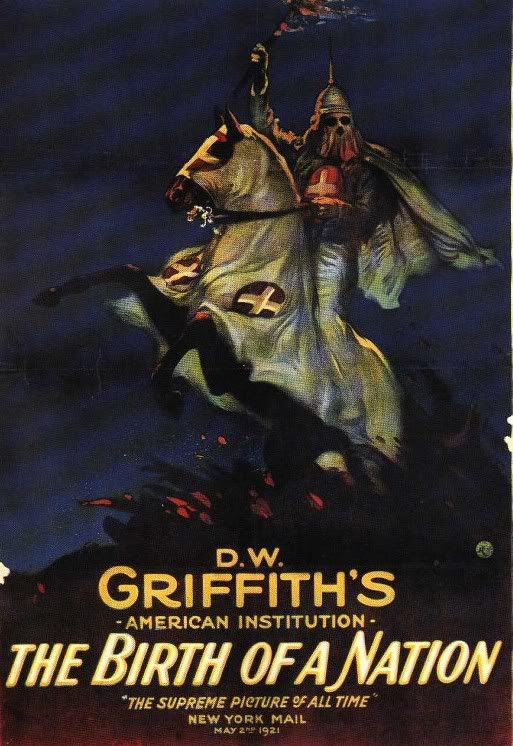
Such notions hovered closely above my contemplative head whilst recently re-watching D.W. Griffith’s silent Civil War epic The Birth of a Nation. As heralded as it is for its technical artistry and medium innovation, it is equally as derided for, among other questionable qualities, its bigoted portrayal of race relations. It’s far-reaching story covers the years-long events that befall two American families before, during and after the civil war. The depictions of and attitudes held towards African Americans in the film range from laughably cartoonish to outright offensive in the extreme, while the plot ultimately glorifies the KKK and the violence perpetuated by the organization in a manner that would have most unprepared viewers quickly squirming in their seats. Certainly, it is something of a hurdle to cover for even the most experienced film lover, but it is one that must be tackled nonetheless. Riots and theatrical boycotts have dogged the film from day one, even amidst more recent, strictly historical presentations. While these demonstrations are rooted from a desire to correct the social ills present in the movie, they also do it a disservice by refusing it full admittance to the marketplace of ideas that is cinematic culture. In order for its ideas to be truly denounced, the film must be openly visible in the first place.
One of the first films to exceed the 100-minute mark (the most complete prints clocking in at over three hours), The Birth of a Nation is arguably the single most artistically important and influential film ever made, a fact that makes it’s social offenses all the more awkward to swallow. Griffith was among a handful of directors working at the time to forge what came to be the early framework for all of cinema, and it would be a near-impossible challenge to find any elements of modern film that did not originate with or near Griffith’s 1915 undertaking. Because the film sits at the foundation of an entire worldly medium that followed in its wake, coming to terms with its dark side is equally as important as appreciating the artistic originality and supreme craft at hand. Any work, however offensive or even potentially dangerous, has the fundamental right to exist, and having been absorbed into the culture it created so effectively, The Birth of a Nation demands attention. The last fate such a film should suffer is to be ignored.
Seen purely in terms of entertainment factor, The Birth of a Nation is nearly as effective today as it was over eighty years ago, its silent conventions and acting mannerisms as much a part of its creation as any other component, completely natural for those accustomed to pre-talkie filmmaking. Nearly as rich in characters and wide in storytelling scope as any number of other modern blockbuster epics (Gone With the Wind, Titanic - both of which employed Griffith's use of montage to staggering effect), the film is a whirlwind of outpouring as it captures the emotional devastation and social turmoil of war, retaining both intimacy and grandeur in its presentation of a story with both great social breadth and intimate personal details. Griffith’s employment of long shots to emphasize action and spectacle are enthralling, while the close shots of actors finely exhibit the radiantly emotional performances at hand. Much of what is at hand here has been accepted cinematic custom for decades, but despite it’s antiquity, The Birth of a Nation is so full-bodied that it almost completely retains its power to stimulate, despite its innovations long since passing down into accepted cliché.
As well as reflecting the now-unacceptable racist attitudes that circulated at the time, The Birth of a Nation examines the social divide wrought on the nation during the Civil War. The two main families, the Camerons and the Stonemans, harken from the south and north, respectively. Economic fallout and the violent rebellions of former slaves plague the Confederacy both during and after the war. The Camerons former lifestyle is eradicated when the freed slaves are given the vote and, with the help of the corrupt radicals, immediately begin to take over the government formerly of the white man. In anguish over the destruction of his people, Ben Cameron (in a moment of inspiration in such horrifically bad taste that only the most offensive moments ever aired on “South Park” can begin to rival its, albeit unintended at the time, humor) establishes the Ku Klux Klan to reinstate the dominance of the proud Aryan race.
To denounce the film outright may seem instinctive for many viewers, and while justifiable so, it also condescends to the context of the time period the film comes to us from. To watch The Birth of a Nation is to experience an American perspective nearly a century in hindsight: one that is indeed hateful, but one that was also commonplace at the time. The black characters in the film are viewed as less-than-human, generally posited against the proper behavior of the white folk as being rowdy, crude and generally lacking in the most basic of social skills (or even the desire to adopt them in the first place). Black extras are typically used in background shots or for larger mobs; as was customary at the time, white actors in blackface were used for the more major roles held by black characters. The blackface makeup looks quite fake and intentionally so, and it is this quality that largely embodies the blind attitudes held by the film and its makers: the bigotry is incredibly obvious and, detached from the proceedings, quite patently absurd.
That today’s audiences have the privilege of more easily recognizing this fact is indeed a blessing, but greater awareness of the atrocities of the past is anything but a call to cover them up or to forget them. It is the responsibility of modern film culture to preserve this telling artifact so that future audiences might better understand the irremovable blemishes on American history. The Birth of a Nation is often regarded as a masterpiece, and such a statement is not entirely unjustifiable. To understand and appreciate the artistry is not to immediately condone its beliefs, and an outright refusal to even engage the work only encourages a perpetuation of those same offensive ideals; without confronting and coming to terms with them, we only allow for them to reappear later, having not yet been adequately dealt with. That the film embodies darker times that have since been largely triumphed over only makes its continued engagement and appreciation more crucial; The Birth of a Nation links the divide between American past and American present, and allows us to better overcome the sins of both eras by more fully understanding where we’ve come from and, ultimately, where we’re going.
Jan 11, 2007
The Wild Blue Yonder (2005): A

Herzog (assuming his audience capable of suspending disbelief enough to overlook the presence of some unavoidable anachronisms and inconsistencies) pieces together scripted interviews about theorized space travel, NASA footage of the 1989 STS-34 Space Shuttle mission (recasting the astronauts as travelers en route to the titular galactic body), and underwater footage of artic marine life (presented as the extra-terrestrial planet), all held together by a wholly alien (to most viewers, that is) score featuring Dutch cellist Ernst Reijsiger and Senegalese singer Mola Sylla. The synchronization of these marvelous sights and sounds creates an overwhelming sense of genuine long-ago, far-away ness (if Stanley Kubrick and David Bowie ever had a love child, this would have been it), while the often sublimely ridiculous use of natural footage (at one point the “inhabitants” of The Wild Blue Yonder are even given voices and their own distinct tongue) prove a dazzling ode to the mesmerizing power of nature. Our Alien narrator, meanwhile – often before locations of abandoned buildings or decrepit scrap heaps – yearns for the preservation of earth’s natural beauty and the staying of mankind’s viral natural imperialism, the human population committing many of the same sins his own race once practiced in vain.
The use of marine cinematography is nothing if not coolly brilliant (tapping into the fact that our own oceans are often more alien and unexplored than even distant worlds), as countless bits of floating ice sprinkle through the alien “atmosphere,” and underwater structures are imagined to be ancient alien cathedrals. Being so naturally outlandish, the experience can surely be interpreted in many a different way, but it is the unwavering conviction brought to the table that gives it an unprecedented emotional and spiritual weight, particularly when it’s imagined human explorers are metaphysically transported back to earth via light particles, only to find a detoxified, reborn world awaiting them. An experience that ultimately creates a plane of higher consciousness through its hallucinatory images, The Wild Blue Yonder is testament to the power of film to create new histories and imagine new beginnings.
Jan 10, 2007
The Godfather, Part III (1990): B+

Even without a handicap, however, The Godfather, Part III is a good film, although its somewhat clumsy sleight of hand makes itself evident almost immediately – long before Mrs. Coppola ever has a chance to open her mouth. (Spoilers ahead!) Initially lacking is the grace of movement and restrained familiarity of character that gave the first two films their own operatic suave, although as narrative threads begin to interweave more meaningfully and conflicts rise to a head (approximately halfway through the film), senior Coppola again begins to find his niche (particularly during the ravishing climax set at – appropriately – an opera house in Italy). Before this return to form, however, the films seemingly mandatory moments of trademark violence bear less dramatic heft than they do tend to tread pure camp; without character relationships and progressing events as fully grounded as we’ve become accustomed to, scenes foreshadowing of everything from Mike Tysons alternative boxing tactics to Grand Theft Auto displays of carnage are a far cry from Part I’s severed horse head and Part II’s opening assassination attempt. Here, an aging Michael Corleone attempts to extricate himself from his underworld business practices after having been recognized by the Catholic Church, only for the actions of a vindictive former partner to force him into continuing his dark acts, even as he attempts to atone for his many sins. Part III’s dramatic impact is strong (however much it feels like an echo of its predecessors), with the importance of children and lineage coming to the front of the matter as this family’s saga unravels in the same country where it all began. Some may think that this chapter is better left untold, but my feelings say that, however lesser an experience it may be, it’s necessity to the arc of this trilogy remains crucial nonetheless.
Jan 9, 2007
Brick (2005): C+
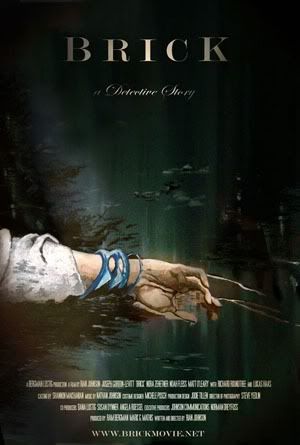 Brick exemplifies the difference between a cinematic talent show and mere karaoke. In an admittedly unique move, the film transplants classic film noir conventions into the more seemingly untainted setting of a modern American suburban high school. Flattery may be the most sincere form of praise, but here the catch comes with the fact that it does so without any sense of moral quandary – it’s rhythmic imitation is impressive, but it yearns for soul beneath all the visual pizzazz and hard-boiled dialogue. Rather than extending this genre-transplanting concept in such a way as to examine the strains that develop between the various social factions already existing within the tumultuous high school habitat (itself an intense social nesting ground for many an American adolescent, myself speaking from long-valued experience), it simply assigns the types of goth, loner, jock and nerd to their appropriate noir counterparts (as good as the acting is across the board, nobody here has the opportunity to play anything other than character types). When Brendan’s (Joseph Gordon-Levitt) ex Emily (Emilie de Ravin) goes over her head into a drug-laden underworld, he optimizes his personal connections and cunning wit to find out what happened to her and why, to predictably mixed Chinatown-esque results of resistance and cooperation. It’s audio visual synchronization is regularly spot-on when it comes to replicating the trademarks of its source material, but Brick quickly takes on the aura of a production bent on completing a checklist of genre clichés more so than digging into the soul of those very trademarks. Often absorbing but never more than first-class mimicry, Brick exists primarily as a reassuring pop quiz for film majors, which is to say it’s aesthetic only goes skin deep.
Jan 1, 2007
2006: The Year in Film
Parallels abound between the last 365 days both within and without the multiplex. While mainstream fare alternated – with few exceptions – between unwatchable garbage and over-praised mediocrity, the mainstream media and elite government powers continued to dive further into a quagmire of unbelievable political treachery and inconceivable stupidity. Anything good or challenging that managed to escape from the popular outlets was quickly and ruthlessly shot down (Miami Vice, Marie Antoinette, Lady in the Water), while tidy formula (Little Miss Sunshine) and predigested insight (Babel, Little Children) passed as edifying entertainment for the masses; even the best of the Oscar hopefuls are only above average (The Queen, The Departed). In other news, the reign of the box office continued to see originality sacrificed in the name of marketability, while mindless pundits questioned whether or not Paul Greengrass and Oliver Stones’ overt 9/11 examinations were “too soon,” somehow forgetting that the likes of Steven Spielberg and Spike Lee had already begun grappling with the moral questions facing our world since 2001 through their own War of the Worlds and 25th Hour. As the voice of reason attempted to permeate politics from the counterculture sidelines, indie filmmakers and true artists provided their own insight through frontal documentary exposes (The War Tapes, Iraq in Fragments, An Inconvenient Truth and When the Levees Broke) and balls-tight attempts to push the medium as a whole to new levels of possibility (thank you, David and Darren). The passing of the late Robert Altman only made the year’s running themes of mortality more poignant, and rest assured, we have not even begun to feel the loss created by his departure. Quality was often sparse, but 2006 was salvaged by the fact that the best films of the year didn’t just entertain us, but framed their feelings – and ours – within a larger framework of our world unfolding and unraveling onto itself.


The experience of the meta-puzzle Mulholland Drive teeters on one’s ability to recognize and accept the alternating rhythms of dream and reality within. The even more monstrous Inland Empire takes things one step further; watching the film is not unlike entering into the labyrinth of a mind, exploring each individual quarter and the memories, dreams, longings, and fears that occupy them. Shifting in and out through layers upon layers of reality, David Lynch’s masterpiece is many things at once: a love story within a love story, a commentary on the dream factory, and an unmistakably uplifting tale of emotional fulfillment. It’s also a glorious “fuck you” to studio-financed, watered down filmmaking and a testament to art as a daring and uncompromising act of creation. Let this one into your bloodstream and the experience is terrifying, transformative, and unforgettable.
Chickenshits cowered at the expansiveness of Michael Mann’s digital photography and unforgiving lack of audience condescension. Their loss is our gain. Miami Vice is the best Hollywood film of the year, and possibly the high water mark of the director’s impressive catalogue. Unfairly tied in name to a television series with which it bears only fleeting and superficial ties, Vice strikes the most resilient chord Mann’s recurrent themes have ever felt, and redefines the boundaries of visually-driven filmmaking in the process. That so many have denounced the film is akin to passengers scrambling in the wake of dust kicked up by a runaway train. For those who can keep up, it’s an unparalleled rush of tingling sensations, and for the first time in years, macho swagger is actually cool.
Like any worthwhile piece of humanistic work, L’Enfant is unyielding in its gaze at free will gone awry. Precisely calculated yet anything but overbearing, the film posits the viewer outside a series of events we desperately seek to alter, yet it is this physical disengagement that makes the eventual redemption of the titular sinner that much more of a cause for celebration.
Lady Coppola saw what was possibly the years worst bout of auteur rejection, with critics apparently thinking that the appropriate follow-up to her moody masterpiece Lost in Translation should be…a formal historical drama. Forget the literalists and the elite historians. Marie Antoinette – by breaking down formal boundaries typically adhered to with stuffy absolutism – brings us closer to the time, place, and people being depicted than the most slavish of textbook interpretations could possibly muster in its own wet dream of itself.
Filmed in 1969 but never released stateside until this year, Army of Shadows’ longevity is evidence to the timelessness of oppression and revolution. Masterfully constructed and emotionally devastating, it bears witness to the cost that often accompanies the choice to do the right thing in the face of adversity (it also serves as an antidote to the Wachowski-endorsed bumper-sticker liberal tripe that is V for Vendetta).
A match made in heaven and manifest in Nashville, Heart of Gold is like attending an autobiographical dream theater. As Young’s lyrics weave bottomless insight into the mysteries of life and death, Demme’s documentation (in a masterful return to his Stop Making Sense roots) amplifies their deeply personal affections as well as the communal, familial ties of all those partaking on stage.
Chaotically dissonant yet exquisitely interconnected, 4 paints Russia and its various protagonists as representatives of a world at conflict between the natural and the mechanical, self-destructive and self-perpetuating. Hardly a country-specific attack, the mind-blowing events within suggest the psychological and moral decay of the entirety of humanity.
Like Marie Antoinette, Three Times further proved that the notions of time and place are but shallow garments lavished upon timeless human emotions. Here, three separate love stories emphasize the multifaceted nature of human emotions, emotional fulfillment and physical longing. Amidst varying styles and characters, director Hsiao-hsien strikes a nearly unparalleled note of eternal spiritual unity.
Love him or hate him, you have to give Darren Aronofsky props for having the balls to make The Fountain. Perhaps the most daring mainstream film in years – if not ever – this dreamy sci-fi mini epic throws all pretenses to the wind and goes for the gut of it’s out-there storyline, unconcerned by standards, conventions, and what is or is not acceptable. Many have called the film a failure. What then, exactly, would have been a success?
The harmful, often unseen consequences of our actions are regularly masked or justified by the dutiful fulfillment of our roles in society. With piteous sympathy, The Death of Mr. Lazarescu watches the unraveling of humanitarian values over the course of a single night, as one man is shuffled without proper treatment from hospital to hospital, the victim of a system where adherence to ones job description trumps both compassion and sensibility. Sometimes seen as a black comedy, its absurdity is undercut by the panging real-world inspirations for its downward spiral of events.
A Prairie Home Companion, Mongolian Ping Pong, The Proposition, Happy Feet, The World According to Sesame Street, The Black Dahlia, Infamous, When the Levees Broke: A Requiem in Four Acts, Gabrielle, Kekexili: Mountain Patrol, Casino Royale, Inside Man, Old Joy, Iron Island, The Science of Sleep
Running Scared, Let's Go to Prison, America: Freedom to Fascism, Tsotsi, Clerks II, X-Men: The Last Stand, My Super-Ex Girlfriend, V for Vendetta, The Santa Clause 3: The Escape Clause, Babel, The Marine, Zoom, The Da Vinci Code, Basic Instinct 2, The Good Shephard
Subscribe to:
Posts (Atom)