Jan 13, 2007

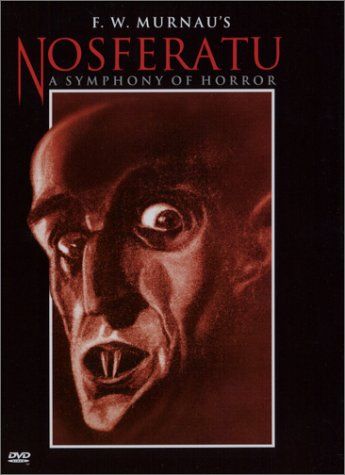
Nosferatu (1922): A

The vampire feature found its first incarnation with F.W. Murnau’s Nosferatu, an unofficial adaptation of Bram Stoker’s novel Dracula. That title, however, almost saw the entire film destroyed. Stoker’s widow, to whom royalties on his works went, easily saw through the film’s changing of names whilst adapting virtually the same plot, and sued for compensation, the court’s ruling being that every copy of Nosferatu had to be destroyed. Thankfully, evasion of the law proved an artistic triumph and a means of preserving a landmark work. Nosferatu, paired with The Cabinet of Dr. Caligari, is one of the hallmark foundations of the German expressionist movement (albeit here of a more eerily natural kind than the obtuse set designs of Weine’s predecessor). It is often regarded as the greatest vampire movie ever made (an assertion I do not support, although I don’t believe it’s far off), but regardless of its overall ranking, it is certainly one of the most subtly festering horror films ever made.

Every image and composition of Nosferatu suggests a half-dead world, the rotting, decomposing corpse of which Murnau obsessively examines with his camera. All seems to have been stillborn, the efforts of the human characters among the only remaining rays of light amidst the darkness; selflessness is ultimately the saving grace of a world otherwise gone to hell. The story is familiar to most; a retail salesman, Thomas (Gustav von Wangenheim), travels to Transylvania to complete a transaction with the wealthy Count Orlock (Max Schreck – German for “maximum terror,” ironically – or, a la Shadow of the Vampire, perhaps not), unperturbed by the warnings from the superstitious locals. Quickly, he learns that the vampire folklore is indeed a serious manner, but not before the Count is the official owner of a home in Thomas’ German hometown. An ill Thomas (sick with a fever induced by the predator Count) rushes home to protect his wife Ellen, but not before Orlock arrives first, bringing with him a deadly plague that begins to eradicate the population.

Horror is almost a misnomer for Nosferatu. Frightening in an existential and spiritual way it surely is, but the effect of the film is not the visceral high generally expected of the genre but the trance-inducing tone more typical of a mood piece. A lingering gaze on natural imagery lends the film this quality, its horror encapsulated not so much in the strictly supernatural (as is evident via the happenings surrounding Count Orlock) as it is ingrained in the monolithic qualities of the natural world. Count Orlock, however, is anything but natural, his distorted features more closely resembling a nimble, upright walking, albino rat than anything that could be called remotely human. His plight is perhaps the saddest of all those in the film, the eternally isolated life of the vampire portrayed as a plague in itself, thus forging a theme that has continued to recur within the genre since this first appearance.

At the center of the film is Schreck’s rightfully revered performance, one so understated and absorbed into the film that it is impossible to imagine the work as a whole without it. Orlock’s body language and physical features create a figure of interlocking contradictions, the former not unlike a gothic ballet interpretation and the latter deeply expressive through its exaggerated repulsiveness. Orlock’s physical presence is not unlike the shadowy representations employed throughout the film; perhaps no single image is more transfixing than the shadow of Count Orlock reaching for the door separating him from his innocent victim. At one point in the film, a scientist points out how a carnivorous hydra plant is so transparent that the physical being is almost nonexistent; so too does Orlock’s body occupy a realm that moves beyond the flesh only to penetrate into the world of the spirit. While the majority of its imitators would define vampirism solely through the physical role of stakes, garlic, blood, and holy water, Nosferatu taps into the psychosexual longings of its mythology with primal efficiency and a somber aftertaste.

Full HD Movie (as of 1/19/2013):

DVD Review: Nosferatu: The Ultimate DVD Edition

The Cabinet of Dr. Caligari (1920): A

My adoration for silent films was born during my pre-adolescent years, as my fascination with monster movies quickly expanded back to the early silent classics. Thank goodness for the once-great AMC channel (which has since devolved into anything but), which regularly showcased these films in the wee hours of weekday mornings; at that age, I could be up at four a.m. even without coffee, ready to soak up the silent feature of the day. Among my first experiences were the films of Buster Keaton (rarely have I laughed so hard as when I first watched The General), The Crowd (the first film I cried over), and the expressionistic classic The Cabinet of Dr. Caligari. At the time, I doubt I could have given an adequate explanation of what all transpired in the film; I was too hypnotized to take notice. What mattered was the eerie, dreamlike nature of the images.

The influence of Robert Wiene’s Caligari is so great that it threatens to obscure the work itself. Debatably the first true horror film (others come to mind, such as Thomas Edison’s 1910 Frankenstein short), the film is, among other things, a foundation for German expressionism, as well as one of the first sources for many of the conventions and styles eventually adopted into film noir. Architectural structures are skewed in ways that defy convention and physics, characterized by sharp angles and distorted frames, all shrouded by the shadows of a barely evaded darkness. One needn’t look far in the culture to see its manifestations, from the works of Tim Burton (Edward Scissorhands, Batman Returns, The Nightmare Before Christmas and Charlie and the Chocolate Factory all come readily to mind) to more unexpected places (such as the Red Hot Chili Peppers’ music video, see below, for their single “Otherside”). As other critics have noted, however, Caligari has unfortunately fallen from its once lofty heights as a cinematic classic. Chalk this up to trends in the community, for Caligari is as important and effective as ever.

The story, as told by Francis (Friedrich Feher), goes as follows: a traveling carnival brings to his hometown the menacing Dr. Caligari (Werner Krauss), whose act involves the awakening of somnambulist Cesare (Conrad Veidt). Purportedly able to predict the future, Francis’ friend Alan (Hans Heinrich von Twardowski) asks Cesare as to how long he will live. The verdict: “You die at dawn.” This chilling revelation is quickly thrown aside as but part of the act, until the following morning, when the dark prophecy is fulfilled by a shadowy, unseen figure. Francis and the town folk quickly look to Caligari in their inquiries.

The key to approaching Caligari is to understand that its distorted sets and spatial arrangements, aside from being the creations of an equally twisted mind (in what might be the first “plot twist” in the medium), are a means of the film wearing its gothic undertones prominently on its sleeves. This works both as a means of expressive style as well as a reflection of the main characters fractured psyche, as the various players are all visually representative of their inner nature. Dr. Caligari looks like some kind of toad, perpetually bent over his cane, his hobbled walk not unlike a disgruntled sand crab (a look greatly borrowed from for Danny DeVito’s brilliant portrayal of the Penguin in Burton’s aforementioned Batman Returns), while Cesare’s acrobatic and fluid motions are the stuff of a nightmarish ballet (his appearance bearing no small resemblance to Johnny Depp’s Edward Scissorhands).

When the ultimate revelation comes in the film’s final minutes – Francis, who has thus far been telling the story via flashback, turns out to be one of many patients in an insane asylum – the many pieces of the quixotic puzzle quickly fall into their perfectly logical places. Unlike many later films that adopted an almost identical narrative structure in regards to showcasing a mental illness (I’m talking to you, A Beautiful Mind), Caligari is both enthralling and true to its structure (not to mention conscientious of its characters’ plights, positing the same symptoms on an unknowing audience rather than simply plugging them for highbrow entertainment factor). The factors influencing Francis’ mental delusions are both clear and logical, providing a tangible connection between a splintered reality and the surreal world in his mind. By taking the viewer through the maze of this mind before resurfacing in a familiar setting, the power of its bizarre elements becomes even more stimulating.

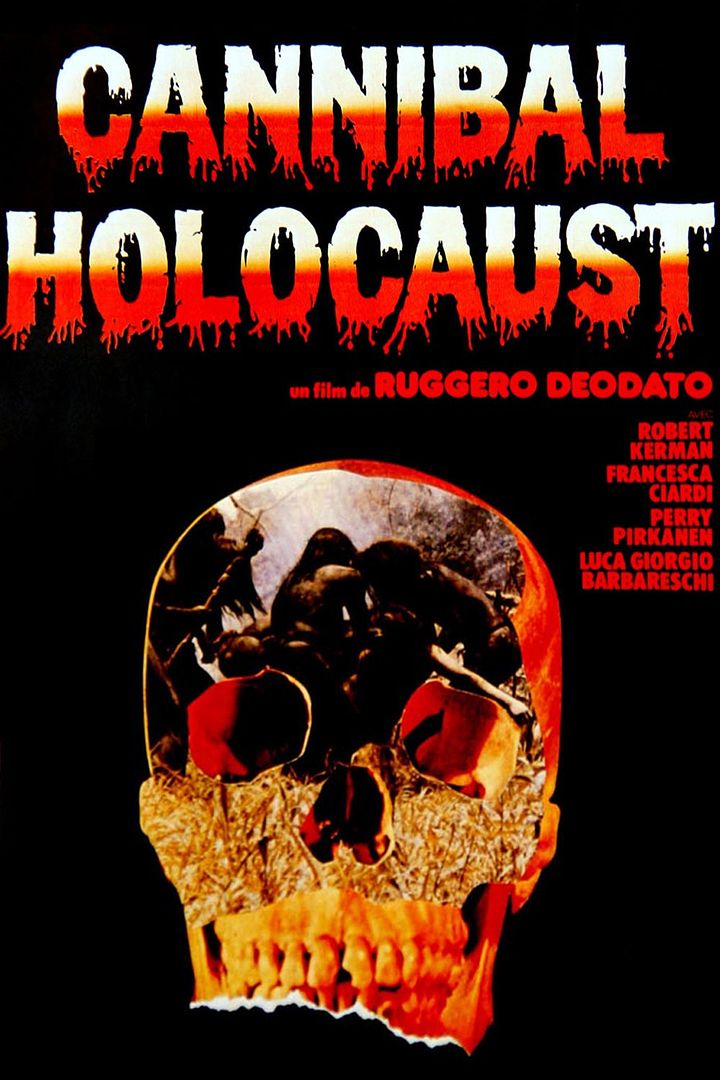
Cannibal Holocaust (1980): D

Says a female television executive in Cannibal Holocaust: “Today people want sensationalism. The more you rape their senses the happier they are.” Count me out of this demographic – one of many laughable examples of the film’s attempts to justify itself as some sort of moral examination on cultural violence and the destructive effects of imperialism. A group of four documentary filmmakers travel deep into the Amazonian to see what they can uncover about the supposed cannibal tribes who reside there. No surprise: none of them are ever heard from again. When NYU Professor Harold Monroe (Robert Kerman) attempts to uncover their whereabouts (or those of their remains), he and his rescue team are able to establish good relations with one of the native tribes, only to discover the fallen foursomes remains and the footage they shot, which includes – to name but a few instances of gut churning violence – native rituals involving forced abortions, rape with a stone penis as a punishment for adultery, full body impalements, communal rape of a native by the male filmmakers, and the decapitation and dismemberment of (real) animals.

The Passion of the Christ always struck me as being gratuitous in its use of violence without context (and extensively, without any real meaning behind it), but Mel Gibson’s torture chamber piece should be considered a humanitarian effort worthy of the Nobel Peace Prize compared to this. A proud supporter of free speech myself, the most offensive aspect of Cannibal Holocaust is its disingenuous claim to supporting said rights - a shallow attempt to frame its exploitation as a protest against exploitation itself. Reads the opening title crawl: “As distributors of this film, we wish to state with absolute sincerity that by no means do we condone the artistic decisions employed by the makers of this film. However, as firm believers in the constitutional right of free speech, we do not believe in censorship.” Let me add myself to the many who have already called this out as complete bullshit, a moral reach-around that, even if it were well intended, forgets that free speech has never been an absolute (let’s hope all screenings of the film end with the distribution of civic books to the audience), and that snuff films would never be permitted under the Constitution. Violence in film can indeed be a powerful tool, particularly when used to examine elements of reality that demand moral grappling and intense philosophic inquiry.

Cannibal Holocaust would like you to think it serves this purpose; at the very least, it wants to package its gorefest in such a way that junkies who get off on it don’t immediate check themselves into some sort of moral rehab (something I whole heartedly recommend to anyone who enjoys this for its gore factor - if they're not already beyond help). While the collected footage is screened for TV producers who wish to use such “sensational” material to draw higher ratings, the film regularly cuts back and forth between the worst of the material being projected and the reactions of the audience, whose glazed-over eyes may as well be watching Howdy Doody. After all said and done, the professor wanders outside to the New York cityscape, thinking via voiceover: “I wonder who the real cannibals are” (presumably, to gorehound hipsters dropping their jaws in a moment of pathetically profound realization). The completely heinous nature of the film, however, is exposed through its own inconsistencies, from the pseudo-artsy scoring of supposedly raw footage (what’s the decapitation and cannibalization of a human without flowery synthesized music?) to the fact that real animals were used for this self-proclaimed expose on the evil within men (as far as horror films serving as commentaries on our obsession with violence in the media go, The Devil's Rejects puts this thing to shame). For years now, I’ve called Bad Boys II the single worst thing I’d ever watched, but at this moment, I’d rather cuddle with Michael Bay before ever coming close to this atrocity again.

Jan 12, 2007

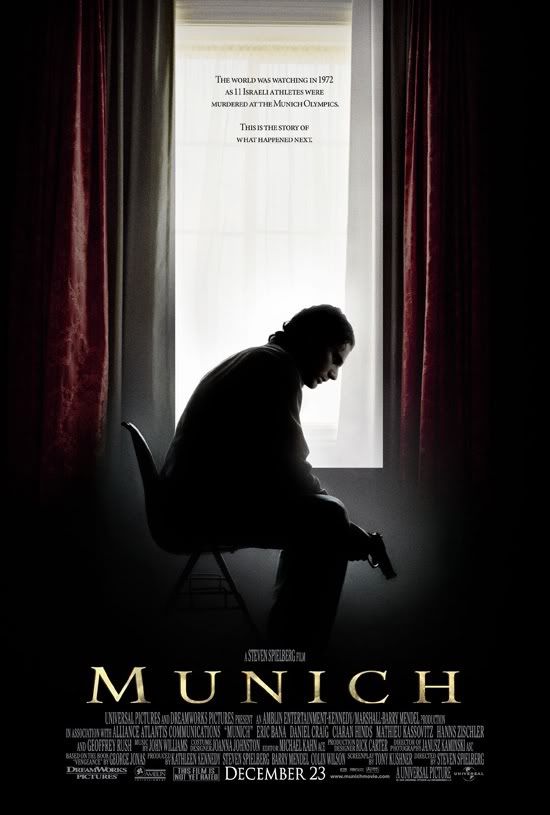
Munich (2005): A+

A plethora of names – the cities to host the Olympic Games prior to 1972 – fill the screen in the opening frames of Munich. This textual myriad soon fades to black to reveal the film’s title, bathed in crimson red, followed by the disclaimer, “inspired by true events.” This moment emphasizes the weight of the tragedy to take place at the supposed festivity of world peace, as well as the necessary declaration that this is art, not history. The Olympics spanning the globe, however, also suggests that Munich's story is one deeply universal in nature. The hosting cities standing in for a sampling of the entire world, Munich emerges as but one of many similar stories throughout human history that, in the end, are really about the same thing. As regards history, the film is an examination of the nature of humanity, in this case, the darker aspects of violence, revenge, and death, rather than a regurgitated depiction of events passed. Some may disagree with Spielberg’s politics, but if there’s one thing the film certainly is not, it’s simple.

A longing for home is the central core to Spielberg’s powerful dissertation. The real-world conflict between Israel and anti-Semite Arabs provides the film’s dramatic backbone from which it can occasionally deviate, so it may look closer at the gritty humanity behind the events that unfold, for both the good and the bad. One side claims the need for a home after thousands of years of persecution, the other the home they once had, pulled out from under their feet. Both sides suffer casualties from the other, and both sides see fit to reprise the latest attack from their enemy. As Spielberg expresses through one of his characters: “There is no peace at the end of this.” But to protect oneself and ones family, violence is sometimes needed, whether as a means of protection, or dissuasion. But under what circumstances, and in what quantities? In the midst of asking these very difficult questions, Munich declares family and home as that which it is most allegiant to (even if, like a good dissenting citizen, it questions Israeli policy). To quote but one of many memorable statements from Spielberg's dialogue: “A place on Earth. At last, we have a place on Earth.”

After a team of eleven Palestinian terrorists take nine Israeli athletes hostage at the 1972 Munich Olympic Games, ultimately killing them all before the eyes of the world, the Israeli Prime Minister Golda Meir (Lynn Cohen) knows that any act of reciprocation will only see more violence against their people. Yet to remain mute in the face of such a media-frantic tragedy would be to show a face of weakness. “Forget peace for now. We have to show them we’re strong.” Enter Avner (Eric Bana), an ex-soldier, Israeli-born Jew asked to lead a five-man mission to assassinate the eleven terrorists (members of the group Black September) behind the Munich massacre. He accepts the job, even with a seven-month pregnant wife waiting for him in Jerusalem. One by one, they hunt down and kill the individuals responsible for the massacre, even being well aware that those killed will have even more ruthless replacements. The pertinence of this timely issue is no coincidence, especially when one regards the simple visual statement in the final scene of the film. Can a war on terrorism be won? Or will the need eventual for non-violent dialogue be lost on those in conflict, even as the effects of vengeance become counter-productive?

In addition to deconstructing the taken-for-granted perceptions of violence and revenge, Munich also finds itself a disarming take on the relationship between the viewer and the film in it’s depiction of the assassinations to follow. Filmed with the skill of a master, they are riveting and enthralling, even as we’re horrified by man’s inhumanity to man in all its aspects. In one poignant scene, like the calm before a storm, Avner talks friendly with a Palestinian terrorist on a hotel balcony. The film declares no moral ambiguity between the “sides” shown at war, but acknowledges that even one’s enemy is almost always still human. When Avner’s team finds themselves occupying the same building as their future enemies (after an unexpected meeting and nerve-racking cease-fire), the discussions, both verbal and wordless, are illuminating. The most memorable of these is a quarrel over the radio station of choice; Steve and an equally stubborn Palestinian take turns changing the dial to their particular preference, back and forth, encapsulating the cyclical tendencies of exchanged violence and thus, their potential for sheer pointlessness.

The progression of violence and killings serve as the source of desensitization for the Israeli team members. Unsure of the reliability of his sources and employers (one of whom may be backed by the CIA), and in the midst of the deaths of several of his fellows, Avner’s once sturdy faith in Israel wanes in the face of fear for his and his families' safety. Avner loves Israel, but learns that blind allegiance to authority can just as readily cause death as it can prolong life. Amongst the fellow missionaries, the audience can gauge the spectrum of thoughts and feelings that exist on these shaky grounds. Steve (Daniel Craig – if this is film is any indication, a worthy addition to the Bond franchise) sees no worthwhile humanity in the enemies the film makes room to humanize: “The only blood that matters to me is Jewish blood.” Carl (CiarĂ¡n Hinds) seeks to retain his sanity in the midst of the bloodshed, where one’s humanity can naturally erode. Bomb maker Robert (Mathieu Kassovitz) questions how true to their ideals their actions are: “We are supposed to be righteous! I lose that, that's my soul.” In shifting between moments of quiet thought and thrilling moments of visceral terror, Munich examines not only the relationship between the thought and the act, but between what is right and what is necessary. Evil is subjective here, the film wading deep in the murky grays of morality.

Many will be, and indeed, already have bee enraged by the political dialogue presented in Spielberg’s film. Many of these are only so because the film allows doubt to enter the equation of thoughts, and even though the film feels a deep love for Israel, that hasn’t stopped many Jewish scholars from practically expelling Spielberg from the community. Munich is the bravest film of Spielberg’s career, perhaps one of the bravest works of thoughtful art of all time. His choice to expose himself for criticism as the cost of getting these issues more into the open – and therefore more into the realm of thoughtful discourse – is brilliantly reflected in a sequence later in the film. Robert (who closely resembles a younger Spielberg – this is no coincidence), stricken with depression from his duties for Israel, takes leave to his cottage home to rest and recuperate. There, he tinkers with his bombs and gadgets, handling them, examining them, and deconstructing them (in essence, learning how these dangerous objects work). Not long after, one of them detonates (foreshadowed as a possible suicide, but never confirmed; hopefully the DVD commentary will clear this up). In short: Spielberg knows that he’ll ultimately touch off a nerve and take a lot of shit for doing so, but these topics and questions must be raised in the open if an answer is ever to be reached. The effect of controversy is often the mark of great art, and Munich finds a thinker, a filmmaker and a Jew offering up a work of personal introspection and anguish that’s says much about the world and the many peoples who occupy it. At the relatively moderate risk of some flack, it hopes to make it a better place.

North Country (2005): C-

Few things are more dramatically heinous than depicting complex and far-reaching social problems with such single-minded intensity so as to reduce the effect to pure emotional propaganda. When a film depicts its events as occupying reality rather than commenting on it, the use of such broad generalizations and black and white us vs. them distinctions (while perhaps making things palatable for the cinematically inept) renders any potentially valid points mute when one looks beyond the Lifetime cartoon antics at hand and out into the real world. In tackling the issue of gender relations and sexual abuse in a male-dominant workplace, North Country sees fit to define its characters exclusively by their status as either victim or victimizer. Charlize Theron’s Josey Aimes gets a job at the local mine to support her two children after leaving her abusive husband (enter the disapproving father and supportive mother for contrasting dramatic effect). There, the handful of female employees must endure the taunts and come-ons from the horny male populace on a daily basis in order to bring home the bacon. Bearing the mind-numbingly overused “based on a true story” label, North Country takes excessive dramatic liberties with the story of the real Lois Jensen and her class action lawsuit against the mining company; excessive not because adherence to fact is mandatory, but because the film ultimately lauds its “inspirational” appeal more than it’s half-assed examination of the turgid social and sexual climate it pillages for tears and applause from the audience. In the end, it’s all about “standing up,” while the utterly ridiculous build-up to the truncated conclusion may as well play out in a boxing ring. Director Niki Caro exquisitely examined female empowerment amidst oppressive cultural conditions in her wonderful Whale Rider; on the other hand, North Country condescends to its audience and reduces its characters to LCD-levels of complexity, negating the seriousness it feebly reaches for in the process. Josey ultimately triumphs, but only because her past experiences somehow validate her present battles as a freedom fighter, and, whaddya know, her nice male lawyer is accused of being gay at the local bar (so we know he's okay)! These are deep social plagues that demand serious thought and attention, yet North Country would have you believe it’s no more complex than a playground quarrel between boys, girls, and cooties.

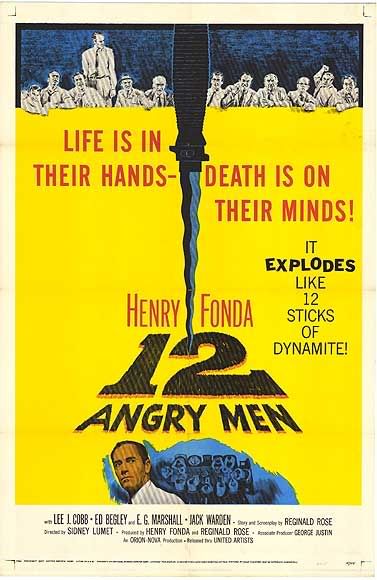
12 Angry Men (1957): A

A young Spanish boy, raised in the slums, stands on trial for the murder of his father. Twelve white jurors march off to decide his fate, most of them convinced of his guilt purely on the basis of his appearance and background before facts have a chance to even enter the equation. These opening scenes of 12 Angry Men, first written in 1954 and filmed here in 1957, are exceedingly telling about the racial and economic divides in America even with fifty years of hindsight. While the film most prominently prescribes to the importance of upholding one’s democratic responsibilities as well as one’s obligation to their fellow man, the racial divides that separate the haves from the have nots is another roadblock that has refused to go away, and thus remains a hot topic suggested here. An average 90’s remake of the film hardly had to change a thing to bring the material up to the times, suggesting that as long as democracy exists and we human participants are flawed in nature, 12 Angry Men and the issues it raises will be timeless in nature.

Taking place almost entirely within the jury room, 12 Angry Man watches as eleven jurors first convinced of the suspect’s guilt are slowly won over to the side of reasonable doubt by the one man sympathetic enough to at least look over the details of the case before sending a man off to die. The twelve men (referred to by their juror number rather than name, as goes the democratic process) exist less as individual characters than as semi-exaggerated caricatures that siphon variously opposing, often clashing viewpoints. For as nicely packaged as 12 Angry Men often is, it makes no self-saluting motions to greater importance, which gives the material the much-desired breathing room it needs to reach full potency. As the most ardent believers of the suspect’s guilt refuse to be worn away by the evidence mounting up in favor of his innocence, one might sense that they exist largely as straw men for the film’s levelheaded bleeding heart to tear down. That would be the case were such stubbornness and bigotry not present in the real world, and if 12 Angry Men’s jury room acts as an unstated microcosm of the real world (or at least American society), then it’s allegorical implications hit all the right notes, even if they may be relatively oversimplified in the long run.

I seriously doubt that the triumph of truth-seeking over reckless abuse of democratic power portrayed here is what generally unfolds in the real world; for as much as 12 Angry Men reflects the many divides of society, it also exists as an idealistic vision of what democracy should be. As a political lesson, it earns the right to borderline on preachy, but as a drama, the film arguably works even better. Employing tighter framing compositions and lower-level angles as the film progresses, the sense of tension and heightened tempers in the small room escalates to near unbearable levels, punctuated by newfound inconsistencies in the testimonials as well as revelations that cast known details of the case in a new lighting. Such images as eleven of the jurors standing opposite the irrationally enraged juror number three (Lee J. Cobb) evoke a wonderful sense of humanities’ potential for good, political context notwithstanding. As a work that reflects on the common regard for one’s fellow man, it is pertinent and demonstrative.

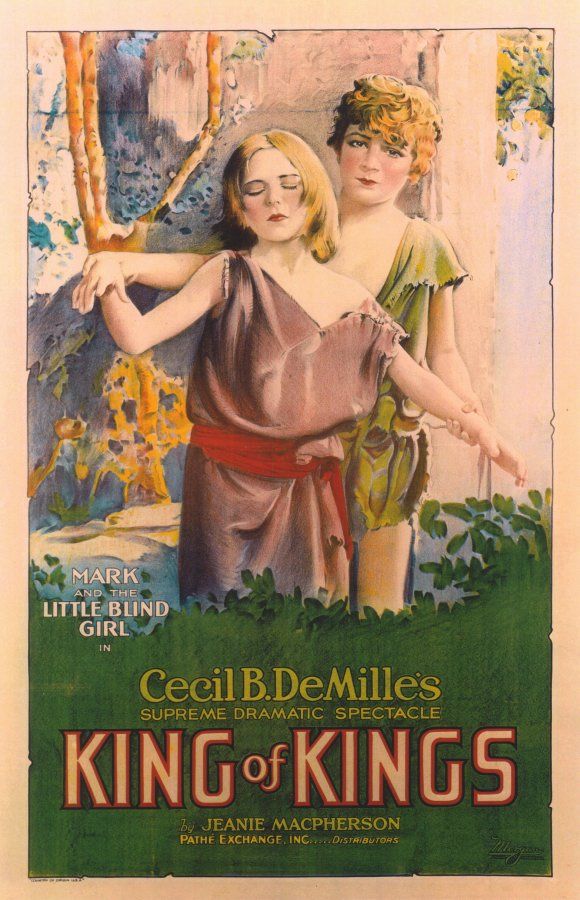
The King of Kings (1927): C

Even seen theatrically and accompanied by a live organ performance (as I was privileged to do so during a special presentation), Cecil B. DeMille's silent would-be epic The King of Kings is a tedious, strictly standard affair, revealing itself as a precursor to Mel Gibson's Christian propaganda piece The Passion of the Christ, albeit without the gore or bloodshed. Originally released as an opener to new theater houses, the film exists primarily to enlighten audiences as to the divine nature of the Christian messiah. In actually showing his godly capabilities as well as why he bore such a threat to the Roman leaders of the day, King of Kings outdoes The Passion in terms of actually providing some meaning for the ultimate crucifixion. But while this work is far from a snuff film, it's sampling of stock character conflicts and overt self-importance renders it little more than a dead-in-the-water melodrama from the days of past.

The first glimpse of Christ (H.B. Warner) is presented via the restored sight of a blind child, positing the audience as both the healed and enlightened. DeMille's overly literally imagery finds little restraint here, both in the grand, elaborate sets and costumes as well as the camera tricks showcasing events of religious and supernatural grandeur. With a bit of narrative liberty taken from the gospel sources, the film's Jesus extricates Mary Magdalene's sins from her soul one by one in a scene completely unaware of its outright silliness. Likewise, the climactic end to the crucifixion sees fire and brimstone rain down upon the unbelievers in an earthquake-like disaster in perhaps the only scene that registers to some tangible effect, even if it feels completely removed from the rest of the film. Ultimately, the exaggerated chaos of it all suggests that those still unconvinced as to whether or not the path of Jesus is the right one have another thing coming, and had better reconsider their status.

Holy its source materials may be in some circles, The King of Kings finds no such divinity in its uninspired biblical retellings, where the good and evil in its characters are worn prominently on their sleeves. Jesus' wise and perfect portrayal is suiting, but from his first glimpse on screen there's never any doubt as to the role Judas (Joseph Schildkraut) will play, rendering his ultimate betrayal completely meaningless. With such reliance on such thinly developed protagonist-antagonist antics, the film never reaches the sense of greater importance it pronounces so boldly. When Christ ascends to heaven three days after his death, the effect is not one of great meaning or accomplishment, but redundancy. Using title cards lifted from scripture, the film is a preachy affair from the very outset, its greater intentions suffocated by it's unwillingness to let the audience appreciate the finer qualities of its message without them being overblown in presentation. Sermons rarely make good films, this one being no different.