Showing posts with label free movies. Show all posts

Feb 10, 2013

Freebie Flicks: RMS Titanic Edition

In Nacht und Eis (In Night and Ice, 1912)


Atlantis (1913)


Atlantic (1929)


Titanic (1943); if you download the file, you can use these subtitles.


1958's A Night to Remember (embedding disabled).

And James Cameron's Ghosts of the Abyss, a film I cannot recommend but for the extraordinary footage it includes of the wreck. If this silly documentary ditched Bill Paxton and so much of its excessively imposed "narrative," it could've been tremendous, but silver linings notwithstanding, it's easily the weakest effort in Cameron's body of work.

Feb 3, 2013

Freebie Flicks: Jerry Maquire (1996)


The related portion of this video starts at the 2:45 mark.


Happy Superb Owl!

(With acknowledgement of the artwork of Takeshita Kenji.)

Jan 31, 2013

Freebie Flicks: Oscar Edition

Apologies for the sparse updates these past few weeks; while I've been busy at work on the blog, it's been less in the way of new content than on the exhaustive effort required to properly format and organize almost seven years' worth of material, plenty to bite off and slow to chew. In exchange for my absence, I offer five Best Picture winners* currently available on YouTube. (KeepVid dot com will allow you to download most of these in HD.)


*Named such in the obsolete category "Unique and Artistic Production," which I'm exploiting here because this remains arguably the greatest film to ever win either award.


Jan 14, 2013

Freebie Flicks: College (1927)


Because it fits my mood today, particularly the final thirty seconds. And don't be a moron and just watch the final thirty seconds if you haven't seen the movie before. KeepVid dot com for the download.

Jan 11, 2013

Freebie Flicks: Cronenberg Double Feature (& Bonus)

As I type this, I've been awake for 19 hours straight with no end of the tunnel in sight. This stretch has so far included two work shifts and one opening night viewing (wide release) of Zero Dark Thirty, and as a break, I'm posting some more free movies. Here are two very different, very important (are there any other kind?) David Cronenberg films, Scanners and Spider (the latter of which I was privileged to write some words about here), as well as the YouTube rip of his commentary track for The Fly. If you love film, maybe not even that one in particular, I'd say it's absolutely worth a listen, as you'll probably learn things you never thought of. In case you don't know this valuable resource, KeepVid.com will allow you to download these and many other online videos as any number of file types. Enjoy.


Jan 9, 2013

Freebie Flick: Videodrome (1983)


I've found myself on a Cronenberg kick recently, what with the DVD/Blu-ray release of Cosmopolis and my long-overdue acquisition of A Dangerous Method as a Christmas present (to me, from me). In perusing YouTube for some of my blind spots within his filmography, I found a surprising wealth of his films available there, and so will be having something of an anti-Oscar Cronenberg series here for the next week or two. First up, his masterpiece Videodrome. Check out KeepVid to download the file.

Jan 5, 2013

Freebie Flick: Fury (1936)


Having finally put down some of my thoughts on Lincoln, I'm feeling more politically charged than usual, so today's free movie is Fritz Lang's Fury, the director's first American film and one of my favorites of the 1930s. Don't forget to visit KeepVid to download the files for your personal viewing pleasure. I also personally recommend the VLC media player for smooth playback, especially with multi-part film downloads.


Jan 3, 2013

Freebie Flick: The Texas Chainsaw Massacre (1974)


Why pay cash money to see a retread that's probably terrible* when the classic that spawned it is readily available for home viewing? In this case, for free. (And if you go to a web site called KeepVid, you can download most any online video in almost any format for easy storage and transportation elsewhere.) Stay tuned for more free stuff, some of it timely, some random, all aspiring to awesomeness.

*If, in fact, Texas Chainsaw 3D turns out to not be garbage, I'll happily announce such. I'm always glad to be wrong when it means there's a good film to be had. I'm looking forward to the reviews, but otherwise, I'm happily protective of my preciously finite legal tender.

Dec 20, 2012

Girl Walk // All Day


In an effort to try to make this space more along the lines of a real blog, I decided it's time to share more stuff. Those who caught Slant's 25 Best Films of 2012 might have noticed our endorsement of Girl Walk // All Day, one of my favorite films of the year. It's available for free viewing through its official web site, albeit a chapter at a time. Click through the picture above of the exhuberant Anne Marsen to experience it.

Jul 20, 2011

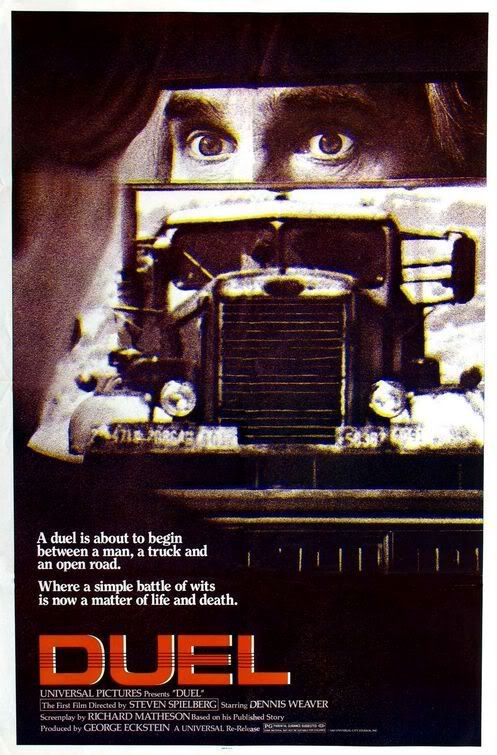
Duel (1971): B+

As the cinematic debut of Steven Spielberg (even though it was originally produced as a TV movie, this is as much of a movie as any), Duel has some undoubtedly big shoes to fill, and that's the case whether you think Spielberg is infallible or intolerable. Possibly you're aware that I'm much closer to the former camp, and if there's one thing that keeps me from loving Duel entirely, it's the knowledge that Spielberg would only improve (for many filmmakers, it would be an easy career high). On its own, it's a startlingly pure, assured piece of psychological horror indicative of a major talent with an instinctive approach to subjectivity. Adapted by Richard Matheson from his own short story, it was successful enough on television to get a theatrical re-release years later, and as a result, two primary cuts of the film exist: the 74-minute theatrical cut, and the 90-minute cut expanded for theaters (the only version I've seen, an oversight I intend to correct), and available more or less intact on DVD (some shots and voice over lines have been removed). My feelings about the film haven't changed over the years; even seeing it in theaters, there remained some pacing issues, which isn't entirely unexpected when a filmmaker - especially a young one - tackles a project of such daunting conceptual limitations (hell, even a veteran Michael Mann could only come up with so many in-vehicle camera angles in Collateral). The main (and in most ways only) character here is one David Mann (Dennis Weaver, a superior everyman), who is traveling in his Plymouth through desert country on a business trip; a tanker truck on the rode first annoys, then obstructs, then attempts to kill him, beyond any reasonable doubt. We (the audience) catch an insubstantial glimpse of the would-be killer at least once, but Mann remains entirely in the dark as to the face of his predator. One of the more nail-biting features of the latter 20th Century; it just grazes the edge of existentialism. Seen in his filmography, the film's rusted, growling tanker truck is an obvious predecessor to the man-eating Great White of Jaws, sharing in its pitilessness. And it's every bit as terrifying.

Feb 3, 2011

The Killer (1989): A+

Photo Sharing and Video Hosting at Photobucket
It's no misuse of hyperbole to say that violence has never appeared as operatic as it does in John Woo's The Killer -- one of the few films to hold a legitimate claim to the title of Greatest Action Movie of All Time. It's title suggests archetypal purity and existential singularity, and whether deliberately or not (the typically humble Woo thinks of his film as commercial, not art), the many pieces of this seminal work come together with such precision as to suggest something of divine inspiration. The title refers to Chow Yun-fat's Ah Jong (referred to in English dubs and subs as John or Jeff), a professional hitman with a conscience; when he accidentally blinds a female bystander whilst eliminating a club full of gangsters, he vows to secure the money needed for the necessary surgery to restore her sight. One last job should do the trick, but a snafu sees his position compromised, and before long, loyalties are tested and honor becomes the only thing left in a temporary world of masculine claims to power.

Romantic to its core, The Killer stages its many bombastic set pieces with gloriously poetic flourishes, the off-the-cuff verve stemming at least in part from Woo's infamously improvisational approach. As transfixing as it is, however, death is not something glorified here, but bemoaned as a necessary evil in an evil world; every expended bullet and flailing body of dead meat is shot as if an aching expression of a corrupted soul. Woo's impulsive editing choices (freeze frames abound for practically Wagnerian effect) compliment his rigorously framed thematic devices; men on both sides of the law become dual sides of the same coin when true justice is at stake. The blinded Jennie (Sally Yeh) is the equally melodramatic purity of essence in this world, but all does not give way to a better tomorrow. Sins must be paid for, and what separates The Killer from the commercial is Woo's ultimate refusal to give in to basic audience expectations. Like a true artist, he bites the bullet and gives us what we need instead.


I recommend these subtitles.

Oct 31, 2007

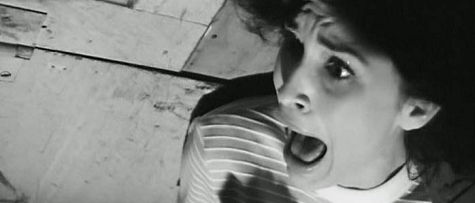
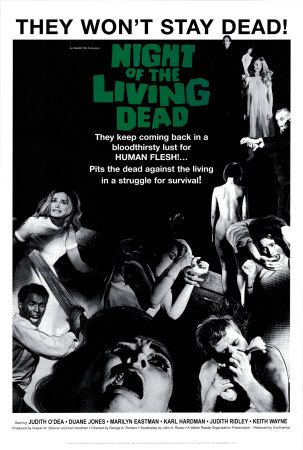
Night of the Living Dead (1968): A+


Fuck hyperbole – George A. Romero's debut film Night of the Living Dead may be the purest horror film ever made. Only the memories of those who were first there during its unveiling can attest to just how revolutionary a creation it was, simultaneously redefining the rules and capabilities of the medium while also forging an entirely new subgenre that – if the recent success of a third Resident Evil film and the upcoming remake of Romero's own sequel Day of the Dead are any indication – remains alive and well today (no pun intended). Even during my first, now hallowed viewing experience, I knew what the zombies were and the general "rules" surrounding them; the reactivation of the body via some viral infection or radiative force, the eating of the flesh of the living, the fact that those bitten by a zombie would ultimately become one themselves, and the killing of the undead through the destruction of the reanimated brain. These qualities have long since been absorbed into horror culture at the same level as Frankenstein and Dracula, the fact of which attests to Night of the Living Dead's timeless potency as one of the genre's most formidable exercises. Although among my most re-watched films, it never fails to evoke the same chills time and time again. Romero would go on to more brilliant and complex works, but in its own direct way, Night of the Living Dead represents unsurpassable perfection.

Kneading its murky imagery into a tsunami of terror over the course of an agonizing hour and a half, Night of the Living Dead focuses primarily on suggestion over action, the tangible violence and onscreen conflicts complimented by a foundation of perpetual, mysterious dread, of normality imploding on itself. A day trip to visit the grave of their father turns into a living hell for Barbra (Judith O'Dea) and her brother Johnny (Russell Streiner), who happen into the middle of the outbreaking zombie plague just as it begins, with any explanation for the sudden terror besieging them amounting to nil. Johnny taunts Barbara over her childhood fear of the cemetery, only for the wandering man in their midst to actually have been already "coming to get her" in the first place. Night may seem overeager to send shivers down its viewers spines but the film works precisely as a validation of our deepest childhood fears, from what we're unable to see in the dark to the general strangeness abound in much of our everyday bric-a-brac. Romero's minimalist cinematography borrows a page from Polanski in its diagonal framing, often suggesting an ethereal landscape of blacks and grays melding into each other, not unlike some dense fabric from which the monsters of our dreams come for us at our most vulnerable. The lack of visual distinction may be the film's most powerful attribute; like the splotchy paint strokes of a surrealist work, our imaginations work overtime to "fill in" the gaps, without our even realizing it.

Romero denies having intended any racial commentary in his character's power struggle, but it's actually the final series of unfortunate events that solidify the work as one of 60's activism rooted in social unease. Ben (Duane Jones) and Harry Cooper (Karl Hardman) duke it out not as black man and white man but as entangled might and pride, and it is in its observation of people interacting under the strains of unimaginable duress that Night of the Living Dead becomes most universal. It's downright impossible to not recall 9/11 as our human protagonists, safe for the time being in their boarded-up country house, huddle around a television waiting with baited breath for the next nugget of information about the unfolding chaos around them. Along with my virginity, I'd give damn near anything to watch the film again for the first time, totally ignorant not only of its own narrative progression but of all things zombie. Horror films have become more technically gruesome and forcefully shocking in the past forty years, and indeed, some have surpassed the film in scares, if not in aesthetic potency. No amount of technical nuance, however, could ever hope to rival Night's sinister lurk through the subconscious. From the subtle voyeurism of its opening credits through its impossibly bleak conclusion, it subjects us to the kind of unrelenting nightmare we only wish we could wake up from.


Feature: 31 Days of Zombie!

Oct 29, 2007

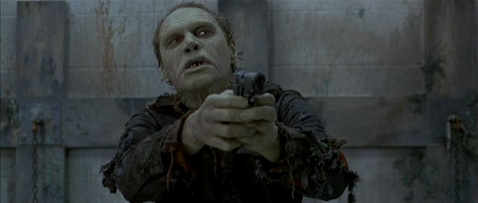
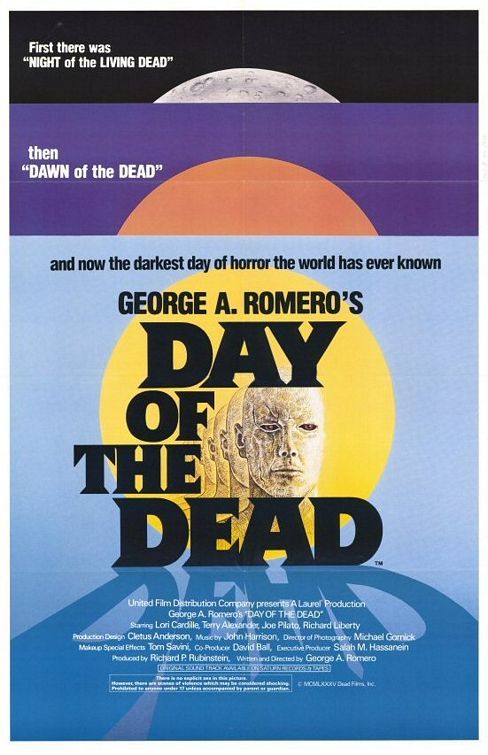
Day of the Dead (1985): A+


Like an ugly duckling, Day of the Dead took some time to get the love it deserved (and even then it has remained a black sheep amongst its brethren) – a scenario not uncommon to works of art that tell people what they simultaneously need to know and want not to hear. The film was – and to a large extent, remains – a victim of its own implicit place in film history; like the occasionally artful summer blockbuster, Romero’s third "Dead" entry is routinely examined and dismissed less for its own qualities than its “failure” to conform to the expectations unfairly assigned to it sight unseen, here as a zombie movie sequel indebted to two highly lauded works come before. Night of the Living Dead and Dawn of the Dead were both brilliant and easily among the greatest horror films ever made, but that Day of the Dead doesn’t follow the expected trilogy arc of capping off its saga with all-out climactic spectacle is hardly an inherent strike against it. Part of this degrading misconception lies in the fact that Romero’s original vision was cut short by budgetary restraints over issues with the increasingly more powerful MPAA rating system, the final result being far from the originally conceived "Raiders of the Lost Ark with zombies", and gore hounds subsequently decrying the relative lack of visceral bloodshed (regardless of the fact that, during its brief moments of splatter, Day features some of the sickest zombie action ever filmed). Similarly, Day is – in the popular sense of the term – a decidedly anti-audience pleaser. Set primarily underground during what appear to be the final death twitches of mankind, the film is quick to dispatch with any practical ideas about escape or happy endings. Welcome to the suck.

It is hardly to their discredit that both Night of the Living Dead and Dawn of the Dead are rather accessible in their social diatribes layered upon physically tangible plots of humans survivors struggling to overcome. Whereas those films commented externally on the world around them, Day of the Dead is also a work of deeply internal ruminations, a film that assumes our flaws and, intrinsically, our imminent mortality (whether at the hands of flesh-eating ghouls or each other), and searches for the silver linings amidst what otherwise appears to be insurmountable hopelessness. The remaining survivors of Dawn of the Dead took off in a helicopter already low on fuel, unsure of what awaited them next. Day of the Dead begins with a small cadre of armed survivors looking for more of their kind, traveling up and down the Floridian coast in their own running-on-fumes whirlybird. The situation has only continued its downward slope; according to the estimates of Dr. Logan (Richard Liberty), the dead now outnumber the living approximately 400,000 to 1. Any chance of killing them off is long since fucked; surviving, then, requires a two-pronged approach of re-evaluating our own definition of socialized living and stopping the zombies’ instinctive drive to eat us, rather than stopping the zombies themselves. Unlike Night's evocations of racism or Dawn's attack on consumerism, Romero's zombies here aren't terrorists or AIDS or any single meaning to be interpreted. To this point, my colleague Eric Henderson summarizes Romero’s matter-of-fact approach so perfectly that I simply must recount it here (kudos to him, too, for his brilliant review of the film, which can be largely thanked for my current involvement with the online film community). “With Day of the Dead, Romero is through fucking around with allegory.”

The audience happens upon this quickly thinning group of survivors long after the metaphorical shit has hit the fan, in effect stripping Day of the Dead of the more typical human drama familiar to its genre, replacing it with its own choice existential probing. Not long ago, a group of scientists and military men were haphazardly thrown into a hole in the ground by the increasingly desperate government, in hopes of their finding a cure for the out-of-control zombie epidemic. Their shelter is an abandoned mineshaft locked away from the besieged surface – as one character tellingly puts it, a “fourteen mile tombstone with an epitaph no one will bother to read.” Littered with financial records and shambled vehicles, it is our decrepit society swallowed up by mother earth in an attempt to rid itself of our viral existence. God takes on a very real presence in the film – the zombies a modern flood and our embittered protagonists an unwilling Noah – and, like that biblical tale, Day of the Dead has its own dove and olive branch, though they admittedly take some rooting around to find. Like Kubrick, Romero has been called cynical, even misanthropic, but so too is his portrayal of man’s inhumanity to man unblemished realism lined with a sincere and genuinely optimistic hope for those who emerge from the ashes. In tone, Day of the Dead is his 2001: A Space Odyssey, we but children taking our first steps, stumbling along the way, growing stronger with that which does not kill us.

In genre, however, Romero’s masterpiece is of a radically different equation; rooted primarily in the dark side of 50’s sci-fi earnestness, Day of the Dead is complicated by its pot boiler psychological dwellings. As pointed out by many – usually in a negative light – its characters are largely of the with-us-or-against-us breed, good or bad, heroic or villainous. Here, mankind has been whittled down to the simplest of its elements, each clinging desperately to the order of the old world and the structure – however destructive – provided by a social chain of command. Romero’s anti-militaristic diatribe, though, is but a surface decoration to the film's approximation of 80’s anxieties, and it is no coincidence that the film’s tyrannical soldiers and commanding officers are all of the strictly Caucasian and heteronormative persuasion. As the zombies outnumber the humans, so too does the status quo crush down upon the female, the black, the Spanish, the eccentric, the queer. 12 Angry Men dealt similarly in characters-as-representations but its straight-faced drama apparently made such walking metaphors legitimate in the eyes of the critical community. Forget them; Day of the Dead litters its understandably bickering personas and heady physical spaces with nuances and suggested depths galore, waxed gloriously by John Harrison’s criminally undervalued, sublime musical accompaniments. The first two acts of the film play out as a series of pushes and pulls between conflicting human interests, not unlike religious groups squabbling over he said/she said bullshit while the bigger picture hovers obviously and ominously over their heads. The final bloodbath, then, is not unlike the final judgment day followed by paradise – or a lack thereof.

The film’s many unspoken joys, however, come from the path to this suggested destination. The commanding Captain Rhodes (Joseph Pilato) has gone apeshit at the apparent lack of progress made by the scientists under his care, their unstable working environment and almost total lack of resources notwithstanding. The most promising work comes from the research of the aforementioned Dr. Logan (amusingly called Frankenstein by the rest of the characters), although the soldiers – dick-obsessed and thuddingly literal-minded – are unable to see it. Of his many zombie specimens (rounded up and leashed by the soldiers for his experiments), it is the endearing Bub (Sherman Howard) who holds what may be the key for mankind’s survival. If Dawn of the Dead was Romero’s zombies-as-people shtick at its most nihilistic, then Bub is that film’s spiritual antithesis, an essentially reborn human literally learning to walk and talk again for the first time. Interaction with everyday items such as tape recorders and telephones reveals lingering memories and even – after a tense encounter with the asinine Rhodes – a retained capacity for moral judgment (here, even a zombie knows an asshole when it sees one). Indeed, the film’s characters are predictable in the sense of who will live and who will die, but naysayers of this point often fail to see how these respective paths mirror their individual commitment to or abandonment of a crumbling social order.

Like Dawn of the Dead, Day of the Dead begins with a character surfacing from the depths of a nightmare, here the leading Sarah (Lori Cardille), whose status as the lone female amongst so many hormone-raging, semen-backed-up males making her an easy emotional point of access for the audience (small critical tangent: could not Day of the Dead – with some minor technical tweaking – easily be the “mineshaft gap” sequel to Dr. Strangelove?). Repeatedly waking up from one surreal nightmare into another, Sarah’s prolonged escape mirrors our own collective social mires, our protagonists ultimately ascending from the hellfire into a heavenly light that purifies them of their penchant for self-destruction. Bub, meanwhile, establishes the first threads of civilized behavior by overcoming of his instinctive barbarity, while the nearsighted Rhodes – in one of the pinnacle villianairy dispatches in all of cinema – runs his empty-headed cockery into the deadest of dead ends. Day of the Dead attacks this central theme of human behavior ruthlessly, almost silently, turning it over time and again like a Rubik’s cube. This deconstruction is so encompassing that the climactic explosion of zombie mayhem – revealing and awesome though it is – is practically an afterthought.


Feature: 31 Days of Zombie!

Oct 27, 2007

Let Sleeping Corpses Lie (1974): B+


(AKA The Living Dead at Manchester Morgue, Don't Open the Window.)

Although the social relevance of Let Sleeping Corpses Lie is likely to have had greater impact (and well-earned shock value) during its initial release, its intelligence in approximating the cultural conflicts of the day has since earned it the quality of timeless relevance, even if the film itself is relatively unknown compared to many of its 70's horror brethren. Two young people en route from London to the countryside are united in their heretofore separate journeys after a chance (albeit slight) collision disables one of their vehicles; suffice to say, their subsequent attempts to find their way about put them in precisely the wrong place at the wrong time. A pit stop to ask for directions sees the initial implementation of a new piece of machinery on a nearby farm; the device, channeling ultrasonic radiation capable of covering a radius of several miles, neutralizes the insect and parasite population by irritating the critters' nervous systems to the point where they kill each other off. Unbeknown to all (and strictly according to this film's brand of science), the nervous systems of recently deceased humans share similar qualities with such lower life forms, here reanimated and immediately turned into murderous beasts with a cannibalistic hunger for their living counterparts.

As dead bodies begin piling up about the humble countryside, the local law enforcement is quick to blame the two youngsters, who always happen to be present at each new crime scene and who - unfortunately for them (in a deeply ironic manner of speaking) - always manage to escape unharmed and without either witnesses or evidence to back up their innocence. Beneath the tangible zombie carnage unfolding on the screen, Let Sleeping Corpses Lie is a potent exercise in radical/conservative tensions; the police chief, wary of the anti-establishment youth suddenly in his midst, is quick to blame them for the Manson-esque murders soon as look at them, knocking them for their "long hair and faggoty clothes." Our passively hippie protagonists, then, wage a layered battle: themselves versus the walking dead who want to tear out their innards and eat their faces, their progressive values versus the stubborn traditions of the authorities, and their naturalism versus the destruction wrought by modern technology. No moment of this multifaceted conflict is more potent than when a zombie attempts to break down a door safeguarding our protagonists, wielding a giant cross as a battering ram. Accused of Satanism, these youth make no proclamation to religion, the film's siding with them suggesting a skepticism towards any higher power amidst such unneeded hell on earth.

The method by which Let Sleeping Corpses Lie fuels its supernatural narrative remains a bit of a stretch but the film justifies itself by remaining unwaveringly true to its chosen brand of logic; in one particularly creepy scene, we learn that the nervous systems of infants are susceptible to the infecting radiation as well (it's a hospital nurse who learns this fact the hard way). Similarly are the characters occasionally thick-headed to the point of irritation (a not uncommon trait to a wide portion of the genre), but so too are the archetypes they deliberately embody. Even if judged on style alone, the film would be a triumph; though not much different from your typical lurching creeps, these zombies wheeze and moan like no other, a simple audio gimmick that is blatantly manipulative but absolutely creepy, not the least for its relative subtlety. Let Sleeping Corpses Lie artfully builds its atmosphere of spiritual (and social) unrest with its gliding cinematography, and the thrills pile up faster than any of its potential flaws or abandonments of logic. Though no Halloween or Carrie, this little gem is not unlike an undiscovered wine, long ripening and ready to be savored.


Feature: 31 Days of Zombie!
Oct 25, 2007

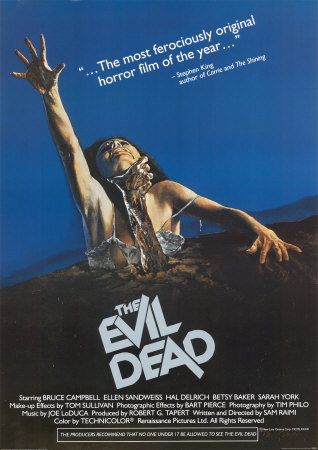
The Evil Dead (1981): A

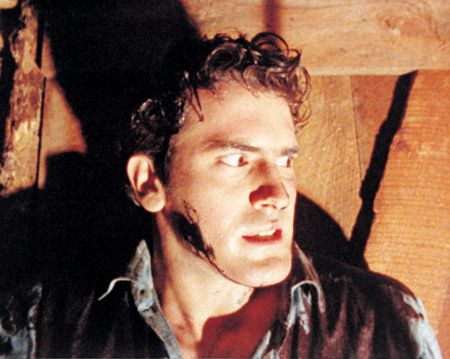
Sam Raimi's grueling debut feature toys with the viewer not unlike its own doomed characters, simultaneously playful and merciless. Although the initially obvious, almost over-the-top channeling of genre conventions (the creaking porch swing, ominous thunder and lightning to matching visual cues, the full moon blotted out of the sky by encroaching clouds) suggests little more than a jokey frolic through haunted house territory to come, it is this sly take on the material that allows the film to slowly turn into a nightmarish Jackson Pollock composition come alive before the audience even knows what hit them. Constructed on a minimal budget over the course of several years, Raimi's film is fiendish in its alternation between the perspective of predator and prey; even when the audience assumes the viewpoint of the film's roaring, malevolent spirits, the primal immediacy of these handheld shots totally disarms any notions of physical space or safety. Eli Roth might get his rocks off from literally torturing the audience but his chickenshit exploitation schlock knows not of such savagery.

Such off-the-cuff filmmaking befits material that has all but become horror legend over the past quarter century, itself indebted to countless tales come before it from all mediums of the genre. A weekend getaway with several college buddies ultimately sees Ash (Bruce Campbell) fighting for his life when unseen forces in the woods become alive and attack their secluded cabin; Cheryl (Ellen Sandweiss) senses something wrong after they discover the bizarre Book of the Dead in the cabin basement but her fellows scoff at any perceived notion of danger. It isn't long, then, before all hell is raining down on the cabin, with roving spirits infecting its occupants, turning them into zombie-like menaces bent on destruction. Raimi's full-frame compositions make the most of his probing wide-angle shots, with everything from the eerie excesses of his Guignol indulgences to Campbell's inimitable face mugging the camera accruing an extravagantly nightmarish quality that never wants for a few more dozen gallons of blood. The film seems lightweight but its thrills quickly become a pervasive force to be reckoned with; cheesy effects often appear ready to burst at the seams but Raimi's eye for lighting and audio/visual augmentation make for some of the most grotesque, prolonged sequences of unadulterated terror every shown in a theater, from one particularly demonic death rattle to Cheryl's literal rape by the thorny vegetation outside of the besieged cabin. Nearly unparalleled, The Evil Dead's no-holds-barred resourcefulness places it among the masterpieces of the genre.


Feature: 31 Days of Zombie!
Oct 24, 2007

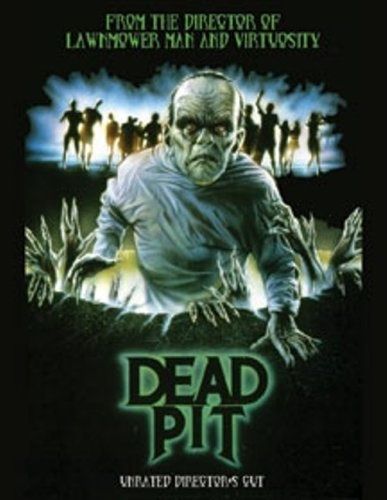
The Dead Pit (1989): D-

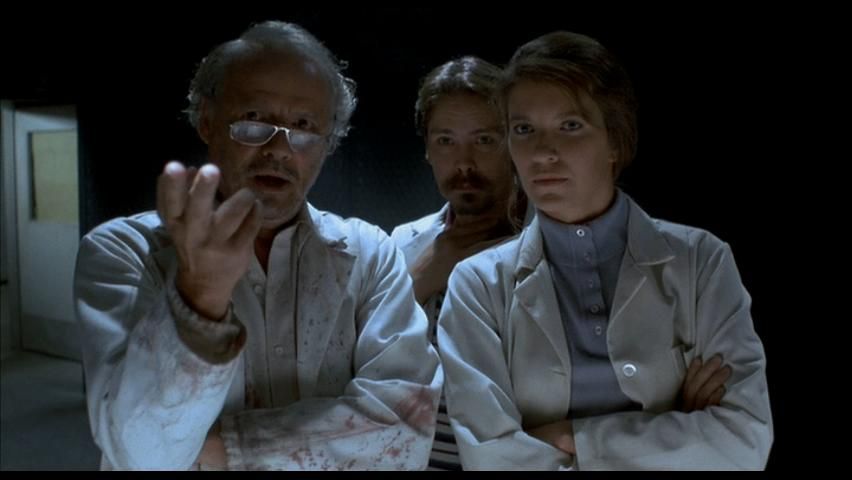
Occupying that unfortunate space between the not-quite-painful atrocity and the so-bad-its-good spectacle of disaster, The Dead Pit instead stuns with its ineptitude around every corner without ever giving in to the trashy joys potentially affording by its bottom-of-the-barrel decor. To hell with being nice: this film is junk of the barely watchable kind, and recommended only to viewers with blood alcohol concentrations well above the legal driving limit. The right mindset can make even the most rancid movie enjoyable in a backwards, jeering manner, but The Dead Pit is virtually unforgivable in its glaring menace. Michael Bay may be reprehensible but at least his films are watchable in the technical sense of the word; the makers of The Dead Pit shouldn't be blamed for the obviously minimal budget at hand, but their complete ignorance to any style outside of the film's synthetic haunted house masturbation suggests deliberate intent to harm the audience. Incidentally enough, the film takes place in a mental hospital, and after experiencing something that makes The Incredibly Strange Creatures Who Stopped Living and Became Mixed-Up Zombies look good by comparison, such a locale may be just the respite one needs.

Ramshackle as it is from one moment to the next, the film actually has a somewhat discernible plot amidst its borderline nauseating imagery (seriously, try to not become disoriented by the roving hallway shots). Dr. Ramzi (Danny Gochnauer) is a brilliant surgeon whose genius has slowly given over to inhumanity and madness, and has taken to torturing and killing patients in his attempts to conquer death. To save both his life and his career, Dr. Swan (Jeremy Slate) kills Ramzi and leaves him to his hidden basement tomb ("Cask of Amontillado" style), where the reclusive doctor is quickly forgotten. Twenty years later, Swan encounters an amnesiac patient (Cheryl Lawson) spouting delusions about an evil surgeon and "the people in the basement," a prophecy that quickly comes to pass. Thanks to its cheapo videowork and synthetic score redundant of every other B horror flick of the 80's, The Dead Pit achieves a kind of hallucinatory madness in its drawn-out climax; the zombie makeup looks like shit but the grain is so artlessly heft that it's hard to tell the difference. Too bad, then, that the total sense of visual, narrative, and logical disorder prevents any of these bare-bones aesthetics from working in a way not akin to razor blades followed by lemon juice. The uniformly thankless and irony-free performances even strip the moments of gratuitous nudity of their campy would-be joys, while the cameraman seems to have perfected his ability to shoot every scene from the worst possible angle. One character, in a moment of self-sacrifice, exits not unlike James Cagney in White Heat; with about ten minutes to go before the end credits, he took the easy way out.

Note: Thanks go to my love Shannon for providing me with this hard-to-find gem of an inclusion. Anyone who has thus far enjoyed my output should personally thank her for her profound tolerance/support of my cinephilia. I adore you.


Feature: 31 Days of Zombie!
Oct 15, 2007

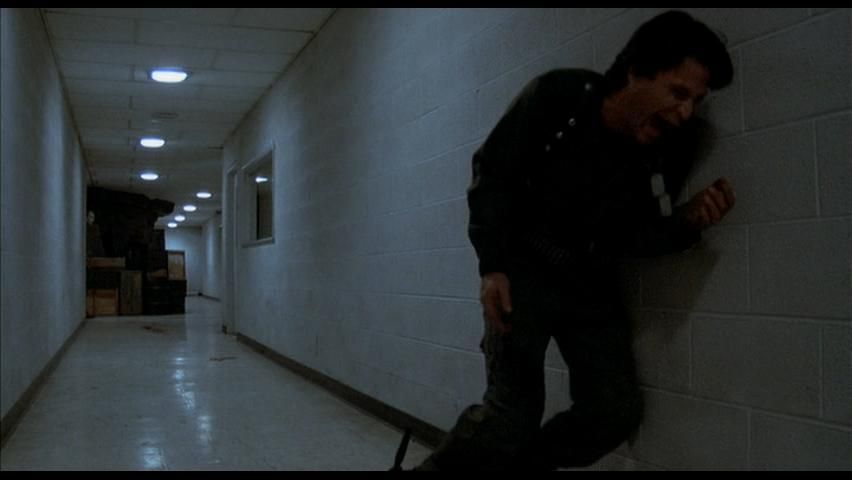
White Zombie (1932): B+

White Zombie’s foray into the supernatural feels something like the forging of a legend. When a young couple, en route to be married, comes across a funeral in the middle of the road (where local grave robbers will be less inclined to steal the corpses for their voodoo practices), the film effectively establishes its mysticism as an unavoidable presence in daily life. Neil (John Harron) and his fiancé Madeleine (Madge Bellamy) have traveled to Haiti for their unification, although the superstitious folklore around them heeds them flee some unseen danger, first suggested when a strange man observes them from the road, his seemingly hypnotized servants causing the couple’s driver to flee in panic. Here, the line between life and death is but a thinly veiled schism between lovers, while White Zombie’s entrancing – if occasionally clunky – development of this premise weaves a haunting morality play of gothic romanticism. The film lays it’s emotions on thick but its confrontational immediacy renders them practically irrefutable.

A mysterious Mr. Legendre – Bela Lugosi, in one of his finest roles – plays the puppet master pulling the strings behind these happenings, having obtained power over the living dead, whom he wills to do his bidding in the form of both manual labor and more nefarious deeds. Charles (Robert Frazer), distraught over his unrequited love for Madeleine in the face of her impending marriage, asks for help in winning her affection. Legendre tells him that, apart from making her a zombie without will, no other way exists to wrestle her away from her current life, a terrible choice that Charles’ aching heart only reluctantly agrees to in the moment of truth. Seemingly dead, Madeleine is buried, only to be excavated shortly thereafter by Legendre and his zombie slaves, her empty grave discovered by the mournful Neil after a night of heavy drinking. This passive love triangle embodies the film’s dramatic core, with the genuinely selfless Charles’ quickly coming to resent his twisted part in Madeleine’s transformation. “I can't bear those empty, staring eyes,” he says in anguish. “Better to see hatred in them than that dreadful emptiness.

Victor Halperin’s evocation of this tragedy unfolds as a series of grand melodramatic gestures, his visuals roughly hewn as a result of their pushing the technical limitations of its day, with multi-layered compositions and one choice split screen sequence employed so as to embolden the pulpy sense of romantic duress. Lugosi commands attention with his deep, penetrating eyes and rhythmic modes of speech, and so too does the film’s use of space invite entrancement. The silhouettes of the dead march silently across mountaintops atop the nighttime sky, while deep shots of and inside Legendre’s seaside castle suggest a vast cavern of lost souls in which Neil and Madeleine’s love strains to endure. White Zombie’s canvas is too condensed to achieve absolute greatness but the mastery of mood and emotion on display suggests a work that has been fully realized within its own boundaries, elevating itself above its particular minutiae and into the realm of myth. Through its own ravishing simplicity, the film achieves the near-operatic.


Feature: 31 Days of Zombie!
Oct 14, 2007

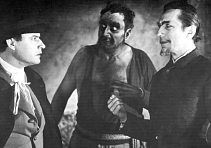
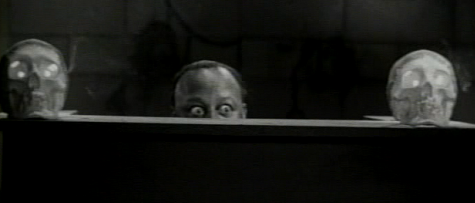
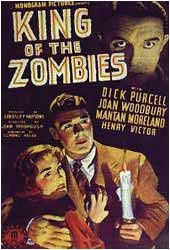
King of the Zombies (1941): C+


Jean Yarbrough would never aspire to aesthetic greatness in his career but his skill behind the camera as a man of basic technical know-how made him something of a commodity for studios relegated to poverty row. A master hack for his time, his works forgo the connective tissues of continuity, logic, or other details whenever such would have impeded on either budgetary restrains or studio-mandated deadlines. This relegated him to quickie films typically lacking in artistry, but there's a genuine earnestness and humility inherent in his work that sorely lacks in the majority of his modern equivalents; rather than gorging on excesses, his films admirably find craft out of practically nothing. King of the Zombies is such a work of slapped-together, audience-pleasing basics, seemingly shot in less than a week and edited together in just over an hour, its aims low and its successes modest (it is worth mentioning, however, that Edward J. Kay's score earned the film a surprise Oscar nomination). But a handful of sets and a few actors - not to mention a running time of under 70 minutes - allow for little in the way of subtlety or characterization, but the film entertains in its own sheepish way, even if it is more interesting as a historical and cinematic time capsule than as its own intended entertainment.

Flying over the Caribbean in search of a missing war comrade, lost in a storm and low on fuel, three Americans - James (Dick Purcell), Bill (John Archer), and their manservant Jefferson (Mantan Moreland) - crash land on an unknown island after picking up on a lone radio signal. Below, they discover the mysterious Dr. Mikhail Sangre (Henry Victor), an Austrian who lives in a mansion on the island with several family members and a handful of servants. Given that one of Dr. Sangre's guests is limited to walking around in a catatonic daze, James and Bill suspect strange going-ons but dismiss the apparent ramblings of Jefferson, who claims to see zombies and ghosts throughout the mansion. Ultimately, though, they discover that the doctor does in fact command a small legion of zombies, having manipulated them with voodoo rituals so as to extract key political information from his prisoners - specifically, details concerning the Panama canal, a key American military concern of the time.

As suggested by its connect-the-dots plotting, nary a moment of King of the Zombies isn't bare to the bone, although the film is one quite satisfied with its own minimalist exercises. Ultimately, it is more of a comedy than a horror, with the skittish antics of the inimitable Moreland taking center stage as he gets riled up over every minute happening and unexplained shadow. A whiff of racism lingers over the film during these more purportedly PC times but Moreland's oft-reviled comedic style is not unlike a one-man Abbot & Costello routine, his snappy delivery of dialogue and subtle gags of body language sporadically amusing - if a tad dated - in their execution. Any cultural condescension is ultimately innocuous, while Moreland's own performance subverts any malicious intentions; although his jittery silliness is often the source of intended laughs in contrast to the staunch seriousness of his white superiors, such floundering often provides the inadvertent solution to whatever problem lies at hand. Such talent is often unappreciated given its context in the ensuing civil rights movement of the time, but Moreland's precision remains a key stepping stone in the history of black cinema, one that proved the high point of many an otherwise dull film, King of the Zombies among them.


Feature: 31 Days of Zombie!