Showing posts with label zombie. Show all posts

Feb 2, 2013

Warm Bodies (2013): B

There's plenty about Warm Bodies that can be accurately described as absurd, even stupid, but such can only prove detrimental if one accepts the central premise of a zombie film with literal seriousness in the first place. The dwindling human population amidst the apocalypse is essentially an afterthought here, with a network of survivors holed up, Escape from New York-style, while the perished shamble away in a wistful recreation of their former lives. That zombies can think, use tools, and even communicate has been an established wing of the genre at least since George Romero's Day of the Dead, and Warm Bodies capitalizes on those predecessors to subversively charming effect (impersonating a reanimated corpse, a human lurches about excessively, at which point their unlikely zombie protector groans "too much"). "R" (Nicholas Hoult) is our chief protagonist of the undead (he can't remember his entire name), Julie (Teresa Palmer) the resistance fighter he falls for after eating her dead boyfriend's brains. I suppose this kind of film was inevitable in the wake of the Twilight franchise's success, but whereas those pretentious blockbusters pay trite lip service to fears of age and death, Warm Bodies is confident enough to make fun of itself even whilst sincerely examining the nature of love and self-understanding, no surprise from director Jonathan Levine (of 50/50, a film I'm most grateful for), who also adapted the script from Isaac Marion's 2010 novel. In this regard, the film is a triumph of having its cake and eating it, too, frequently inconsistent even within its own set of zombie "rules" (slow shufflers who spring to caffeinated life when under attack) and all the better for thumbing its nose at expectations with the occasional deviant touch. The low budget look occasionally suggests an unsatisfying television aesthetic, but the creative production design (particularly the creepy skeletons) and earnest script (which is tasteful enough to never explicitly articulate the film's Shakespearean trappings) go a long way in elevating so modest a work. A small pity that John Malkovich doesn't have more to do, but like most of Warm Bodies, he's a pleasure under any circumstance.

LIST: Zombie films I've seen, ranked in order of preference.

Oct 17, 2009

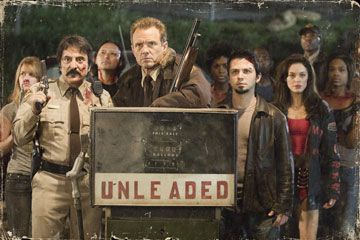
Dead Snow (2009): B

With the possible exception of Planet Terror, Dead Snow might be the dorkiest zombie film ever made, and I say that in praise. While the pre-credits opening – a hilariously self-aware, subversive chase scene scored to “In the Hall of the Mountain King” – stands as an easy comedic high point, that the rest of the movie holds up in comparison further underscores the overall stability and sly invention of the genre-riffing glee that is to follow. One of the few existing members of the Nazi zombie subgenre, this otherwise traditional tale revels in both the archetypal and schematic even as its violent means of dispatching both villains and protagonists proves more unpredictable than not. A group of medical students – played by an able cast, wisely straight-faced against the surrounding absurdity – finds themselves under attack during a weekend getaway at an isolated cabin deep in the snow covered mountains of Norway. Though well-equipped with movie-centric knowledge on how to survive such a confrontation – provided via a cinephiliac character whose T-shirt of choice proves an ominous bit of foreshadowing (all that’s missing is a baby) – they prove too heavily outnumbered by the squadron of the undead (which still operates according to rank, a humorous touch sadly not maximized to further effect) to simply stay put. Modestly ambitious and highly successfully within its chosen territory, Dead Snow proves to be one of the punchiest horror flicks in recent memory and one of the more capable within its low-budget constraints; the silent, lifeless landscapes make for a chilling tension-builder between each over-the-top set piece, while a memorable third-act shot of a character trapped beneath the snow is more nightmarishly claustrophobic than anything in The Descent. For the title of Best Zombie Comedy of 2009, Zombieland has a worthy competitor.

Mar 27, 2008

American Zombie (2008): B

After the dull (not to mention mean-spirited and largely unfunny) Behind the Mask: The Rise of Leslie Vernon, one can be forgiven for treading the genre of the horror mockumentary with more than a bit of skepticism. The fact, then, that American Zombie exceeds initial expectations is a quality more than incidental in nature, it being not only among the most spot-on examples of the genre since Rob Reiner revolutionized it with This is Spinal Tap almost a quarter century ago, but also doubling as an intelligent re-examination of its predecessors in the horror genre. For the bulk of its running time, I'd even go so far as to suggest it of near-brilliance, its failure to follow through with a consistent batting average being the only impediment to its status as something of an instant, albeit minor, zombie classic. The scenario of the film—basically, that zombies are a real and everyday presence in our society—screams of gimmickry, a lethal trait the film avoids until a piteous conclusion manifest of an already unnecessary plot conflict, one that sidesteps the film's effectively inquisitive nature in favor of more traditional (read: contrived) storytelling devices. That the film itself serves to critique media trends and cinematic pretentions as much as anything else almost allows the success of the third act turn of events, but such is a slippery slope is the film lightens up on exposition in favor of deadpan, de-contextualized humor.

Totally aware of itself, American Zombie concerns two documentarians—John Solomon and Grace Lee, playing themselves—out to tell the zombies' side of the story, they a minority group working for equal rights, suffering the same patterns of discrimination and marginalization as any number of groups throughout U.S. history. Parallels to the civil rights, feminist and LGBT movement about as we see the undead—who are presented here, quite importantly, as being able to function without a reliance on human flesh—attempt to re-integrate themselves into society. The film's ultra-cheap budget is apparent in some of the effects work—an open wound is achieved with a simple prosthetic and a handful of mealy worms—but American Zombie maintains its own suspension of disbelief in great part because of the stellar cast, which pitch-perfectly replicate the casual nature of traditional documentary subjects with almost absolute consistency. Ditto the filmmakers, who present American Zombie as being from the same cloth as countless other docs, right down to the establishing shots and still-life cutaways that serve as transitions from one segment to the next. Nonetheless, their film avoids the tedium of its non-fiction fellows by constantly doubling back on itself, self-reflective (both figuratively and literally) and staunchly non-ironic, a quality that allows the film far more humor than had it openly winked to the audience about its many first-glance absurdities.

Few aspects of modern life go untouched: labor laws are in effect to prevent slave labor abuse of the undead, for whom the official, politically correct term is a "revenant". This is just one example of many in which American Zombie intelligently and meticulously maps out the social patterns and mechanisms at work as regards any group at odds with the status quo, recollecting Romero's deconstructions of racism and sexism through an effectively no-frills lens. Hate crimes abound (a zombie rights group entitled ZAG suffers routine graffiti attacks by zombie haters) while many of both secular and sacred backgrounds work towards greater unification, arguing, respectively, that anyone currently living may one day become a zombie themselves, and (in possibly the film's finest moment), that "Jesus loves zombies. Jesus was the original zombie." More often than not, American Zombie strikes pivotal chords by simply telling it like it is, stating out loud what was on everybody's mind when The Passion of the Christ and Zack Snyder's Dawn remake shared theater space in 2004.

Such trinkets of brilliance are complimented finely by numerous, altogether effortless homages to zombie films past (from Dawn of the Dead to Blood Sucking Nazi Zombies), while an early, scientific explanation of the zombie condition serves to bathe the rest of the proceedings in a state of complete legitimacy (essentially, a virus rests dormant in the brain until the moment of death, re-activating the cells long before decomposition begins to set in). The similarly themed They Came Back was more successful in its exploration of this scenario in large part because is bypasses the easy baiting that American Zombie goes for in the end (are the zombies up to something? will they eat someone, and who?), which disappointingly skimps out on the ravishing self-criticism initially suggested by the image of our protagonists recording themselves, implying that, by making a documentary about the undead, they are effectively telling the same story about how we function while still alive. The same has been true from the early days of Night of the Living Dead on through the more recently incisive Shaun of the Dead, but Lee's film proves—along with George Romero's Diary of the Dead—that it's a genre as viable as ever, endlessly flexible and perpetually illuminating.

Oct 31, 2007

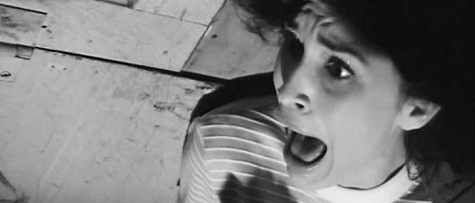
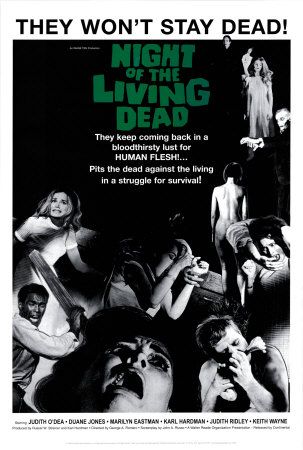
Night of the Living Dead (1968): A+


Fuck hyperbole – George A. Romero's debut film Night of the Living Dead may be the purest horror film ever made. Only the memories of those who were first there during its unveiling can attest to just how revolutionary a creation it was, simultaneously redefining the rules and capabilities of the medium while also forging an entirely new subgenre that – if the recent success of a third Resident Evil film and the upcoming remake of Romero's own sequel Day of the Dead are any indication – remains alive and well today (no pun intended). Even during my first, now hallowed viewing experience, I knew what the zombies were and the general "rules" surrounding them; the reactivation of the body via some viral infection or radiative force, the eating of the flesh of the living, the fact that those bitten by a zombie would ultimately become one themselves, and the killing of the undead through the destruction of the reanimated brain. These qualities have long since been absorbed into horror culture at the same level as Frankenstein and Dracula, the fact of which attests to Night of the Living Dead's timeless potency as one of the genre's most formidable exercises. Although among my most re-watched films, it never fails to evoke the same chills time and time again. Romero would go on to more brilliant and complex works, but in its own direct way, Night of the Living Dead represents unsurpassable perfection.

Kneading its murky imagery into a tsunami of terror over the course of an agonizing hour and a half, Night of the Living Dead focuses primarily on suggestion over action, the tangible violence and onscreen conflicts complimented by a foundation of perpetual, mysterious dread, of normality imploding on itself. A day trip to visit the grave of their father turns into a living hell for Barbra (Judith O'Dea) and her brother Johnny (Russell Streiner), who happen into the middle of the outbreaking zombie plague just as it begins, with any explanation for the sudden terror besieging them amounting to nil. Johnny taunts Barbara over her childhood fear of the cemetery, only for the wandering man in their midst to actually have been already "coming to get her" in the first place. Night may seem overeager to send shivers down its viewers spines but the film works precisely as a validation of our deepest childhood fears, from what we're unable to see in the dark to the general strangeness abound in much of our everyday bric-a-brac. Romero's minimalist cinematography borrows a page from Polanski in its diagonal framing, often suggesting an ethereal landscape of blacks and grays melding into each other, not unlike some dense fabric from which the monsters of our dreams come for us at our most vulnerable. The lack of visual distinction may be the film's most powerful attribute; like the splotchy paint strokes of a surrealist work, our imaginations work overtime to "fill in" the gaps, without our even realizing it.

Romero denies having intended any racial commentary in his character's power struggle, but it's actually the final series of unfortunate events that solidify the work as one of 60's activism rooted in social unease. Ben (Duane Jones) and Harry Cooper (Karl Hardman) duke it out not as black man and white man but as entangled might and pride, and it is in its observation of people interacting under the strains of unimaginable duress that Night of the Living Dead becomes most universal. It's downright impossible to not recall 9/11 as our human protagonists, safe for the time being in their boarded-up country house, huddle around a television waiting with baited breath for the next nugget of information about the unfolding chaos around them. Along with my virginity, I'd give damn near anything to watch the film again for the first time, totally ignorant not only of its own narrative progression but of all things zombie. Horror films have become more technically gruesome and forcefully shocking in the past forty years, and indeed, some have surpassed the film in scares, if not in aesthetic potency. No amount of technical nuance, however, could ever hope to rival Night's sinister lurk through the subconscious. From the subtle voyeurism of its opening credits through its impossibly bleak conclusion, it subjects us to the kind of unrelenting nightmare we only wish we could wake up from.


Feature: 31 Days of Zombie!

Oct 30, 2007

Dawn of the Dead (1978): A


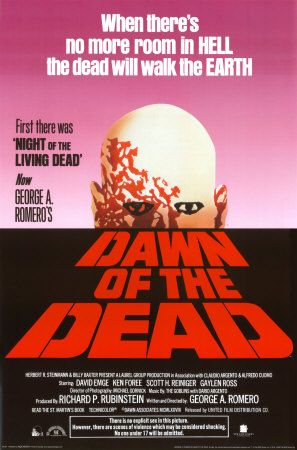
Much has been written about George Romero's Dawn of the Dead – more, perhaps, than any other horror film ever made, given its much-deserved critical/cultural standing and expansive opportunities for academic investigations. Night of the Living Dead was a hit upon its initial release but its success came slowly through word of mouth on the nickelodeon circuit. Ten years later, Dawn of the Dead was ready to capitalize on its predecessor's already extensive influence, and thus a brilliant film was granted the luxury of finding its audience immediately. I myself have seen the film around a half dozen times or so over about ten years, first renting it sometime during my pre-adolescence, after having been blown away by the bleak, unflinching terror that was Night. My initial experience with Dawn remains something of a blur; gore and blood abounded, for sure, and given both my age and the still-potent trend setting nature of the film, my sense is that it was something of a sensory overload (and to think it was on a scratchy old pan-and-scan videotape).

Very clear, though, is my memory of the film's most infamous piece of dialogue; though I myself am not as huge of a supporter of the film as many are (though a near-masterpiece, it is easily my least favorite of Romero's original trilogy), I believe it contains the finest single moment in the director's zombie pantheon. Fleeing the metropolitan areas overrun by the exploding zombie populace, our protagonists land their helicopter at a shopping mall in search of food and supplies, only to find the place overrun with the mindlessly wandering undead. Wonders Francine (Gaylen Ross), "What are they doing? Why do they come here?" With a dry wit that even he may not be privy to, her boyfriend responds: "Some kind of instinct. Memory, of what they used to do. This was an important place in their lives." Even at the age of ten, I recognized the implied criticism of meaningless reliance on commodity to define oneself, even if the concept itself was temporarily beyond my articulation.

Watching the film once again, Romero's carefully calculated deconstructions on social woes of the time seem most brilliant in their simultaneously identifying the film as a distinctly American work rooted in the cultural anarchy of the 1970's as well as one packed with universal truths on the human condition, borders of time and place notwithstanding. The former packs the greatest punch in the third-act war between the main protagonists holed up in their shopping mall fortress and the military convoy that overruns them (bringing the zombie population flooding back in), stealthily evoking not simply the tensions between pacifist movements and more aggressive social orders of the time, but any scenario in which men turn on each other in the face of greater disorder (in other words, look at any historical timeline and pick your example of choice). The latter, then, is one implicit in the passive social hierarchies throughout Romero's screenplay, particularly amidst relationships and connective tissues so obvious they tend to remain hidden in plain view. In a prolonged television debate meant to inform viewers on how to handle the crisis at hand, a lone scientist stresses the importance of exterminating the dead "without emotion." How fitting, then, that the soldiers who underestimate the zombies – treating them more like disposable hunting targets worthy of ridicule than a lethal force to be reckoned with – are generally those who find themselves being torn limb from limb.

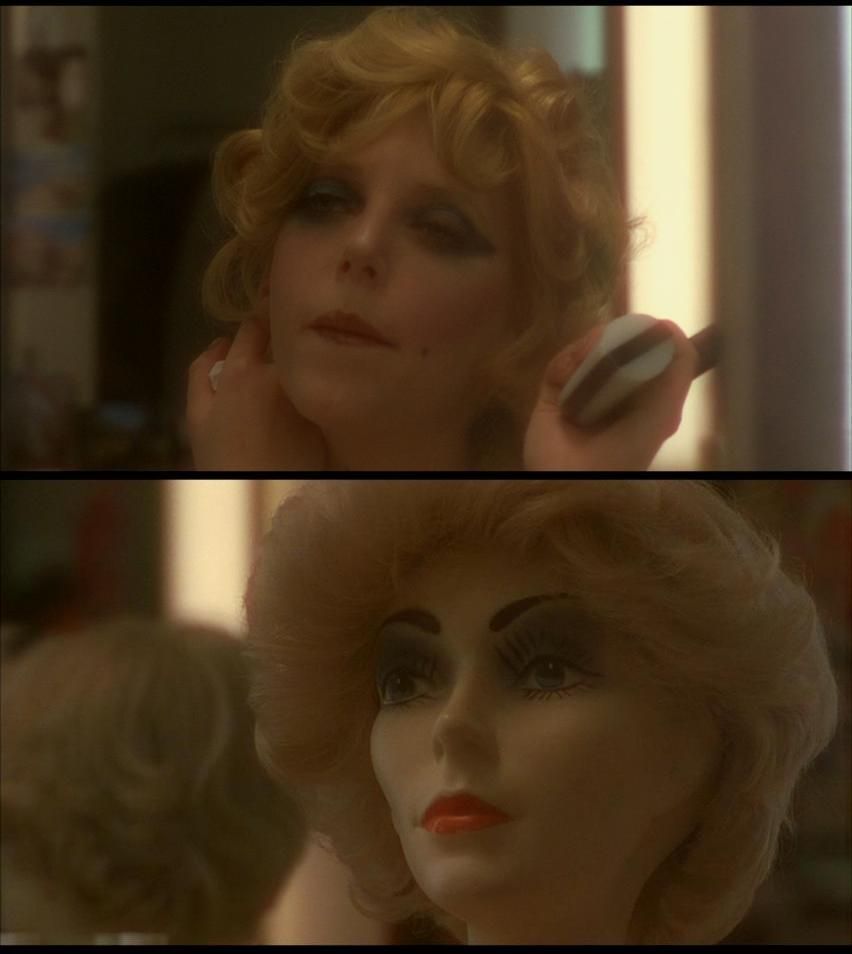
Romero's staging of these sequences is deliberately jarring in their sense of physical placement and spacial relationships, a quality that often renders his montages aggravating and underwhelming in the moment, only to improve immeasurably in a more contextualized retrospect. The opening sequence of a television station in disarray is a nearly unsurpassed example of cinematic crisis in the moment, while the subsequent raid on a zombie-infested apartment complex is by turns overwhelming in its chaos (two words: exploding head) and necessarily off-putting in its perpetual state of confusion. Romero's framing of social ills via his rotting, walking metaphors is ingenious but it's the more subtle, unspoken statements that register with the greatest force. Along with Peter's (Ken Foree) passive rip on America's mallrat culture, a personal favorite touch comes late in the film, after our characters have locked off their place of residence and cleared it of any danger, now lavishing themselves with unnecessary material goods galore while the world goes to shit beyond their decorated walls. Francine, decked out in makeup and channeling heroines of the silver screen with her sexy six-shooter, is briefly juxtaposed with an identically lavished mannequin (the moment may very well be her inner self-realization), plasticine and utterly devoid of anything human. This lies at the core of our character's moral reawakening and the reclamation of their identity apart from the material. In other words (to quote Marylin Manson), without the threat of death, there's no reason to live at all.


Feature: 31 Days of Zombie!

Oct 29, 2007

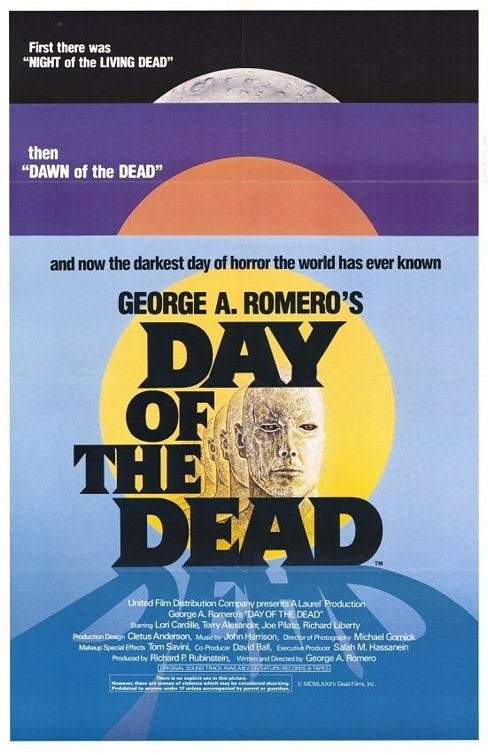
Day of the Dead (1985): A+


Like an ugly duckling, Day of the Dead took some time to get the love it deserved (and even then it has remained a black sheep amongst its brethren) – a scenario not uncommon to works of art that tell people what they simultaneously need to know and want not to hear. The film was – and to a large extent, remains – a victim of its own implicit place in film history; like the occasionally artful summer blockbuster, Romero’s third "Dead" entry is routinely examined and dismissed less for its own qualities than its “failure” to conform to the expectations unfairly assigned to it sight unseen, here as a zombie movie sequel indebted to two highly lauded works come before. Night of the Living Dead and Dawn of the Dead were both brilliant and easily among the greatest horror films ever made, but that Day of the Dead doesn’t follow the expected trilogy arc of capping off its saga with all-out climactic spectacle is hardly an inherent strike against it. Part of this degrading misconception lies in the fact that Romero’s original vision was cut short by budgetary restraints over issues with the increasingly more powerful MPAA rating system, the final result being far from the originally conceived "Raiders of the Lost Ark with zombies", and gore hounds subsequently decrying the relative lack of visceral bloodshed (regardless of the fact that, during its brief moments of splatter, Day features some of the sickest zombie action ever filmed). Similarly, Day is – in the popular sense of the term – a decidedly anti-audience pleaser. Set primarily underground during what appear to be the final death twitches of mankind, the film is quick to dispatch with any practical ideas about escape or happy endings. Welcome to the suck.

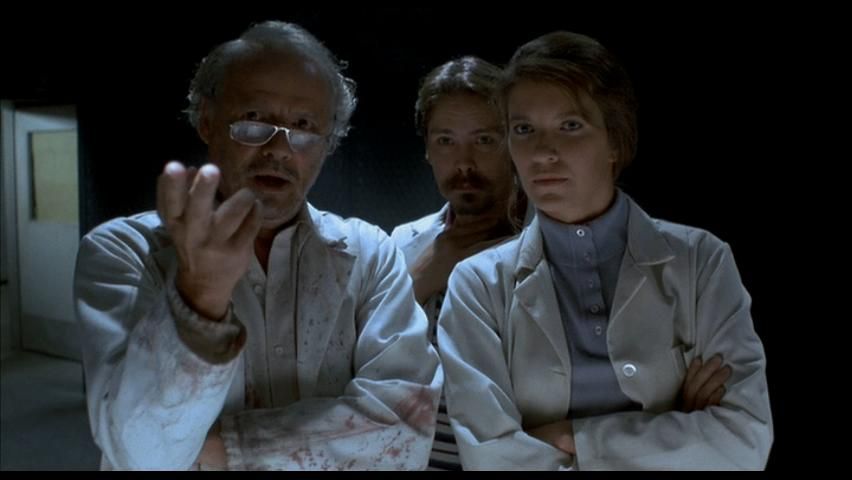
It is hardly to their discredit that both Night of the Living Dead and Dawn of the Dead are rather accessible in their social diatribes layered upon physically tangible plots of humans survivors struggling to overcome. Whereas those films commented externally on the world around them, Day of the Dead is also a work of deeply internal ruminations, a film that assumes our flaws and, intrinsically, our imminent mortality (whether at the hands of flesh-eating ghouls or each other), and searches for the silver linings amidst what otherwise appears to be insurmountable hopelessness. The remaining survivors of Dawn of the Dead took off in a helicopter already low on fuel, unsure of what awaited them next. Day of the Dead begins with a small cadre of armed survivors looking for more of their kind, traveling up and down the Floridian coast in their own running-on-fumes whirlybird. The situation has only continued its downward slope; according to the estimates of Dr. Logan (Richard Liberty), the dead now outnumber the living approximately 400,000 to 1. Any chance of killing them off is long since fucked; surviving, then, requires a two-pronged approach of re-evaluating our own definition of socialized living and stopping the zombies’ instinctive drive to eat us, rather than stopping the zombies themselves. Unlike Night's evocations of racism or Dawn's attack on consumerism, Romero's zombies here aren't terrorists or AIDS or any single meaning to be interpreted. To this point, my colleague Eric Henderson summarizes Romero’s matter-of-fact approach so perfectly that I simply must recount it here (kudos to him, too, for his brilliant review of the film, which can be largely thanked for my current involvement with the online film community). “With Day of the Dead, Romero is through fucking around with allegory.”

The audience happens upon this quickly thinning group of survivors long after the metaphorical shit has hit the fan, in effect stripping Day of the Dead of the more typical human drama familiar to its genre, replacing it with its own choice existential probing. Not long ago, a group of scientists and military men were haphazardly thrown into a hole in the ground by the increasingly desperate government, in hopes of their finding a cure for the out-of-control zombie epidemic. Their shelter is an abandoned mineshaft locked away from the besieged surface – as one character tellingly puts it, a “fourteen mile tombstone with an epitaph no one will bother to read.” Littered with financial records and shambled vehicles, it is our decrepit society swallowed up by mother earth in an attempt to rid itself of our viral existence. God takes on a very real presence in the film – the zombies a modern flood and our embittered protagonists an unwilling Noah – and, like that biblical tale, Day of the Dead has its own dove and olive branch, though they admittedly take some rooting around to find. Like Kubrick, Romero has been called cynical, even misanthropic, but so too is his portrayal of man’s inhumanity to man unblemished realism lined with a sincere and genuinely optimistic hope for those who emerge from the ashes. In tone, Day of the Dead is his 2001: A Space Odyssey, we but children taking our first steps, stumbling along the way, growing stronger with that which does not kill us.

In genre, however, Romero’s masterpiece is of a radically different equation; rooted primarily in the dark side of 50’s sci-fi earnestness, Day of the Dead is complicated by its pot boiler psychological dwellings. As pointed out by many – usually in a negative light – its characters are largely of the with-us-or-against-us breed, good or bad, heroic or villainous. Here, mankind has been whittled down to the simplest of its elements, each clinging desperately to the order of the old world and the structure – however destructive – provided by a social chain of command. Romero’s anti-militaristic diatribe, though, is but a surface decoration to the film's approximation of 80’s anxieties, and it is no coincidence that the film’s tyrannical soldiers and commanding officers are all of the strictly Caucasian and heteronormative persuasion. As the zombies outnumber the humans, so too does the status quo crush down upon the female, the black, the Spanish, the eccentric, the queer. 12 Angry Men dealt similarly in characters-as-representations but its straight-faced drama apparently made such walking metaphors legitimate in the eyes of the critical community. Forget them; Day of the Dead litters its understandably bickering personas and heady physical spaces with nuances and suggested depths galore, waxed gloriously by John Harrison’s criminally undervalued, sublime musical accompaniments. The first two acts of the film play out as a series of pushes and pulls between conflicting human interests, not unlike religious groups squabbling over he said/she said bullshit while the bigger picture hovers obviously and ominously over their heads. The final bloodbath, then, is not unlike the final judgment day followed by paradise – or a lack thereof.

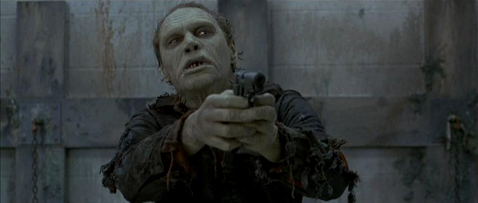
The film’s many unspoken joys, however, come from the path to this suggested destination. The commanding Captain Rhodes (Joseph Pilato) has gone apeshit at the apparent lack of progress made by the scientists under his care, their unstable working environment and almost total lack of resources notwithstanding. The most promising work comes from the research of the aforementioned Dr. Logan (amusingly called Frankenstein by the rest of the characters), although the soldiers – dick-obsessed and thuddingly literal-minded – are unable to see it. Of his many zombie specimens (rounded up and leashed by the soldiers for his experiments), it is the endearing Bub (Sherman Howard) who holds what may be the key for mankind’s survival. If Dawn of the Dead was Romero’s zombies-as-people shtick at its most nihilistic, then Bub is that film’s spiritual antithesis, an essentially reborn human literally learning to walk and talk again for the first time. Interaction with everyday items such as tape recorders and telephones reveals lingering memories and even – after a tense encounter with the asinine Rhodes – a retained capacity for moral judgment (here, even a zombie knows an asshole when it sees one). Indeed, the film’s characters are predictable in the sense of who will live and who will die, but naysayers of this point often fail to see how these respective paths mirror their individual commitment to or abandonment of a crumbling social order.

Like Dawn of the Dead, Day of the Dead begins with a character surfacing from the depths of a nightmare, here the leading Sarah (Lori Cardille), whose status as the lone female amongst so many hormone-raging, semen-backed-up males making her an easy emotional point of access for the audience (small critical tangent: could not Day of the Dead – with some minor technical tweaking – easily be the “mineshaft gap” sequel to Dr. Strangelove?). Repeatedly waking up from one surreal nightmare into another, Sarah’s prolonged escape mirrors our own collective social mires, our protagonists ultimately ascending from the hellfire into a heavenly light that purifies them of their penchant for self-destruction. Bub, meanwhile, establishes the first threads of civilized behavior by overcoming of his instinctive barbarity, while the nearsighted Rhodes – in one of the pinnacle villianairy dispatches in all of cinema – runs his empty-headed cockery into the deadest of dead ends. Day of the Dead attacks this central theme of human behavior ruthlessly, almost silently, turning it over time and again like a Rubik’s cube. This deconstruction is so encompassing that the climactic explosion of zombie mayhem – revealing and awesome though it is – is practically an afterthought.


Feature: 31 Days of Zombie!

Oct 28, 2007

Evil Dead II (1988): A-


A first time viewer might be forgiven for thinking Evil Dead II a work of impossible expectations. About twenty minutes in, the film has achieved so fierce a stylistic velocity that it seems about to drop over dead, as if it had overdosed on caffeine and gone into overdrive during its highly energized death rattle; its brilliance, then, comes in the form of its being able to sustain such delirious energy for an additional hour after this point of apparent exhaustion. The Evil Dead remains the stronger film if only for its relatively straightforward take on the same scenario, but this sequel/remake is something of a masterpiece unto itself; with a substantially larger budget at his disposal, director Sam Raimi essentially remade the film that jumpstarted his career, largely cutting down on the horror quotient and instead recasting the tale as one of frightful slapstick. Laughs notwithstanding, however, the film is just as unforgiving as its darker predecessor; viewers with heart conditions may want to keep their thumb near the pause button, lest their own health be put at unnecessary risk.

At the films outset, the slate has been wiped clean – in essence, the original Evil Dead never happened as far as this cinematic reality is concerned. Ash (Bruce Campbell) once again finds himself besieged by supernatural forces during his intended getaway time in a secluded mountain cabin, with demonic spirits wrecking his escape route and quickly breaking down the doors to his ramshackle shelter. No sooner than his girlfriend has been zombified than additional soon-to-be victims show up at his pathetic fortress: two archaeologists researching the malevolent Book of the Dead that resurrected the evil spirits in the first place, and two naïve locals hired to lead them to the cabin. In comparison to the minimalist plot of the original, these elements function as little more than decorations to the narrative, although they afford the necessary outlets for the indulgences of style that make up Evil Dead II’s haywire genius. The film isn’t so much postmodern as it is anarchy captured in a bottle, with every batshit crazy sight gag serving to further deconstruct its chosen genre trappings.

Such Tex Avery-inspired whimsy takes on many forms in Evil Dead II’s seemingly endless visual barrage, although none may be more delirious than a physically collapsing Ash forced to reckon with his own possessed hand, both as a still-attached extremity and, later – thanks to his ever trusty chainsaw – as a detached limb with a life of its own. Evil Dead II’s tendency towards self-references might have been knock worthy were the film not so regularly on the money; truly, Ash may be the grooviest of modern horror heroes, particularly with his makeshift chainsaw-arm and boom stick in hand. Such everything-and-the-kitchen-sink aesthetics, however, don’t prevent the film from maintaining the modest B movie craftsmanship of its predecessor, as Evil Dead II isn’t afraid to leave things a little rough around the edges. Such imperfections – like the roughly hewn projection effects of the final act, as well as some sketchy stop motion zombie animation – instill the film with creative, soulful fingerprints, while the sheer volume of highly noticeable continuity errors, whether intended or not, become a running gag all to themselves. Ultimately, the film is so impressive that it’s structural indebtedness to the enjoyable but inferior sequel Army of Darkness comes as something of a disappointment, if only because the open-ended conclusion is not unlike the tiniest leak in a wonderfully overstuffed bag of goodies.


Feature: 31 Days of Zombie!

Oct 27, 2007

Let Sleeping Corpses Lie (1974): B+


(AKA The Living Dead at Manchester Morgue, Don't Open the Window.)

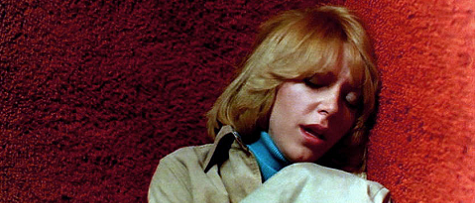
Although the social relevance of Let Sleeping Corpses Lie is likely to have had greater impact (and well-earned shock value) during its initial release, its intelligence in approximating the cultural conflicts of the day has since earned it the quality of timeless relevance, even if the film itself is relatively unknown compared to many of its 70's horror brethren. Two young people en route from London to the countryside are united in their heretofore separate journeys after a chance (albeit slight) collision disables one of their vehicles; suffice to say, their subsequent attempts to find their way about put them in precisely the wrong place at the wrong time. A pit stop to ask for directions sees the initial implementation of a new piece of machinery on a nearby farm; the device, channeling ultrasonic radiation capable of covering a radius of several miles, neutralizes the insect and parasite population by irritating the critters' nervous systems to the point where they kill each other off. Unbeknown to all (and strictly according to this film's brand of science), the nervous systems of recently deceased humans share similar qualities with such lower life forms, here reanimated and immediately turned into murderous beasts with a cannibalistic hunger for their living counterparts.

As dead bodies begin piling up about the humble countryside, the local law enforcement is quick to blame the two youngsters, who always happen to be present at each new crime scene and who - unfortunately for them (in a deeply ironic manner of speaking) - always manage to escape unharmed and without either witnesses or evidence to back up their innocence. Beneath the tangible zombie carnage unfolding on the screen, Let Sleeping Corpses Lie is a potent exercise in radical/conservative tensions; the police chief, wary of the anti-establishment youth suddenly in his midst, is quick to blame them for the Manson-esque murders soon as look at them, knocking them for their "long hair and faggoty clothes." Our passively hippie protagonists, then, wage a layered battle: themselves versus the walking dead who want to tear out their innards and eat their faces, their progressive values versus the stubborn traditions of the authorities, and their naturalism versus the destruction wrought by modern technology. No moment of this multifaceted conflict is more potent than when a zombie attempts to break down a door safeguarding our protagonists, wielding a giant cross as a battering ram. Accused of Satanism, these youth make no proclamation to religion, the film's siding with them suggesting a skepticism towards any higher power amidst such unneeded hell on earth.

The method by which Let Sleeping Corpses Lie fuels its supernatural narrative remains a bit of a stretch but the film justifies itself by remaining unwaveringly true to its chosen brand of logic; in one particularly creepy scene, we learn that the nervous systems of infants are susceptible to the infecting radiation as well (it's a hospital nurse who learns this fact the hard way). Similarly are the characters occasionally thick-headed to the point of irritation (a not uncommon trait to a wide portion of the genre), but so too are the archetypes they deliberately embody. Even if judged on style alone, the film would be a triumph; though not much different from your typical lurching creeps, these zombies wheeze and moan like no other, a simple audio gimmick that is blatantly manipulative but absolutely creepy, not the least for its relative subtlety. Let Sleeping Corpses Lie artfully builds its atmosphere of spiritual (and social) unrest with its gliding cinematography, and the thrills pile up faster than any of its potential flaws or abandonments of logic. Though no Halloween or Carrie, this little gem is not unlike an undiscovered wine, long ripening and ready to be savored.


Feature: 31 Days of Zombie!

Oct 26, 2007

The Serpent and the Rainbow (1988): C+


Despite the strongly emphasized exoticness its Haitian scenery, The Serpent and the Rainbow may be Wes Craven's most pedestrian film. This says a lot about a director who has defined his career largely through the presentation of everyday scenery perverted by the unexpected and the supernatural, from Freddy Kreuger's creepy distortion of his surroundings to the tight, uncanny claustrophobia of the seemingly innocuous Red Eye. This 1988 deviation deals with horror of a more singularly supernatural kind: how many of its bizarre events are tangible, as opposed to imagined terrors duking it out with a hypnotized reality? Such material would seem to befit Craven's surrealist sensibilities but the film never rises above a merely quotidian perspective; it stands more than a leg up from the condescending, desaturated color palates and cultural reduction of globe-hopping junk like The Last King of Scotland but its bourgeois form wants for mystery or intrigue. In the original Nightmare on Elm Street, we saw Freddy's wake of destruction, but it was his often unseen, wholly felt presence that worked the film's wonders. The Serpent and the Rainbow negates such potential through its disinterested aesthetic, and generally forgets the old adage that less can be more.

In traditional folklore, the earth was represented by a serpent and the heavens a rainbow, with all creatures dying somewhere between the two. Man's soul, however, allows him greater suffering than that which exists in the physical world, and it is this crux upon which the film builds itself and quickly falls stagnant. Bill Pullman is Dennis Alan, an American medical researcher sent to Haiti to investigate the apparent reanimation of the dead that has been documented by the locals; one man, known to have died and been buried over a decade prior, had just recently been photographed alive as could be. Dennis' investigations find him quickly involved in both the local radical movement against the oppressive government as well as voodoo practices that blur the line between reality and imagination - or, quite possibly, the physical world and that of the afterlife. Only sporadically does Craven effectively showcase these unearthly elements, and often time incidentally at that (such as the visual blackout when Dennis finds himself buried alive); most of the time, the film suggests and overly decorated haunted house, its art direction excessive to the point of implausibility, its literal evocation of the supernatural disappointingly leaden and unimaginative. Many of these flaws are relative but they nonetheless thirst for personality. From Pullman's clumsy narration to the complete lack of context for the narrative's central political conflict, the film amounts to little more than a lethargic tour guide.


Feature: 31 Days of Zombie!

Oct 25, 2007

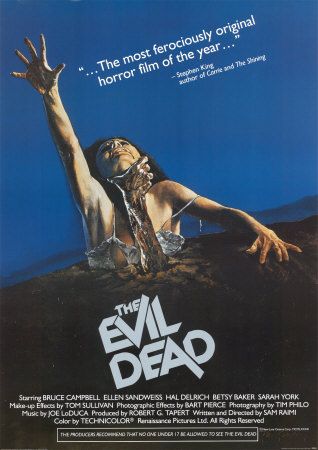
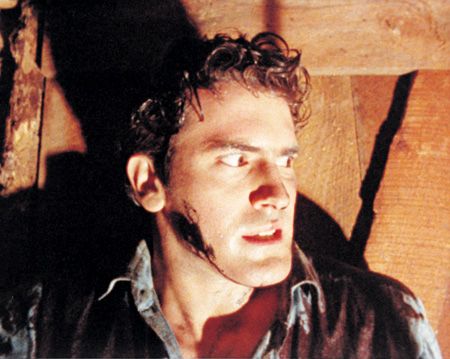
The Evil Dead (1981): A

Sam Raimi's grueling debut feature toys with the viewer not unlike its own doomed characters, simultaneously playful and merciless. Although the initially obvious, almost over-the-top channeling of genre conventions (the creaking porch swing, ominous thunder and lightning to matching visual cues, the full moon blotted out of the sky by encroaching clouds) suggests little more than a jokey frolic through haunted house territory to come, it is this sly take on the material that allows the film to slowly turn into a nightmarish Jackson Pollock composition come alive before the audience even knows what hit them. Constructed on a minimal budget over the course of several years, Raimi's film is fiendish in its alternation between the perspective of predator and prey; even when the audience assumes the viewpoint of the film's roaring, malevolent spirits, the primal immediacy of these handheld shots totally disarms any notions of physical space or safety. Eli Roth might get his rocks off from literally torturing the audience but his chickenshit exploitation schlock knows not of such savagery.

Such off-the-cuff filmmaking befits material that has all but become horror legend over the past quarter century, itself indebted to countless tales come before it from all mediums of the genre. A weekend getaway with several college buddies ultimately sees Ash (Bruce Campbell) fighting for his life when unseen forces in the woods become alive and attack their secluded cabin; Cheryl (Ellen Sandweiss) senses something wrong after they discover the bizarre Book of the Dead in the cabin basement but her fellows scoff at any perceived notion of danger. It isn't long, then, before all hell is raining down on the cabin, with roving spirits infecting its occupants, turning them into zombie-like menaces bent on destruction. Raimi's full-frame compositions make the most of his probing wide-angle shots, with everything from the eerie excesses of his Guignol indulgences to Campbell's inimitable face mugging the camera accruing an extravagantly nightmarish quality that never wants for a few more dozen gallons of blood. The film seems lightweight but its thrills quickly become a pervasive force to be reckoned with; cheesy effects often appear ready to burst at the seams but Raimi's eye for lighting and audio/visual augmentation make for some of the most grotesque, prolonged sequences of unadulterated terror every shown in a theater, from one particularly demonic death rattle to Cheryl's literal rape by the thorny vegetation outside of the besieged cabin. Nearly unparalleled, The Evil Dead's no-holds-barred resourcefulness places it among the masterpieces of the genre.


Feature: 31 Days of Zombie!

Oct 24, 2007

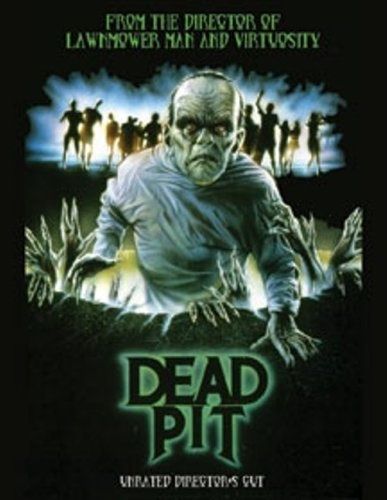
The Dead Pit (1989): D-

Occupying that unfortunate space between the not-quite-painful atrocity and the so-bad-its-good spectacle of disaster, The Dead Pit instead stuns with its ineptitude around every corner without ever giving in to the trashy joys potentially affording by its bottom-of-the-barrel decor. To hell with being nice: this film is junk of the barely watchable kind, and recommended only to viewers with blood alcohol concentrations well above the legal driving limit. The right mindset can make even the most rancid movie enjoyable in a backwards, jeering manner, but The Dead Pit is virtually unforgivable in its glaring menace. Michael Bay may be reprehensible but at least his films are watchable in the technical sense of the word; the makers of The Dead Pit shouldn't be blamed for the obviously minimal budget at hand, but their complete ignorance to any style outside of the film's synthetic haunted house masturbation suggests deliberate intent to harm the audience. Incidentally enough, the film takes place in a mental hospital, and after experiencing something that makes The Incredibly Strange Creatures Who Stopped Living and Became Mixed-Up Zombies look good by comparison, such a locale may be just the respite one needs.

Ramshackle as it is from one moment to the next, the film actually has a somewhat discernible plot amidst its borderline nauseating imagery (seriously, try to not become disoriented by the roving hallway shots). Dr. Ramzi (Danny Gochnauer) is a brilliant surgeon whose genius has slowly given over to inhumanity and madness, and has taken to torturing and killing patients in his attempts to conquer death. To save both his life and his career, Dr. Swan (Jeremy Slate) kills Ramzi and leaves him to his hidden basement tomb ("Cask of Amontillado" style), where the reclusive doctor is quickly forgotten. Twenty years later, Swan encounters an amnesiac patient (Cheryl Lawson) spouting delusions about an evil surgeon and "the people in the basement," a prophecy that quickly comes to pass. Thanks to its cheapo videowork and synthetic score redundant of every other B horror flick of the 80's, The Dead Pit achieves a kind of hallucinatory madness in its drawn-out climax; the zombie makeup looks like shit but the grain is so artlessly heft that it's hard to tell the difference. Too bad, then, that the total sense of visual, narrative, and logical disorder prevents any of these bare-bones aesthetics from working in a way not akin to razor blades followed by lemon juice. The uniformly thankless and irony-free performances even strip the moments of gratuitous nudity of their campy would-be joys, while the cameraman seems to have perfected his ability to shoot every scene from the worst possible angle. One character, in a moment of self-sacrifice, exits not unlike James Cagney in White Heat; with about ten minutes to go before the end credits, he took the easy way out.

Note: Thanks go to my love Shannon for providing me with this hard-to-find gem of an inclusion. Anyone who has thus far enjoyed my output should personally thank her for her profound tolerance/support of my cinephilia. I adore you.


Feature: 31 Days of Zombie!

Oct 23, 2007

Shaun of the Dead (2004): B+


Shaun enjoys a simple kind of life: a shift on the job, a round of video games with his roommates, a brew at the local pub. It takes the near-destruction of society by the arisen legions of the undead (not to mention his long-delayed dumping by an embittered girlfriend) to wake this chap up to his ingrained apathy and dissatisfaction in life. Shaun of the Dead takes the basic premise of any number of self-betterment tales and sets it amidst one of the horror genre's most tried-and-true formulas, the result being a film that is at once plainly obvious and remarkably sharp-witted, the latter mostly thanks to the film's utter honesty in its exhibition of the former. Initially, this would seem to upset the very root of its satire, immediately connecting the metaphorical dots in presenting its alive-and-well human protagonists as nearly indistinguishable from the rotting zombies threatening to eat their faces. The alternating laughs and revelations, then, stem not from these correlations (which have grown increasingly more difficult to present without lending to tedium, Romero's brilliance be damned), but from their given acceptance and the subsequent attempts to overcome their damning accuracy. In this most apocalyptic of genres, Shaun of the Dead is not unlike a ray of unexpected sunshine - even if it has a little red on it.

Though leagues apart in their comedic tendencies, the film shares a spiritual kinship with 1999's Office Space, with both Ron Livingston's Peter Gibbons and Simon Pegg's Shaun striving to overcome their reliance on The Man amidst socially-reinforced oppression. Shaun, a man so passive and unaware that he can hardly walk down the block to the convenience store without tripping over himself, is himself stuck in a rut of personal insecurity and employment-based woes; while Ron found his personal freedom through an admonishment of superficial workplace responsibilities, Shaun discovers himself via whacking zombies in the head with a cricket bat. By means of modestly creative framing patterns and editing schemes, Shaun of the Dead milks its chosen dissatisfied-people-as-zombies shtick for all its worth (all the while throwing in a few choice homages to boot, this viewer's personal favorite involving the plan to rescue Simon's mother, the deliberately named Barbara), and though not all of its gags work as intended - a bit where four protagonists impersonate the living dead so as to pass through a crowd of zombies, unnoticed, fails purely for its total abandonment of reason - there's seemingly no limit to Simon Pegg's hilariously inane facial expressions. The genuinely undead help to pry this zombified laborer from the dead-end lifestyle he's come to accept for himself, and Shaun of the Dead, though not without its rough patches, evokes this skewering satire with a rambunctious attitude worthy of the most pointed gadflies.


Feature: 31 Days of Zombie!

Oct 22, 2007

Re-Animator (1985): A-


Gleefully tossing aside any perceived notions of good taste, Re-Animator established its maker as a premiere genre master in the same vein that Blood Simple and The Terminator announced the Coen Brothers and James Cameron to the world. Stuart Gordon's foray into the outer limits of life, death, and heads carried about by their decapitated former bodies is a nearly operatic exercise in splatter, hilarious and horrific all at once and utterly without apology. Though its button-pushing manipulations of sex and violence pale in the wake of the past 22 years worth of cinema, its raunchy sincerity remains a force to be reckoned with; although very much a black comedy, Re-Animator doubles as a touching love story delivered with equal levels of seriousness, the two qualities constantly pushing at one another with an electric fusion of energy. As if afraid he'd never be able to make another film, Gordon pulled out all the stops, the result being a dauntless work achieved only through the naivety of it being a practically impossible film to make in the first place. Too add audacity to boot, Richard Band's "original" score echoes Bernard Herrmann's arrangements for Psycho around every corner, appropriately complimenting both the learned compositions at hand as well as the many cinematic texts that Re-Animator throws into the viewers face at lightning speed.

The emboldened young medical student Herbert West (Jeffrey Combs) arrives at Miskatonic University (a fictional school common in horror tales, first created by H.P. Lovecraft in his here-adapted tale "Herbert West-Reanimator") after a less than desirable ending to his studies in Switzerland. Though the epitome of professionalism, his pomposity is quickly at odds with the faculty of his new school, whose work he considers close-minded and outdated; his mission, slowly revealed, is to conquer "brain death" by providing life to deceased bodies well after the heretofore accepted point of no return. After a brouhaha with a resuscitated body sees the Dean of Admissions (Robert Sampson) killed (only to be reanimated as a raving lunatic), Dr. Carl Hill (David Gale) begins to interfere in West's experiments, in hopes to acquiring his secrets and claiming them for himself. Meanwhile, Megan (Barbara Crampton) - daughter of the Dean and fiance-in-secret to West's roommate Dan (Bruce Abbott) - suspects foul play, and works with Dan to uncover Dr. Hill's motives.

Though Herbert West remains the most iconic element of Re-Animator's postmodern indulgences - with neon green syringe in hand, no less - it is actually the oppressed relationship between Megan and Dan that provides the film with its much-needed emotional core, one that is ransacked by chance, evil schemes and misguided bouts of love. Gordon preludes their plights with touching moments of young love, although there is nary a doubt as to their imminent inclusion in the events ahead. Re-Animator's romanticism is genuine but understandably prone to complications of the supernatural kind; when Dr. Hill orders a walking cadaver to kidnap Megan - over whom he has held an unhealthy obsession for some time - the subsequent torture she finds herself subjected to is likely to derange any viewers sense of their physical self, gender notwithstanding. West's actions may borderline on the insane but his sense of right and wrong is ultimately in the right place, his ultimate fate continuing in the lexicon of mad scientists gone awry. Re-Animator's set-up is so delicious it threatens to diminish its payoff simply by comparison, with the ultimate explosion of zombie mayhem defined more by the energy of its performers than its sense of spectacle. In its best moments, the film itself practically leaps off the screen.


Feature: 31 Days of Zombie!

Oct 21, 2007

The Plague of the Zombies (1966): B


As one of the last zombie productions before George Romero revolutionized the genre with Night of the Living Dead, and as the only work of the genre ever made by the infamous Hammer production company, The Plague of the Zombies is a prime example of routinized filmmaking done right. Sir James Forbes (André Morell) - a renowned professor and medical practitioner - receives word from his long-time colleague Dr. Peter Thompson (Brook Williams) concerning the strange deaths taking place in his remote village, and subsequently travels there with his daughter Sylvia (Diane Clare) to investigate the inexplicable happenings. Townsfolk have been dying left and right, apparently from total lack of physical cause; upon further investigation, the coffins of the departed are discovered to be empty one and all, and no sooner than the latest victim of this unseen plague is laid to rest is his decaying body reported walking about. The film establishes this scenario with grim efficiency, its dense scenery populated by creepy background/foreground contrasts and a perpetual sense of unease seemingly ingrained into the landscapes. These developments are predictable in the technical sense of the word but the film approaches them with an earnestness that offsets their familiarity; Plague of the Zombies is no tour-de-force, but its investment in its material is commendable.

Along with its simple yet propulsive plot, the film unfolds as a series of intriguing contrasts: between life and death, male and female, tradition and modernity, science and voodoo. As is largely typical of the genre, it is ultimately revealed that the undead are used for slave labor, here put to work in local tin mines and beaten as they carry out their grim duties beneath the earth. Their master - having mastered voodoo practices during his time abroad in the Caribbean - uses his methods both to raise the dead and torture the living. (It amuses me to no end how far the antagonists of horror films are willing to go to acquire cheap labor; are reasonable working hours and medical plans that much of a burden to bear?) The film's visual palate remains both formal and earthy, lending an unsettling tone of moral decay bound to infect anyone unwary enough of the danger that abounds, while one choice sequence employs a disjointed style that emphasizes the otherworldliness of its life-after-death spiritual conflict. The whiff of mystery that hangs over the proceedings is not unlike the lid on a boiling pot, with the narrative uncoiling at a teasing, deliberate pace. Plague of the Zombies hardly touches upon virgin territory but its meaty indulgences are full of life and excitement, inviting the audience to share in the character's sense of investigation and discovery. Among the ranks of whodunit B horror films, this one stands out.


Feature: 31 Days of Zombie!

Oct 20, 2007

Resident Evil: Apocalypse (2004): B-


When it comes to the scope of cinema, there's all sorts of distinctions to be made. In terms of quality, there's bad, good, good bad, and bad good (just for starters), and truly committed cinephiles quickly come to know the superior joys of a good kung fu film as opposed to the posturing of wannabe Oscar dreck. Resident Evil: Apocalypse is a good bad bad movie, or something like that. This is a series that thrives - or fails to - entirely on craft and the efficiency thereof, its ineptitude and contrivances often quite necessary to its indulgences into visceral goodies, while its general lack of formal quality is worn on its sleeves like a badge of honor. The same goes for the 2002 original, a film enjoyed by several of my colleagues though not by myself, its sporadic (often unintentional) amusements notwithstanding. The point of distinction here, then, is that Resident Evil: Apocalypse is utterly shameless whereas its predecessor tried to play things with a straight face; ultimately, it is not unlike cinema as concession stand junk food manifest. You can practically see the popcorn "butter" running off the screen.

The Umbrella Corp. remains up to no good. After the underground viral breakout in the first film, the intended quarantine doesn't hold (surprise), with the infected zombies escaping to the surface where the innocent civilians of Raccoon City unknowingly await. Alice (Milla Jovovich) returns, more deadly and nimble than ever, her genetic structure having been tampered with by the Corp. after her being captured at the end of the first film. Soon, the entire city is locked down and set for quarantine, and it's up to her and a small band of survivors to locate the daughter of an already evacuated scientist, who will in return provide them all with transportation out of the city. The settings for these proceedings suggest an amped-up version of Escape from New York's titular locale, with the cityscape nearly swallowed by a sense of polished, ominous dread and the nighttime sky so black that daylight may as well never come. There's practically no art to these images (note the hilariously choppy slow-motion employed throughout), but their raw effectiveness as pure visceral gratification more than makes up for the film's general reliance on idiocy to further its plot.

In his 2004 review, Roger Ebert (who thought the movie "an utterly meaningless waste of time", which, in a way, is correct) cautioned parents, "If you encounter teenagers who say they liked this movie, do not let them date your children." As a teenager in college, I disliked the film, but now in my early adulthood I feel more privy to its joys, which simply require that one accept them on their own mindless terms. Alice, though totally lacking in character or nuance, is the original Terminatrix (although I would prefer Khristanna Loken any day of the week), only partially human but wholly ass-kicking superwoman. Resident Evil: Apocalypse's inanities are largely of the relative kind, so which ones are forgivable will depend on the particulars of each viewer (for my money's worth, yay to protagonists stupid enough to walk through a graveyard during a zombie outbreak, nay to those too stupid to shoot an oncoming mutant in its fully-exposed head). Some of the films clichés are too straight edged - like the overtly British daughter whose personality provided the model for the deadly computer system in the first film - and thus offset the balance between braindead fun and cool extravaganza. More often than not, though, Resident Evil: Apocalypse sets a high-water mark for trashy comic book adaptations. If you can't beat 'em, join 'em.

Feature: 31 Days of Zombie!

Oct 19, 2007

They Came Back (2004): B


It would seem to be a natural human desire to revisit a loved one after their having departed this world. In They Came Back (Les Revenants), virtually everyone in the world is suddenly confronted with this notion as a full-blown reality when 70 million of the recent dead (more or less everyone to die in the past ten years) rise from their graves, a little slower and a little colder (their body temperature being five degrees lower than normal) but otherwise in full health. The word “zombie” is never mentioned but all the same the living begin to suspect the intentions of the “returnees”; are they truly themselves, walking and talking like they used to, or are the simply mimicking the behaviors of their former lives, perhaps as a mask to some darker conceit? It’s a mark to writer/director Robin Campillo’s singularity that They Came Back only incidentally recalls the works of Romero (the shots of the slowly returning dead marching through the city streets eerily recalls the opening of Day of the Dead), for his film is one of primarily intangible horrors. The living dead may not be an immediate threat, but outside of their tucked away graves they remain a constant reminder of our imminent mortality.

In different hands the film could have easily been a satire, but Campillo knowingly plumes the humorous aspects of this scenario without losing sight of these ethereal ruminations. Officials needn’t worry about body counts when the dead return, just unemployment, for the returnees wish to go back to their former lives almost as if they’d never left them. Research is inconclusive but the dead seem connected by an invisible communication system, while any attempt to converse with them regarding their death or the time since then proves futile – they seem only able to function through the details of their past, their bodies continuing to live but their spirits locked away in some irretrievable time capsule. The living, all the while, strive to cope with this profound event, with husbands returning to their wives and children returning to their parents, the grieving process begun anew in an unnatural infusion of emotions across the spectrum. Campillo regards the isolation of these souls with breathtaking long shots, while the use of infrared cameras to differentiate between the living and the returnees allows for some otherworldly evocations of this newfound example of “us” and “them”. His camera seems to deliberately circle around death, examining it from every angle. They Came Back’s narrative doesn’t deviate far from the initial establishment of these developments but its exploration speaks volumes as to the existential necessity of our ability to differentiate between life and death (with apologies to Terry Shiavo). Here, the living may ultimately be the true zombies, while the dead seem to have been better off wherever it was they came back from.


Feature: 31 Days of Zombie!

Oct 18, 2007

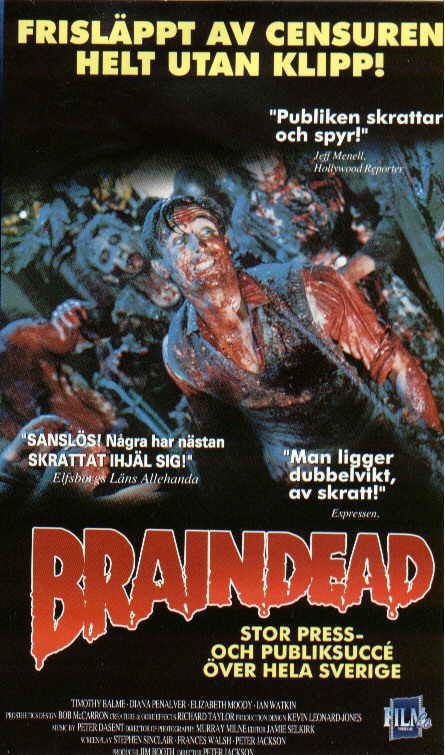
Braindead (1992): B+


It may take a bit of patience to adjust oneself to the gaudy, synthesized madness of Peter Jackson's practically unrivaled Braindead (aka Dead Alive). The film utilizes the alluring qualities of trashy horror cinema at a feverish pitch, its gratuitously comical indulgences into gore of the squishy and squirty kind likely to simultaneously blow minds and turn stomachs. Its fable-esque story of one young man's fight for freedom against his domineering mother is told with a ghastly sort of brilliance, infused with incessantly red-stained imagery, into which it dives without coming up for breath for seemingly hours at a time. On a surface level, its obtrusive, exaggerated stylistics are almost deliberately off-putting, and like the overwhelming hoards of grotesque zombies that eventually abound its spectacle, one must be willing to get down and dirty in the muck if they're to survive the incoming onslaught.

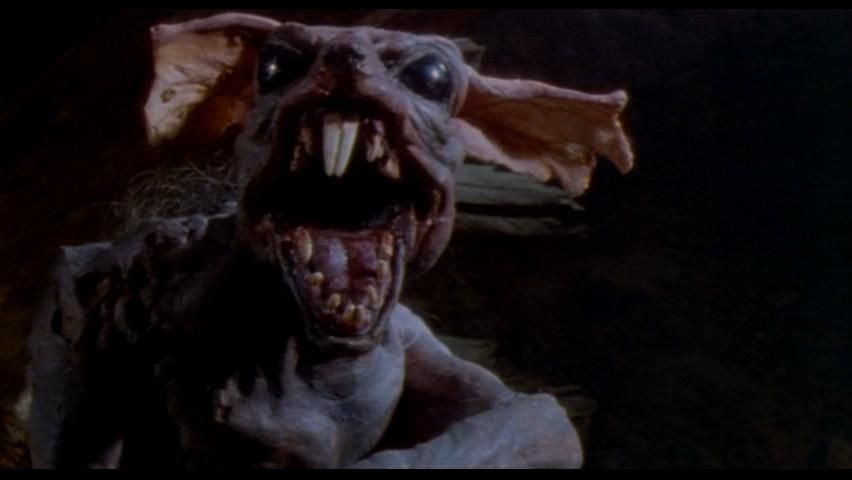
With apologies to Shaun of the Dead, Braindead remains the original rom-zom-com, its tale of Oedipal suppression and distressed romance writ large in what is easily the bloodiest coming-of-age story ever filmed (seriously, Passion of the Christ pales next to this monster). Lionel Cosgrove (Timothy Balme) has been with his mother Vera (Elizabeth Moody) as long as he can remember, he but her sole emotional vestige after the tragic death of his father, who drowned while saving Lionel himself from a fall into the ocean at age of five. Their relationship is one of destructive co-dependence; Vera is fascistic in her demands while Lionel instinctively relies on the structure imposed by her dominance, knowing no purpose outside satiating her every whim, however unreasonable. It is beyond his scope of experience, then, when a beautiful young woman, Paquita (Diana Peñalver), falls almost instantly in love with him. Vera will have nothing of it, of course, and follows the two on their first date to the local zoo. Hiding in the bushes near one of the animal cages, Vera is unforeseeable bitten by the Sumatran Rat Monkey.

Yes, a rat monkey - and an evil one at that (just watch the movie, I swear it makes as much sense as is physically possible). With her wound seemingly a minor one, Vera is bandaged up by a local nurse and left to recover in the comfort of her own home. Come morning, however, her state has drastically worsened. Both mentally and physically, Vera is literally falling apart, her wound now a festering, goopy mess prone to squirting unidentifiable fluids in any number of directions, while her face literally tears open at the first attempt to apply makeup. Lionel, unable to recognize a world without his beloved mum, takes to preserving her by any means possible. Death proves but a minor nuisance in their case; shortly after perishing, Vera rises again as a violent zombie, with Lionel ultimately chaining her up in the basement, ever faithful even as she attempts to tear him limb from limb. By this time, her newfound hunger for flesh has created a handful of additional zombies, whom the distraught and confused Lionel - reaching for a long-departed sense of normality - takes to alternately feeding and tranquilizing in the privacy of his home (needless to say, his blossoming relationship with Paquita has suffered as a result of these developments).

Even if Braindead were something to be reviled (an opinion that I'm sure is held by many), its sheer creativity in portraying zombie mayhem would be something to marvel at. Dawn of the Dead may get the props for its brilliant helicopter half-decapitation, but what other film has had such audacity as to feature a disemboweled stomach and intestines acting as its own predatory force? The film's build-up is a brilliant enough spectacle of gag-testing sight gags and wince-inducing scenarios; Lionel feeds a nearly-headless zombie by plopping the food inside her open neck, while the undead inadvertently consume bits of their melting bodies when the pieces plop into their bowls of custard. Lionel's mother returns from the grave more violent than ever, while the zombified punks who desecrated her burial site must reckon with the kung fu mastery of the sickest priest to ever grace the silver screen ("I kick arse for the Lord!"). What is easily the films most narratively insignificant sequence is also perhaps its most stellar; Lionel, again faking normalcy, takes a zombie baby for a stroll in the park (don't ask). When the devilish little toddler escapes, he is forced to physically subdue it lest it eat the other children abound, and horrified parents look on at what is seemingly the worst case of child abuse this side of Mommie Dearest.

When all hell breaks loose in the confines of Lionel's high-rise mansion, the carnage that unfolds may be the most sustained yet executed in the genre; the seemingly endless creativity in how Jackson kills off both people and zombies practically requires a second viewing on general principle alone. Nevertheless, its uncontainable excess acts as a visually poetic rendering of Lionel's suddenly required spurt of maturity, with the death of his mother a significant departure he must literally fight to move on from. These blood ties take on disturbing and profound depths when, in the gargantuan climax, the monstrous, mutated Vera tears open her stomach so as to return her son to the womb. I'm yet unable to connect the creative ties between this and Jackson's equally masterful work on The Lord of the Rings (save for the visual homages that populate his trilogy, particularly in The Return of the King), but Braindead - at the very least - exhibits the resourcefulness that would allow this Kiwi to redefine the modern blockbuster some ten years later. In its own compact way, this exhausting zombie outtake is just as epic as that trilogy. Rarely has the urge to expectorate one's lunch been a feeling so sublime.


Feature: 31 Days of Zombie!

Oct 17, 2007

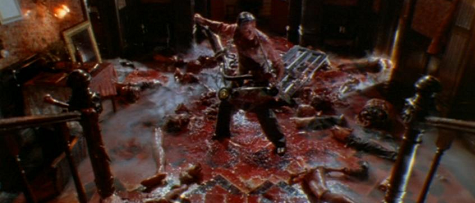
MST3K 812: The Incredibly Strange Creatures Who Stopped Living and Became Mixed-Up Zombies!!?

If, in the annals of long-ass movie titles, Dr. Strangelove or: How I Learned to Stop Worrying and Love the Bomb occupies a rung near or at the top of the ladder, then T.I.S.C.W.S.L.A.B.M.U.Z. almost certainly rests at (or below) ground level. Even when viewed in the context of its classic Mystery Science Theater 3000 showcasing (episode 812, which I am in effect reviewing here, having been unable - and slightly unwilling - to track down the film by its lonesome), it is a barely watchable, incoherent mess of dance numbers and rote, often incomprehensible exposition, a film simultaneously coming from nowhere and utterly without a destination. Forget the fact that the zombies indicated in the title are anything but and only show up about five minutes before the end credits; this is the kind of film that threatens to disarm any critic, as reviewing it amounts to little more than listing the basics of filmmaking and pointing out the extremity with which each one is ignored. Bless you, Mike, Tom and Servo - we couldn't get through it without you.

From the outset of this marathon, I knew it would be impossible to ignore this most memorably titled of films, and am delighted to have found an opportunity to mesh together my immense love of the living dead with what I consider the greatest television show of all time (another film, 1986's Zombie Nightmare, starring none other than Adam West, was covered by the series in its sixth season). The film itself, unfortunately, remains a turgidly bad affair severely wanting for atrocities of a more actively embarrassing nature; it's a testament to Mike and the 'bots' riffing skills that they remain consistently hilarious amidst such tedium before them. The opening scene sees a decidedly doughy salesman refusing the sexual advances of the fortune teller Madame Estrella (Brett O'Hara), who - with the help of her assistant Ortega (played by Don Russell as essentially poverty manifest; after this episode, the grizzled, iconic character would become something of a regular on the series) - punishes her would-be partner by pouring acid onto his face. It's a good twenty-five or thirty minutes before we return to this bit of established narrative, a time frame taken up by at least ten minutes of dancing sequences hardly worth their weight in popcorn butter. Crow pointedly remarks, "Cinematography by Zapruder!," and it's anyone's guess as to how one of the film's photographers, Vilmos Zsigmond, would manage to go on to everything from McCabe and Mrs. Miller to Close Encounters of the Third Kind. To his credit, though, he was fourth and last credited. Maybe he only interned.

Director Ray Dennis Steckler stars as Jerry, a free spirit who scoffs at the idea of weighing himself down with a job or education, two of the many means by which society aims to enslave one's mind and spirit (at least, that's what I gather from the barely decipherable sound design). When a trip to the local carnival reveals to him a strange connection with one of the customers of the aforementioned fortune teller, Jerry makes a point to find out just what's going on at the mysterious palm reading booth, only to be hypnotized and enslaved by Madame Estrella, who forces him to carry out her murderous biddings. The film features enough purportedly "suggestive" dance numbers so as to effectively ward off puberty for three to five years in any of its younger male viewers, and it's a long uphill battle before the much-touted zombies make their ultimate appearance. No matter, really; Zeus himself couldn't be expected to save this dreck, while watching the film itself provides explanation enough for the absurdity of the title, which feels cut from the same cloth as the murky anti-scenery. Whatever it was that the creative forces at hand were smoking, they had a lot of it.

The opening host segment of the episode brilliantly riffs on the excessiveness of the film's self-justifying title; the robots are both partaking in a walk-a-thon to raise money for various causes, with the name of the Tom Servo's organization of choice - Helping Children Through Research and Development - ultimately revealing itself as the most obnoxious acronym of all time. Other gaudy aspects of the production - from the unwitting reliance on carnival-esque imagery to the high rising hair styles of the day - find similarly deserving lampoonings between commercial breaks; horrendous though the film may be, this is typical stuff for this trio of seasoned viewers. However, unable to sit in those hallowed seats on the Satellite of Love myself, I desperately searched the proceedings for meaning, style, or subtext - anything to take away the pain from the seemingly countless, completely sexless striptease sequences (say that five times fast). While the chance remains that the film was in fact meant as a commentary on social oppression - Jerry is elevated to some kind of martyrdom after a climactic, incomprehensible police chase along the beach ends in his tragic death - the reality is that it is a work entertaining only through its own astounding incompetence.


Feature: 31 Days of Zombie!

Oct 16, 2007

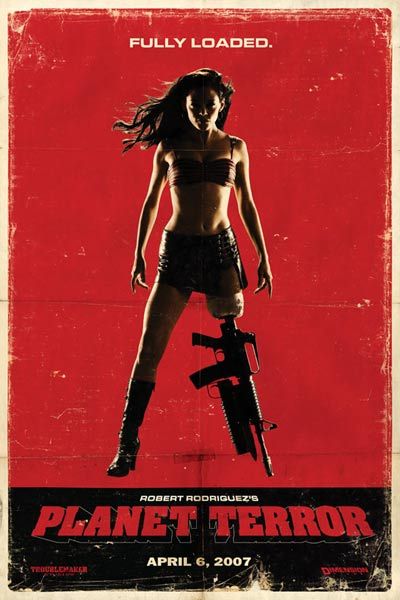
Planet Terror (2007): B+


Take it for what it is. Planet Terror - Robert Rodriguez's contribution to his Grindhouse collaboration with Quentin Tarantino - is a first-rate homage to the schlocky, sleazy B-movies of decades past, loading on the gore, clichés, and self-referential dialogue like there's no tomorrow with a cascade of influences from John Carpenter, James Cameron, George A. Romero and Lucio Fulci (just to name a few), all the while topping off its gimmicky (though totally effective) construction with countless scratches, blips, audio/visual inconsistencies and even a carefully placed "missing reel" in its loving ode to the almost lost end-of-the-line theater experience. Multiplexes have sucked the personality right out of most of our collective viewing experiences and Planet Terror effectively recreates such memorable and meaningful imperfections, if only on a superficial level. For the record, I always liked the blips and scratches, and no matter how many times Carmike plays that fucking "digital experience" clip, any movie shot on film is going to suffer when it's projected with our current digital technology. Rodriguez and Tarantino know there's more to cinema than the supped-up technology adored by the likes of George Lucas and Michael Bay, and in its best moments, the film beckons us to return to our roots.
The only real problem, then, is that the film doesn't really do much more than that. Sure, it looks cool. Sure, it's hella entertaining. I've seen it three times and enjoyed it continuously, albeit to decreasing returns. Any work has the potential to lose its potency once it becomes overly familiar, but whereas the great genre pieces of the past - Assault on Precinct 13, Night of the Living Dead, Escape from New York, The Terminator - all worked layer upon layer of moral and philosophical quandaries into their viscerally charged storylines, allowing for repeated viewings of notably increasing returns, Planet Terror is ultimately little more than a collection of cinematic quotations thrown into the melting pot with the heat turned up to eleven. Such relative triteness is legitimate because Rodriguez doesn't aim to pass his homage off as anything but, a necessary modesty that ultimately lends itself a kind of superficial sweetness that might otherwise smack of genuinely hollow emotions. Jeff Fahey and company aren't embodying cinema as persona in the same vein as the performers of Kill Bill or his own Sin City - they're going for the purely stylistic gut of their archetypal forefathers and hitting the nail smack on the head. Like most of Planet Terror, this limits their capacity for actual feeling, but they manage to kick plenty of ass nonetheless.

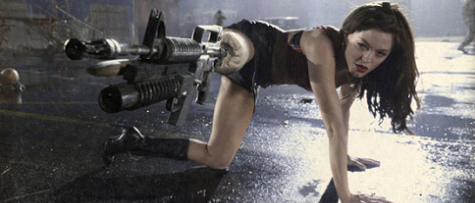
The film's general plot has been detailed extensively on this blog before and needs not be recounted here again. Needless to say, it's melange of junk drawer B-movie parts - the heroic outlaw, and experienced and cynical cop, the brothers divided against each other, the heroine out to prove herself - penetrates directly into the heart of our cinematic subconscious, with Rodriguez trading in deliberately iconic imagery that simultaneously echoes and redefines our genre-based customs and traditions. A sexy, jazzy pole dance opens the film like a sizzling flash of sweat and sleaze, complimented quite perfectly by Rodriguez's own guitar-wailing score. Rose McGowan's same character - cheekily named Cherry Darling - will later lose her leg to a batch of mutated flesh-eating zombies, only to have it replaced by a combo assault rifle/grenade launcher, the centerpiece image in the film's glorious onslaught of heteronormative indulgences of the self-aware and completely shameless kind. From Cherry's ex-lover El Wray (es embodied by Freddy Rodríguez) to the inclusion of makeup guru Tom Savini in the cast, these touches condense the culture that inspired them into a kind of postmodern madness designed to temporarily overload the senses. Planet Terror purports to be stupid and shallow but it is incredibly smart in how it navigates these terrains, proving once again that a little irony can go a long way.
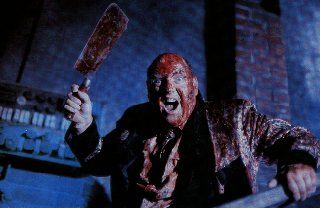


Feature: 31 Days of Zombie!